



What is a Hanging Glacier?
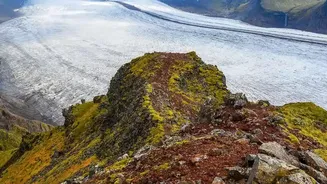
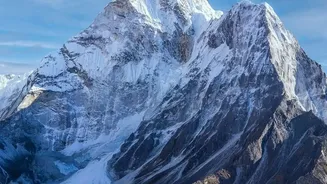
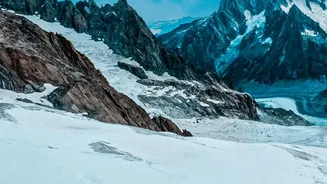
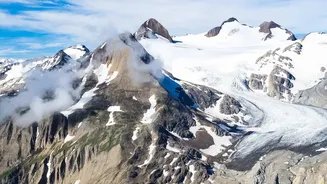
Imagine a river of ice that doesn't quite reach the main valley floor, instead stopping abruptly at a cliff or on a steep mountainside. That, in essence, is a hanging glacier. They are often tributary glaciers, smaller ice flows that, in a healthier glacial
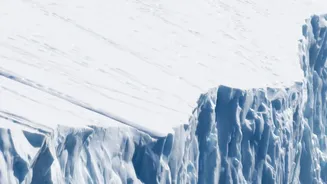
system, would have merged with a larger valley glacier. As the main glacier thins and retreats, these smaller offshoots are left suspended high above, seemingly defying gravity. This precarious position is what gives them their name and their inherent instability. Unlike glaciers that grind slowly down a valley, the primary way a hanging glacier transfers its ice to the terrain below is through dramatic breaks, resulting in icefalls and avalanches.
The Science of a Sudden Collapse
A hanging glacier’s collapse is a dramatic spectacle of physics. These glaciers are often frozen to the bedrock beneath them, which allows them to 'stick' to incredibly steep slopes. However, this bond is not permanent. The relentless pull of gravity is a constant force, and as the glacier grows heavier with accumulated snow and ice, the stress increases. The most significant factor destabilizing these glaciers today is climate change. Rising temperatures cause meltwater to seep into crevasses and to the base of the glacier. This water acts as a lubricant, reducing the friction between the ice and the rock, and weakening the frozen bond that holds it in place. Eventually, a critical point is reached where the ice can no longer support its own weight, and a massive section breaks free without warning.
A Torrent of Ice, Rock, and Debris
When a hanging glacier breaks, it doesn't just create a simple icefall. The event is a cascade of destruction. The falling ice, sometimes involving millions of cubic metres, shatters upon impact with the valley floor after freefalling for potentially kilometres. The immense energy generated by the fall can instantly melt a portion of the ice, mixing it with snow, loose rock, and sediment from the valley walls and floor. This transforms the initial ice avalanche into a fast-moving, churning slurry known as a debris flow. These flows can travel at incredible speeds, scouring valley walls up to hundreds of metres high and carrying boulders the size of buildings. The force is so immense that the impact can even register as a significant seismic event.
A Pressing Concern for the Himalayas
For India, this phenomenon is not a distant, academic concern. The Himalayas are home to countless glaciers, and recent studies have raised alarms about the specific risk from hanging glaciers in the region. A 2026 study identified 219 hanging glaciers in Uttarakhand's Alaknanda basin alone, with nearly a third classified as highly unstable. The 2021 Chamoli disaster in Uttarakhand, which claimed over 200 lives and destroyed major infrastructure, was the direct result of a massive rock and ice avalanche from a hanging glacier. As Himalayan temperatures rise faster than the global average, glaciers are retreating and becoming more fragmented, increasing the likelihood of such events. Communities and vital infrastructure, like hydropower projects located downstream in river valleys, are increasingly at risk.
Monitoring a Remote and Growing Threat
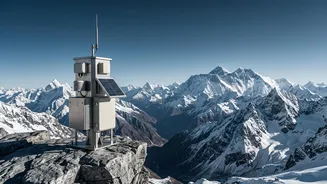
Predicting the exact moment a hanging glacier will collapse is nearly impossible, but monitoring efforts are advancing. Unlike in the European Alps, where high-risk glaciers are often closely watched with radar and warning systems, large-scale monitoring in the vast and rugged Himalayas is a significant challenge. Scientists are increasingly using satellite imagery to identify cracks and changes in glacier shape that may signal instability. Following recent disasters like the one in Nepal in August 2026, Indian authorities like the National Disaster Management Authority (NDMA) are intensifying efforts to study these events and install early warning systems on glacial lakes that can be affected by such collapses. This growing focus underscores the urgent need to understand and prepare for these mountain hazards.