




Why Front-of-Package Claims Fall Short
Walking through a supermarket, you're bombarded with labels designed to catch your eye: 'Made with Whole Grains', 'Multigrain', 'High Fibre'. These phrases make products seem like a healthy choice, but they often don't tell the whole story. Research shows
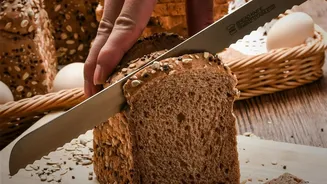
these labels are confusing for shoppers. A product 'made with whole grains' might contain only a tiny amount, with the main ingredient being refined flour (maida). Similarly, 'multigrain' simply means more than one type of grain is used; it doesn't guarantee any of them are whole grains. Even the colour can be deceptive. A brown loaf of bread might get its colour from molasses or caramel colouring, not from being 100% whole wheat. These marketing tactics make it difficult to judge a product's healthfulness by its cover alone.
Decoding the Jargon: Whole Grain vs. Whole Wheat vs. Multigrain
To become a smarter shopper, it's crucial to understand what these terms actually mean. A true whole grain contains all three parts of the original kernel: the nutrient-rich bran, the germ, and the starchy endosperm. This complete package provides fibre, vitamins, and minerals. 'Whole wheat' is simply a type of whole grain. So, a product labelled '100% whole wheat' is also '100% whole grain'. The term 'multigrain', however, is where confusion often starts. It only signifies that multiple grains are present, but those grains could be refined, stripping them of their most nutritious parts. A multigrain bread could be made mostly of maida with a few other refined flours and a sprinkle of whole grains. That's why relying on this term is not a reliable way to choose a healthy product.
Your Guide to Reading the Ingredient List
The secret to finding genuinely healthy grain products lies on the back of the package, in the ingredient list. In India, the Food Safety and Standards Authority of India (FSSAI) mandates that ingredients be listed in descending order by weight. This means the ingredient that makes up the most of the product is listed first. To ensure you’re getting a true whole-grain product, look for the word 'whole' in the first one or two ingredients. For example, the first ingredient should be 'whole wheat flour' (atta), 'whole oats', or 'whole grain rye flour'. If the first ingredient is simply 'wheat flour', 'enriched flour', or 'maida', the product is not primarily whole grain, even if it has a 'whole grain' claim on the front. This simple check is the most powerful tool you have.
Putting It Into Practice in India
Fortunately, FSSAI has been introducing regulations to bring more clarity. For a product to be labelled 'Whole Wheat Bread', it must contain at least 75% whole wheat flour. For 'Brown Bread', the minimum is 50% whole wheat flour. For a product to be called 'Multigrain Bread', it must now contain at least 20% of grains other than the main cereal. While these rules help, the ingredient list remains your best friend. Look past the claims and go straight to the list. Is 'whole wheat flour' or 'atta' the first ingredient? Are sugars like 'syrup' or 'dextrose' high up on the list? Taking a few extra seconds to read the fine print empowers you to see past the marketing and make a choice that is genuinely better for your health.
The Real Benefits of Getting It Right
Making the effort to choose true whole grains has significant health payoffs. Whole grains provide a complete package of nutrients that are stripped away during the refining process. The fibre in whole grains helps maintain steady blood sugar levels, aids in digestion, and can help with weight management. Studies have consistently shown that regular consumption of whole grains is linked to a reduced risk of chronic diseases, including heart disease, type 2 diabetes, and certain cancers. By choosing products that are genuinely rich in whole grains, you're not just buying a different type of bread or biscuit; you're actively contributing to your long-term health and well-being.