








The S&P Global Forecast
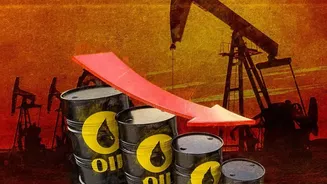
S&P Global Energy expects crude oil prices to remain in a broad range of $80 to $100 per barrel through 2027. Their forecast projects Dated Brent, a key global benchmark, will average around $90 or higher for the rest of 2026 and settle near $86 per barrel in 2027. This
represents a $5 increase from their previous outlook. The analysis suggests that prices would likely be even higher if not for a current lack of global refining capacity, which is putting some downward pressure on crude. This view is shaped by ongoing geopolitical tensions, particularly supply-side risks stemming from conflict in West Asia, which have kept a risk premium embedded in the market since February 2026.
The View from Other Agencies
Other major forecasting bodies offer a spectrum of outlooks, highlighting the market's underlying uncertainty. The U.S. Energy Information Administration (EIA) is more bullish for the immediate term, forecasting the Brent crude spot price to average $96.32 in 2026 before falling to $83.74 in 2027. The EIA recently raised its forecast, citing attacks on Saudi Arabian pipelines and extreme tightness in diesel markets as factors pushing prices up. In contrast, the International Energy Agency (IEA) recently cut its 2026 oil demand outlook, citing the economic fallout from the war in Iran and soaring fuel prices. The IEA forecasts a significant supply deficit for 2026 but sees global supply rebounding by 7.7 million barrels per day (mb/d) in 2027. Meanwhile, OPEC's October report trimmed its 2026 demand growth forecast but slightly increased its 2027 projection, anticipating a need to replenish inventories.
Supply: A Fragile Balance
The supply side of the oil equation is fraught with variables. Geopolitical conflict remains the most significant wildcard. Futures contracts for 2026, 2027, and 2028 are trading at record highs, suggesting that traders are bracing for a prolonged period of tight supply. Much depends on the stability of production and exports from the Middle East. Goldman Sachs has modeled scenarios where Brent crude could average $125 per barrel in 2027 if Gulf output remains significantly below pre-conflict levels. Conversely, if production recovers faster than expected, prices could fall into the $60s. Beyond OPEC+, production growth from non-OPEC+ countries, particularly the US, Brazil, Guyana, and Argentina, is another key factor. However, some analysts see US supply growth plateauing after years of expansion, which could add to supply constraints.
Demand: The Economic Engine
Global oil demand is intrinsically linked to economic health. Forecasters are closely watching major economies like China and India, both significant drivers of energy consumption. China's crude stockpiling has acted as a 'shock absorber' for the market, but its future buying patterns remain a variable. For India, a net oil importer, high crude prices directly threaten to increase the national import bill and fuel inflation. The Reserve Bank of India is already contending with rising consumer prices, driven by both food and energy costs, which has led it to tighten monetary policy. A weaker rupee can further exacerbate the problem by making dollar-priced oil more expensive. The long-term trajectory of the global energy transition—the shift towards renewables and electric vehicles—also looms over demand forecasts, though oil is expected to remain a significant part of the energy mix for years to come.