







A New Kind of Watcher in the Sky
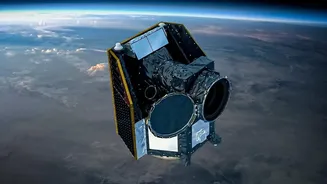
Launched in early September 2026, EOS-05 is not just another satellite; it's a fundamental shift in India's Earth observation strategy. Unlike conventional satellites that circle the Earth in Low Earth Orbit (LEO) and get only brief snapshots of a location,
EOS-05 operates from a geosynchronous orbit, approximately 36,000 kilometres high. This latest update confirms it has successfully completed its complex orbit-raising manoeuvres to reach this perch. From this position, it can keep a continuous watch over the Indian subcontinent, much like a CCTV camera provides constant monitoring of a specific area. This allows it to observe large geographical areas repeatedly and provide data at much shorter intervals than ever before.
The Significance of a Constant Gaze
The latest milestone—achieving its final orbital slot—is significant because it moves EOS-05 from its launch phase to its operational-readiness phase. The primary advantage of its geosynchronous position is the ability to monitor fast-developing events in near real-time. For a country like India, which frequently faces natural disasters, this is a revolutionary capability. The satellite is designed to track cyclones, floods, forest fires, and cloudbursts by capturing images of a specific region every 5 to 30 minutes. This rapid revisit capability provides a crucial window for disaster management agencies to issue timely warnings, assess damage, and coordinate rescue and relief efforts far more effectively.
Beyond Disaster Management
While disaster response is a key application, the significance of EOS-05 extends much further. Its advanced imaging systems can provide vital data for agriculture, helping monitor crop health, soil moisture, and seasonal vegetation changes across vast farmlands. It can also track changes in forest cover, water bodies, and overall land use, providing invaluable information for environmental monitoring and resource management. For a growing economy, having such detailed, high-frequency data is crucial for sustainable development planning, from urbanisation to infrastructure projects.
A Strategic Asset for National Security
ISRO has described EOS-05 as a 'strategic' satellite, and its importance for national security cannot be overstated. Its ability to maintain a constant vigil over the Indian landmass and its surrounding maritime zones provides a powerful surveillance tool. The satellite can monitor international borders and seas, offering timely intelligence to avert potential incursions or security threats. This persistent monitoring capability from a high orbit gives India a strategic edge that complements its existing fleet of low-orbit surveillance satellites. Being able to watch over a specific area of interest for extended periods is a major enhancement for the nation's defence and intelligence apparatus.