







An Accidental Lunar Collision
In January 2025, a SpaceX Falcon 9 rocket successfully launched the Firefly Blue Ghost 1 mission, deploying lunar landers. However, the rocket's upper stage, its job done, was left in a high orbit without enough fuel for a controlled return. Over the next
year and a half, gravitational forces and solar radiation nudged the 4-ton, 45-foot-long piece of hardware onto an unalterable collision course with the Moon. On August 5, 2026, the derelict rocket stage slammed into the lunar surface at an astonishing 5,400 miles per hour, an event predicted by astronomers but beyond anyone's control.
Capturing the Aftermath
Though the impact itself wasn't observed directly, the hunt for the crater began immediately. South Korea's Danuri lunar orbiter was the first to spot the scar, providing initial coordinates. Several days later, between August 11 and 12, NASA's Lunar Reconnaissance Orbiter (LRO) maneuvered to get a better look. This was no easy task. From its orbit 60 miles above the surface, operators had to precisely tilt the speeding spacecraft to point its cameras at the correct spot as it flew overhead at one mile per second. A timing error of just ten seconds would have meant missing the target by ten miles.
What the New Images Reveal
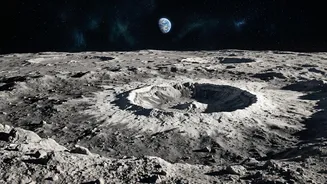
The new LRO images are the sharpest yet, revealing a fresh crater about 60 feet wide and less than 10 feet deep. By capturing the site from multiple angles and in different lighting, scientists have been able to analyze the ejecta—the material blasted out by the impact. The photos show distinct patterns of bright and dark streaks fanning out from the crater. The darker material comes from the very top layer of lunar soil, known as regolith, which has been weathered for eons by solar wind and cosmic rays. The brighter streaks are fresh, unweathered material excavated from deeper beneath the surface, giving scientists a rare look at what lies underneath without having to land a mission to dig.
An Unplanned Science Experiment
While the crash was accidental, it has provided a valuable, if unintended, scientific experiment. Man-made impacts on the Moon are rare, and this one has given researchers a real-time opportunity to study crater formation. The size and shape of the crater and the distribution of the excavated material provide data on the physical properties of the lunar surface. For example, a distinctive V-shaped pattern in the ejecta suggests the booster hit the Moon at a relatively low angle. This information helps refine models of how impacts, both natural and artificial, shape the lunar landscape. It's a silver lining that turns a discarded piece of hardware into a source of new knowledge about our celestial neighbor.
A Wake-Up Call for Deep Space
The Falcon 9 impact highlights a growing challenge in the new era of commercial space exploration: space debris. While many rocket stages are designed to burn up in Earth's atmosphere, hardware used for missions to the Moon and beyond can be left in chaotic orbits that are difficult to track. This event serves as a stark reminder of the need for better tracking of deep-space objects and sustainable practices for disposing of mission hardware. Although some mission operators intentionally impact the Moon as a safe disposal method, this uncontrolled crash underscores the potential for future accidents as lunar traffic increases. It presses the question of how space-faring nations and companies will manage the life cycle of their equipment far from home.