







What 'Faster' Actually Means
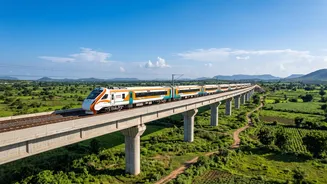
The new 'faster' services are limited-stop trains designed to significantly reduce travel time during the busiest parts of the day. By skipping several stations, these trains will cover the entire 82-kilometre corridor from Sarai Kale Khan to Modipuram
in under 50 minutes, a notable improvement over the roughly 60 minutes taken by regular services. For instance, the journey between Anand Vihar and Ghaziabad will now take just eight minutes. Similarly, travel time between Ghaziabad and Begumpul will be cut to 28 minutes, and the Anand Vihar to Begumpul stretch will take about 36 minutes. This initiative is primarily targeted at office-goers and students who make up a large portion of the corridor's daily traffic.
The New Peak Hour Schedule
The NCRTC has introduced a total of eight new fast services, four in the morning and four in the evening. During the morning peak, two trains will depart from Sarai Kale Khan towards Modipuram at 8:00 AM and 8:30 AM. Simultaneously, two trains will leave from Modipuram for Sarai Kale Khan at the same times. This pattern will be repeated in the evening, with two departures from each terminal station at 6:00 PM and 6:30 PM. Commuters are advised to pay attention to station display boards and announcements to distinguish between the fast, limited-stop services and the regular trains.
Which Stations Are Included?
To achieve these faster travel times, the new services will halt at only five key stations along the entire route. These stations are Sarai Kale Khan, Anand Vihar, Ghaziabad, Begumpul, and Modipuram. Passengers intending to travel to other stations like New Ashok Nagar, Sahibabad, or Muradnagar will need to continue using the regular Namo Bharat services, which will operate as usual. The NCRTC has confirmed that the introduction of these fast trains will not affect the frequency of the standard services, which continue to run at intervals of approximately 10 minutes.
Responding to Growing Demand
This service enhancement is a direct response to the rapidly growing ridership on the Delhi-Meerut corridor. The route currently serves around 1.1 lakh passengers daily and has recently surpassed the milestone of five crore total passenger journeys. With thousands of people relying on the Namo Bharat trains for their daily commute, overcrowding during peak hours had become a common issue. By offering a quicker option, the NCRTC aims to provide a more comfortable and efficient travel experience, encouraging a further shift from private vehicles to public transport. This move is also expected to help alleviate road congestion and contribute to reducing air pollution in the region.
The Bigger Picture for NCR Connectivity
The Delhi-Meerut RRTS is the first of several planned high-speed corridors intended to transform regional travel in the NCR. By connecting major urban nodes like Delhi, Ghaziabad, and Meerut with a reliable, semi-high-speed rail network, the project is redefining the possibilities for living and working across the region. Before the RRTS, a commute from Meerut to Delhi could easily take three hours by road. The Namo Bharat service has drastically cut this to under an hour, making inter-city daily travel a viable option for many more people. The success of this corridor serves as a template for future projects, including the planned Delhi-Panipat and Delhi-Alwar routes, which promise to further integrate the National Capital Region.