







A Fiery, Flawed Success
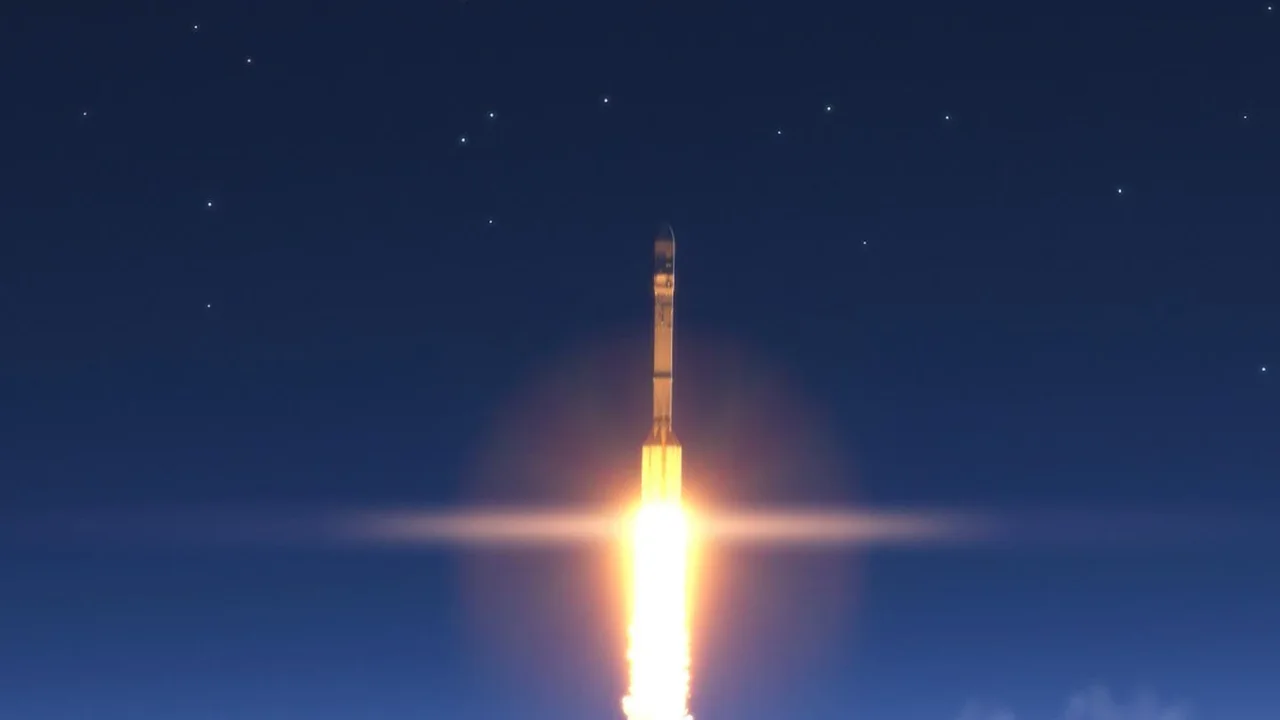
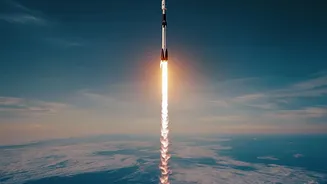
On September 28, the world's largest and most powerful rocket, Starship, blasted off from its Texas launchpad for its 14th test flight. This time was different. Despite an engine shutting down on both the Super Heavy booster and the Starship upper stage,
mission controllers pushed forward. Cheers erupted as the spacecraft successfully achieved orbit around Earth for the first time. The mission wasn't flawless; it was cut short from a planned nine-hour journey to just under three out of an abundance of caution. Yet, in that time, it accomplished its primary goals: reaching orbit and deploying 26 operational Starlink satellites, a first for the program. The flight ended with a controlled, though fiery, splashdown in the Pacific Ocean.
The Leap From Hops to Orbit
To understand the significance of this test, it's crucial to distinguish it from Starship's earlier flights. Previous tests were suborbital, meaning the vehicle flew high into the atmosphere but didn't achieve the velocity needed to circle the planet. Think of it as throwing a ball very high in the air; it goes up and comes straight back down. Those tests were vital for proving concepts like engine performance and the vehicle's wild 'belly-flop' reentry maneuver. Reaching orbit, however, is a different league entirely. It requires accelerating to a staggering speed of around 28,000 km/h (17,400 mph), fast enough that the arc of its fall matches the curve of the Earth. This successful orbital insertion demonstrates that Starship is not just a high-altitude test article but a capable spacecraft.
Unlocking the Future of SpaceX
Achieving orbit isn't just a technical victory; it's a commercial and strategic gateway. Starship is the only vehicle large enough to carry the next generation of SpaceX's own Starlink internet satellites (V3), which are crucial for expanding the network's capacity and the company's revenue. This flight deployed the first operational batch of these larger satellites. Beyond its own business, SpaceX holds a multi-billion dollar contract with NASA to develop a version of Starship as the Human Landing System (HLS) for the Artemis program. This program aims to return astronauts to the Moon. NASA has congratulated SpaceX, calling the successful flight an important milestone toward that goal.
The Path to Moon and Mars
While challenges remain, this orbital flight is the most significant validation yet of Elon Musk's ambitious vision for a fully and rapidly reusable transportation system to make humanity multi-planetary. The entire system is designed so that both the booster and the ship can return for rapid reuse, drastically cutting the cost of access to space. Future test flights will focus on refining performance and attempting to catch the returning vehicles with the launch tower's giant 'chopstick' arms instead of having them splash down in the ocean. The success of this mission provides critical momentum for the Artemis program, with NASA planning a crewed docking test between its Orion capsule and a Starship in 2027 before an eventual lunar landing on Artemis IV in 2028. Every successful Starship flight brings the prospect of lunar bases and Martian cities a little closer to reality.