








The Core Finding: A Race Against Time
The recent report, titled 'Hidden Assets: The Economic and Health Case for Climate and Clean Air Action', was released by the UN Environment Programme (UNEP) and the Climate and Clean Air Coalition (CCAC). Its central message for Delhi is a clear ultimatum:
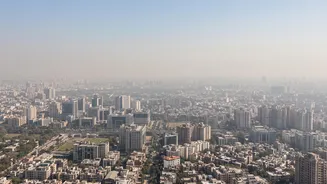
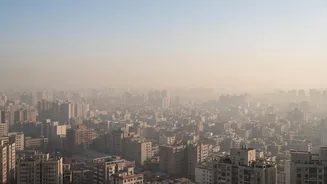
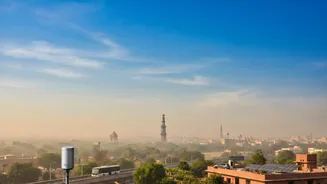
meet the national air quality standards on schedule starting from 2026, or pay a heavy price in public health. According to the analysis, timely action could reduce the cumulative PM2.5 exposure burden by a significant 20% by the year 2040. This isn't just about cleaner skies; it's about a tangible reduction in the pollutants that cause severe health issues for millions.
The High Cost of Delay
The report presents a concerning alternative scenario. It warns that an eight-year delay in implementation—which is the expected global average due to institutional and other barriers—would slash the potential benefits in half. Instead of a 20% reduction in PM2.5 exposure, Delhi would only see a 10% improvement. This delay would lead to 'substantially greater health impacts' over the period, undoing much of the progress that could have been made. The economic argument is just as powerful. Globally, every year of delayed action on air quality and climate forgoes more than USD 1.5 trillion in combined benefits.
It's Not Just About Delhi
While Delhi was a specific case study, the report is a comprehensive global economic assessment. It covers countries like China, India, Mexico, and Nigeria, which collectively represent over 40% of the world's population. The findings highlight a universal truth: the economic burden from air pollution is massive. In South Asia alone, it's equivalent to 10% of the regional GDP. The report makes a compelling investment case, stating that every USD 1 invested in integrated climate and clean air action can yield around USD 15 in economic benefits. These returns come from lower healthcare costs, higher labour productivity, and avoided damage from climate change.
What are the Recommended Solutions?
The report identifies 25 specific, feasible solutions that tackle both air pollution and climate change simultaneously. For urban centres like Delhi, these recommendations are critical. They include accelerating the transition to renewable power and improving energy efficiency across all sectors. Other key measures focus on promoting clean cooking and heating technologies, enforcing stricter vehicle emission standards, expanding electric vehicle adoption, and improving waste management to stop open burning. The report also stresses solutions for the agricultural sector, such as finding alternatives to crop residue burning and more efficient fertiliser use.
The Biggest Obstacle: Institutional Barriers
So, what's stopping progress? The report identifies 'institutional barriers' as the single biggest contributor to delays worldwide, accounting for roughly 2.4 years of a hypothetical 15-year implementation window. For a city like Delhi, where air quality management requires coordinated action across multiple states including Haryana, Uttar Pradesh, and Rajasthan, this finding is particularly relevant. A fragmented response, where different agencies work in silos, has long been a challenge. The UN's findings reinforce the need for a unified, 'airshed-level' approach to planning and enforcement rather than just focusing on state-by-state actions.