







The Great Indian Onion Challenge
For decades, the Indian onion market has been a story of extremes. One season, farmers in Maharashtra, the country's largest onion producer, face a gut-wrenching price crash due to a bumper crop and lack of storage, sometimes selling their produce for
as low as a few rupees per kilogram. The next, consumers in distant cities like Delhi or Guwahati face exorbitant prices due to shortages, supply chain bottlenecks, and hoarding. This boom-and-bust cycle harms both ends of the supply chain. High post-harvest losses, which can be significant for perishables, further complicate the issue, making stable supply and fair prices a constant struggle for policymakers, farmers, and households alike.
Enter the Kanda Express
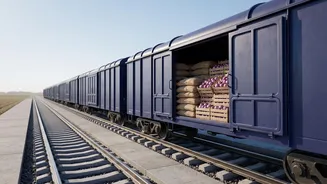
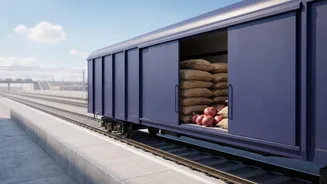
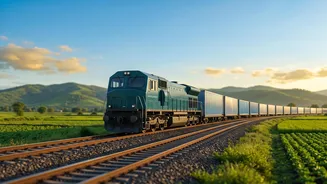
To tackle this perennial issue, the government has ramped up a strategic logistics solution: the Kanda Express. This is not just a single train but a dedicated service under the larger Kisan Rail initiative, designed to move bulk quantities of onions quickly and efficiently from the production heartland of Nashik in Maharashtra to major consumption hubs across India. As recently as August 2026, special trains were dispatched from Lasalgaon, home to Asia's largest onion market, to cities like Delhi, Chennai, and Guwahati to augment supplies and control rising prices. By using the extensive rail network, the initiative aims to bypass the delays and inconsistencies of road transport, ensuring a fresher product reaches markets faster.
How It Modernises the Supply Chain
The Kanda Express represents a fundamental shift from traditional road transport. Instead of thousands of individual trucks, a single train can carry hundreds of tonnes of onions at once. The recent dispatch to Delhi, for instance, involved a 21-bogie train carrying around 450 metric tonnes. This bulk movement is more cost-effective and has a lower carbon footprint. The initiative is part of a broader government strategy that includes creating a buffer stock under the Price Stabilization Fund (PSF). Agencies like NAFED and NCCF procure onions from farmers, which are then dispatched via these trains during lean seasons or periods of price volatility to cool down the markets.
Impact on Farmers and Consumers
The primary goal is twofold: ensure farmers get better access to a wider range of markets, and protect consumers from sudden price shocks. By providing a direct link to high-demand urban centres, the train service offers farmers an alternative to selling in local mandis, which can be prone to gluts and price manipulation. For consumers, the timely arrival of large stocks helps increase availability and stabilise retail prices. For example, onions from the government's buffer stock transported via the Kanda Express are often sold at subsidised rates, such as Rs 35 per kg in Delhi, to provide direct relief to households during price surges.
Challenges on the Tracks
The initiative is not without its hurdles. Logistics, even by rail, can be complex. A recent 'Kanda Express' departure was delayed due to issues with packing the onions into sacks on time. There have also been instances of protests from local activists and farmers. Some farmers have raised concerns about the quality of onions being transported, alleging that lower-grade produce was being loaded, which could undermine the effort's integrity. Ensuring the benefits reach small and marginal farmers, improving first-mile connectivity to the railway stations, and scaling up the service to cover even more routes remain ongoing challenges that need to be addressed for the system to be truly transformative.