




Mehrangarh Fort, Jodhpur: The Preserved Palace
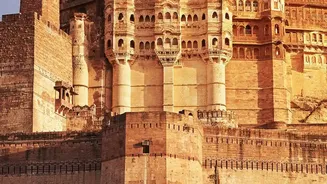
Towering 400 feet above the ‘Blue City’ of Jodhpur, Mehrangarh is the epitome of a preserved fortress palace. Built in the 15th century by Rao Jodha, it has never been conquered by force. Its massive walls, which Rudyard Kipling called ‘the work of giants,’
enclose a series of stunning palaces with intricate carvings, expansive courtyards, and beautiful stained-glass windows. The Moti Mahal (Pearl Palace) and Phool Mahal (Flower Palace) are breathtaking examples of Rajputana opulence, their interiors so well-maintained that they feel as if the royal family just stepped out. The fort is still managed by the Jodhpur royal family, and its museum offers a rich glimpse into the life and treasures of the Rathore clan, making it feel less like a monument and more like a living palace.
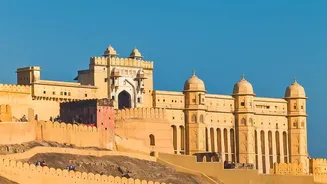
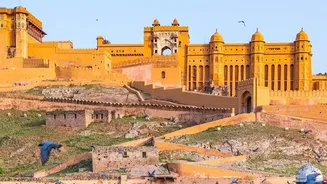
Amer Fort, Jaipur: The Opulent Masterpiece
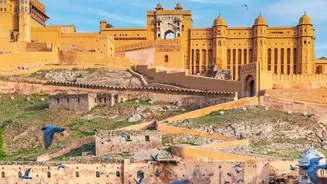
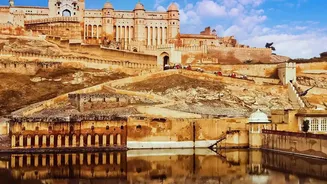
A short distance from Jaipur, Amer Fort is a stunning blend of Rajput and Mughal architectural styles. Built with pale yellow and pink sandstone and white marble, it sits majestically on a hill overlooking Maota Lake. Constructed by Raja Man Singh in the 16th century, the fort is famous for its artistic elements. The 'Sheesh Mahal' (Mirror Palace) is a highlight, where a single candle can illuminate the entire hall thanks to thousands of tiny, embedded mirrors. The fort is divided into four main sections, each with its own courtyard, moving from public spaces to the private royal quarters. Its excellent state of preservation, combined with features like the Ganesh Pol gate and lavish gardens, makes Amer a prime example of a functioning palace within a fortress.
Red Fort, Delhi: The Imperial Symbol
As the heart of the Mughal capital Shahjahanabad, the Red Fort is more than just a fortress; it's a symbol of imperial power. Built by Emperor Shah Jahan in the 17th century, its massive red sandstone walls enclose a complex of palaces, pavilions, and gardens. Structures like the Diwan-i-Khas (Hall of Private Audience) once housed the famed Peacock Throne. While the fort has suffered damage over the centuries, many of its key structures, including the elegant marble pavilions connected by the 'Stream of Paradise,' are well-maintained. As a UNESCO World Heritage site, it represents the zenith of Mughal creativity and remains a powerful symbol, where India's Prime Minister hoists the national flag on Independence Day.
Chittorgarh Fort, Rajasthan: The Citadel of Valor and Ruins
Chittorgarh, India's largest fort, is a place where grandeur and tragedy coexist. Spread across 700 acres on a high hill, this UNESCO World Heritage site is a sprawling complex of palaces, temples, reservoirs, and towers. Some structures, like the Vijay Stambha (Tower of Victory), stand tall and proud, celebrating historic military triumphs. Others, like the ruins of Rana Kumbha Palace, are poignant reminders of the three devastating sieges the fort endured, which led to the legendary acts of 'Jauhar' (mass self-immolation) by Rajput women. Chittorgarh perfectly embodies the headline's theme, offering visitors a chance to walk through magnificent, preserved temples before contemplating history amidst the haunting, beautiful ruins of its palaces.
Golconda Fort, Hyderabad: The Whispering Ruin
Once the capital of the Qutb Shahi dynasty and a famous diamond market, Golconda Fort is now a majestic ruin. While its palaces and halls are largely shells of their former glory, the fort's brilliant engineering endures. Its most famous feature is its acoustic design; a clap at the entrance can be heard at the highest point of the citadel, almost a kilometre away. This system once served as a warning of attack. The fort complex also includes mosques and remnants of an ingenious water supply system. Visitors can wander through vast, empty halls and climb to the top for panoramic city views. The popular evening sound and light show, often narrated by Amitabh Bachchan, brings the silent stones to life with stories of its opulent past.
Tughlaqabad Fort, Delhi: The Cursed Ruin
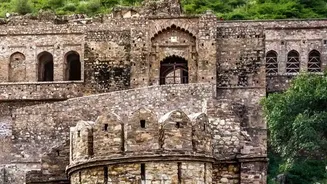
For a true sense of weathered ruins, Tughlaqabad Fort is unmatched. Built in the 14th century by Ghiyas-ud-din Tughlaq, this was the third city of Delhi. Its massive, sloping stone walls and imposing bastions were built for defence. Legend holds that the fort was cursed by the Sufi saint Nizamuddin Auliya, who proclaimed it would either be inhabited by shepherds or remain desolate. The curse seems to have worked; the fort was abandoned shortly after its construction. Today, it is a vast, eerie, and sparsely visited ruin. Walking through its barren landscapes, with only the massive fortifications for company, offers a stark and powerful connection to a grand but failed vision.
Gingee Fort, Tamil Nadu: The Forgotten Troy of the East
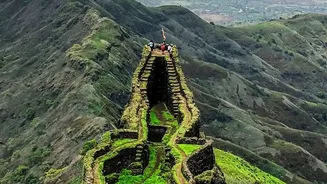
Dubbed the 'Troy of the East' for its supposed impregnability, Gingee Fort in Tamil Nadu is a sprawling and dramatic ruin. Spread across three fortified hillocks—Rajagiri, Krishnagiri, and Chandragiri—its walls run for 13 kilometres. The fort passed through the hands of the Vijayanagara Empire, the Marathas, Mughals, and the French, each adding to its structures. What remains today is a fascinating collection of temples, granaries, a seven-storeyed Kalyana Mahal (marriage hall), and military structures, all in various states of decay. Unlike the more famous northern forts, Gingee offers a sense of discovery. Climbing its steep hills reveals forgotten pavilions and breathtaking views, making it an adventurer's dream and a perfect example of a magnificent ruin returning to nature.