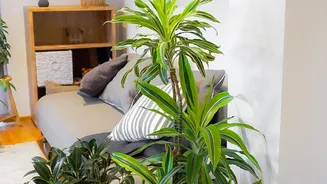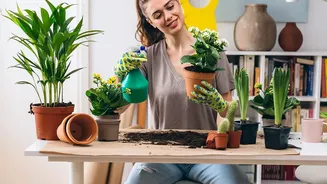






The idea that a few houseplants can purify your home's air is an appealing one. But while the marketing is strong, the science behind it comes with major caveats that are important to understand before you turn your living room into a jungle.
The Legend of the NASA Study
The entire
'air-purifying plant' trend can be traced back to a 1989 NASA study. Scientists were looking for ways to clean the air in sealed environments, like a space station. They placed individual plants in small, airtight plexiglass chambers and injected pollutants like formaldehyde and benzene. Over 24 hours, they found that certain plants did indeed remove a significant percentage of these chemicals. This is the scientific seed from which a billion-dollar industry grew. The problem? Your home is nothing like a sealed space station. Later research has shown that the effect in a typical, ventilated room is almost negligible.
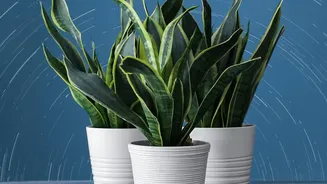
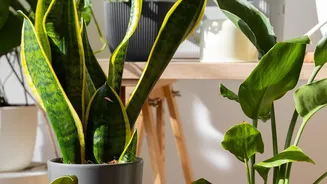
1. Snake Plant (Dracaena trifasciata)
Often topping 'best air purifier' lists, the snake plant is famous for its hardiness and for performing a special type of photosynthesis that allows it to release oxygen at night. This makes it a popular choice for bedrooms. The caveat is that while it did remove toxins in NASA's sealed chamber, its impact in your bedroom is minimal. A 2019 review by researchers at Drexel University calculated you'd need somewhere between 10 to 1,000 plants per square meter to match the basic air-clearing effect of your home's natural ventilation. So while the nighttime oxygen release is a real and interesting biological quirk, the amount is too tiny to affect your sleep or air quality in any meaningful way.
2. Spider Plant (Chlorophytum comosum)
Easy to grow and famous for the 'pups' it sends out, the spider plant is another hero of the original NASA study. It was noted for its ability to filter formaldehyde and carbon monoxide. However, like all plants on this list, the effect is a matter of scale. A single spider plant in a 200-square-foot room is not going to act as an effective air filter against modern household pollutants. The rate of air exchange from simply opening a window or running a ventilation system is thousands of times more effective at removing volatile organic compounds (VOCs) than a handful of plants. Think of its purification ability as a tiny bonus, not its main feature.
3. Peace Lily (Spathiphyllum)
The elegant peace lily, with its white blooms, was a star performer in the 1989 study, shown to remove all five of the tested airborne toxins, including ammonia. This has made it a go_to for those looking for beauty and function. The scientific caveat, however, remains the same: the findings from a sealed lab chamber don't translate to real_world homes. While the plant does absorb pollutants through its leaves, you would need an impractically large number of them to make a measurable difference in your living room's air. Its most reliable benefit is its beauty and its tendency to wilt dramatically when it needs water, making it a great visual reminder for forgetful plant owners.
4. Areca Palm (Dypsis lutescens)
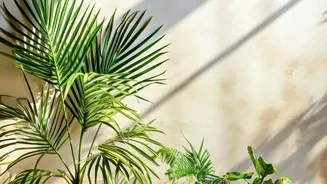
Often called the golden cane palm, the Areca palm is praised not just for removing toxins like formaldehyde and xylene, but also for being a natural humidifier. It releases a significant amount of moisture into the air through transpiration, which can be helpful in dry environments. While its toxin_removing abilities face the same scaling issue as the others, its humidifying effect is more noticeable. A few large palms can genuinely increase the ambient humidity in a room. Just be aware that this also means they require more consistent watering than some other houseplants to stay lush and effective.
5. Boston Fern (Nephrolepis exaltata)
The Boston fern is a classic, lush plant that was highlighted as being particularly good at removing formaldehyde from the air. Ferns thrive in high_humidity environments, making them a popular choice for bathrooms. The scientific fine print here is twofold. First, the air_cleaning effect is minimal in a normal setting. Second, they require more care than many other plants on this list, needing consistently moist soil and high humidity to prevent their fronds from turning brown and crispy. Their primary benefit is aesthetic, lending a timeless, vibrant green look to a room.
6. English Ivy (Hedera helix)
A vigorous vine, English ivy was found to be exceptionally good at filtering benzene, a common VOC found in plastics, resins, and synthetic fibers. It's often seen trailing from hanging baskets or climbing walls. But beyond the now_familiar caveat about needing a jungle's worth of plants to clean your air, English ivy comes with another warning: it can be prone to pests like spider mites and is considered an invasive species in many regions if planted outdoors. It requires good air circulation and careful monitoring to keep it healthy indoors.