




A New, Ultra-Sharp Look at Our Star
For as long as we have pointed telescopes at the sun, a fundamental question has lingered about its boiling surface. Were the blurry edges of its massive convection cells—known as granules—truly that indistinct, or was our view simply not good enough?
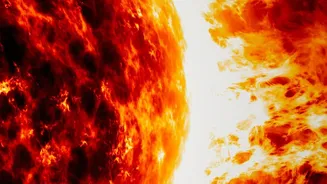
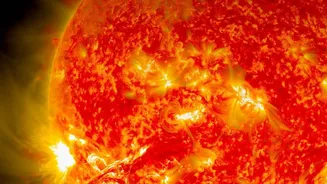
Thanks to new images, we now have a stunning answer. Recent observations from the Daniel K. Inouye Solar Telescope (DKIST) in Hawaii have provided the highest-resolution pictures of the sun’s surface to date, settling the debate. The images reveal that the sun's surface is not blurry at all, but rather a landscape of intricate and violent activity, with details as small as 20 kilometres across now visible for the first time. This is like being able to spot a small coin in Mumbai all the way from Pune, an unprecedented feat of astronomical observation.
The Telescope Behind the Breakthrough
Capturing such detail from 150 million kilometres away is no simple task. The breakthrough comes from the DKIST, the world's largest and most powerful solar telescope, perched 10,000 feet up the Haleakalā volcano. Its massive four-metre primary mirror gives it an unparalleled ability to gather light. But a big mirror alone isn't enough; Earth's turbulent atmosphere blurs any image from the ground, a problem that has frustrated astronomers for centuries. To overcome this, scientists paired the telescope with a high-speed camera capable of capturing hundreds of frames per second and used advanced image-processing techniques to digitally remove the atmospheric distortion. By combining many cleaned-up images, they can reconstruct a view of the sun that is clearer than ever thought possible from Earth’s surface.
Tiny Whirlpools with Big Implications
So what do these crystal-clear images actually show? The most exciting discovery is something that was long theorised but never before seen: tiny, violent whirlpools of plasma swirling at the edges of the solar granules. This phenomenon, known as the Kelvin-Helmholtz instability, occurs when fluids of different densities or speeds flow past each other. On the sun, these vortices are small on a solar scale—some only 25 kilometres long—but they appear to be incredibly energetic. Scientists believe these whirlpools are constantly twisting and braiding the sun’s magnetic fields on a small scale. This previously hidden process could be a crucial mechanism for moving vast amounts of energy from the sun's surface up into its outer atmosphere, the corona.
Solving the Coronal Heating Mystery
The discovery of these solar whirlpools could be a key piece in solving one of the biggest puzzles in solar physics: the coronal heating problem. For decades, scientists have been baffled as to why the sun's corona, its tenuous outer atmosphere, sizzles at millions of degrees Celsius, while the visible surface just below it is a relatively cool 5,500 degrees. It defies intuition that it would get hotter further away from the core heat source. The leading theories have long involved the transfer of energy through magnetic waves and small-scale energy releases. These newly observed vortices provide a tangible, visible mechanism that could be doing exactly that—churning energy from the surface and flinging it outward, contributing significantly to the corona's extreme temperature.
Why Solar Details Matter on Earth
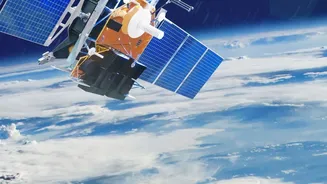
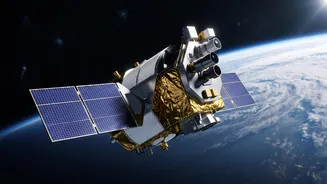
While this may seem like distant, abstract science, a deeper understanding of the sun has very practical implications here on Earth. Our star is not just a benign source of light and heat; it also produces what is known as space weather. Solar flares and coronal mass ejections can hurl massive amounts of charged particles and radiation into space. If directed at Earth, these events can disrupt and damage our critical infrastructure, including communication satellites, GPS systems, and even power grids. By observing the fundamental processes that drive solar activity in such fine detail, scientists can improve their models for predicting these powerful events. These new images are more than just pretty pictures; they are a vital tool in safeguarding our increasingly technology-dependent world.