







The 'Non-Invasive' Difference
When we talk about brain-computer interfaces (BCIs), there are two main paths. The first is invasive, involving surgery to place electrodes directly on or in the brain. This approach, used by companies like Neuralink, offers high-precision signals but
comes with significant risks and is generally reserved for severe medical cases. The second path is non-invasive, using sensors placed outside the head to pick up the brain's electrical or magnetic signals. This method is much safer and easier to use but has historically suffered from 'noisy' signals, making it difficult to decode anything complex. This is the challenge Meta has taken on.
What Did Meta's AI Achieve?
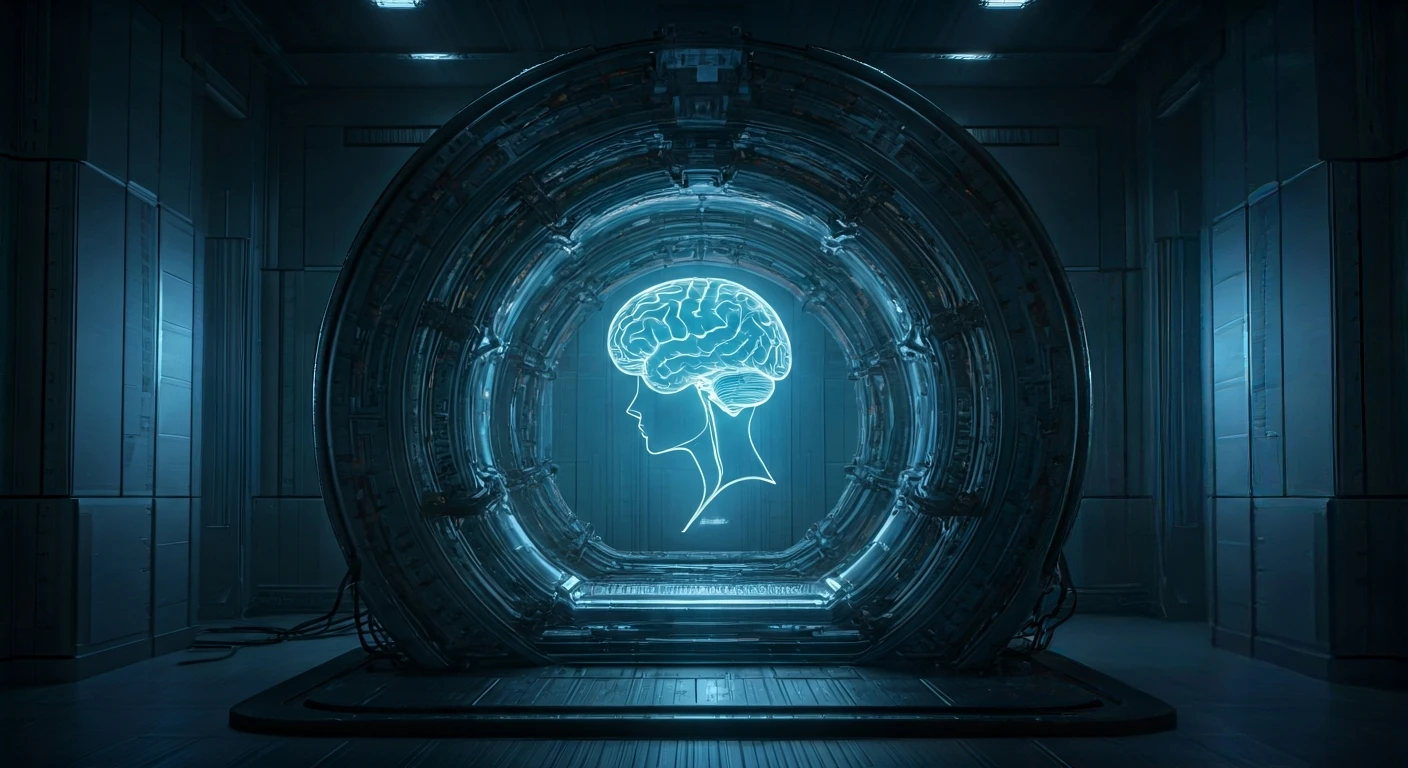
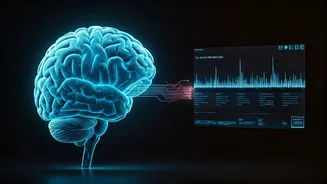
Meta's researchers have developed an AI system that can reconstruct images and text from brain activity with surprising accuracy, using a non-invasive technique called magnetoencephalography (MEG). An MEG scanner is a large helmet-like device that measures the tiny magnetic fields created by neurons firing in the brain. In one line of research, the AI was able to generate a continuous stream of images that roughly matched what a volunteer was seeing. In another, more recent project called Brain2Qwerty, the AI decoded sentences that people were typing, achieving an average word accuracy of 61%—a massive jump from the roughly 8% accuracy of previous non-invasive methods.
How Does It Actually Work?
The process is complex, but it boils down to a three-part AI system. First, an 'Image Encoder' or text model analyzes the stimulus (the picture or the typed sentence). Second, a 'Brain Encoder' learns to map the MEG signals to the patterns identified by the first encoder. It learns to associate a specific pattern of brain activity with, for example, the concept of a 'dog' or the intention to type the letter 'A'. Finally, a 'Decoder' uses these brain-to-AI alignments to generate a new image or reconstruct the sentence. By training the AI on thousands of examples, it learns the user's unique neural patterns, eventually allowing it to work from brain signals alone. The latest versions also use large language models to help predict plausible sentence structures from noisy data.
The Goal: Restoring Communication
Meta's stated goal for this research is primarily clinical. Such technology could one day provide a voice for people who have lost the ability to speak or move due to brain lesions, stroke, or other neurological disorders. By creating a reliable, non-surgical way to translate thoughts into text or speech, it could transform patient care and restore a vital means of connection. The company has stressed the importance of open science, releasing the code for its models to help accelerate research across the neuroscience community.
We're Not There Yet
Before you worry about someone reading your thoughts on the street, it's important to understand the current limitations. The technology requires a massive, room-sized MEG machine, which is not something you can wear as a hat. Furthermore, the AI must be extensively trained on each individual user over many hours. It cannot read a new person's mind 'off the shelf'. The decoded images are also blurry and conceptual rather than photorealistic, and the text decoding still makes errors. However, the speed of progress is what makes this research so significant.
The Coming Ethical Debate
Even in its early stages, this technology raises profound ethical questions about mental privacy, security, and consent. What happens when the technology becomes smaller, more accurate, and more accessible? Could neural data be used for advertising, surveillance, or to manipulate thoughts? While non-invasive BCIs are generally seen as lower risk than implants, the ability to decode brain activity so effectively means we must start having serious conversations about data ownership and what it means to have a truly private thought. Researchers in the field acknowledge these concerns, arguing for strong ethical guidelines to be developed in parallel with the technology itself.