



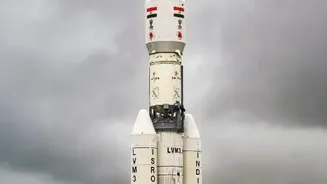
India’s first solar observatory, Aditya-L1, is once again making headlines. New analysis of a massive solar eruption from August 2024 has revealed a crucial detail that could change how we predict space weather and protect our technology on Earth.
India’s Eye on the Sun
Launched
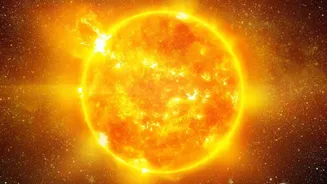
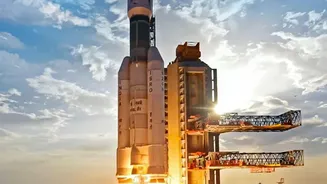
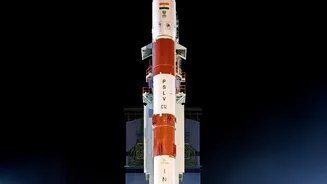
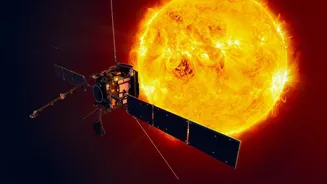
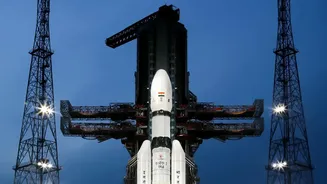
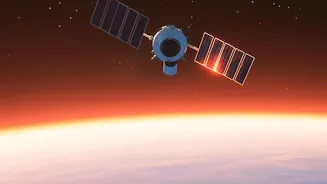
in September 2023, Aditya-L1 is the Indian Space Research Organisation's (ISRO) ambitious mission to study the Sun. Positioned 1.5 million kilometres from Earth at a special spot called Lagrange Point 1 (L1), the spacecraft has an uninterrupted view of our star. This unique vantage point allows its seven sophisticated payloads to continuously observe solar phenomena like solar flares, the solar wind, and coronal mass ejections (CMEs) without being blocked by the Earth. The primary goal is to better understand the Sun’s behaviour and its impact on the space environment around our planet, an area of study known as space weather.
A Solar Storm in August 2024
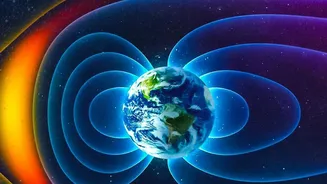
The focus of the new study is a coronal mass ejection that occurred on August 5, 2024. A CME is a massive and powerful eruption of magnetised plasma—a hot, electrically charged gas—from the Sun's outer atmosphere, the corona. When these eruptions are directed towards Earth, they can cause significant disturbances. These geomagnetic storms can disrupt satellite operations, interfere with GPS and communication networks, and even damage power grids on the ground. For this reason, accurately predicting the arrival and intensity of a CME is a critical goal for scientists worldwide. The August 2024 event provided a perfect opportunity for Aditya-L1 to put its advanced instruments to the test.
Uncovering an Uneven Eruption
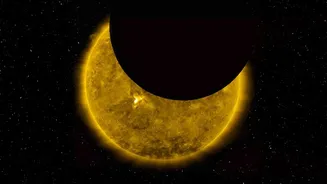
For a long time, many scientific models assumed that CMEs expanded uniformly, like a perfectly symmetrical bubble. However, the latest findings from Aditya-L1 challenge this assumption. Using its Visible Emission Line Coronagraph (VELC) instrument, scientists at the Indian Institute of Astrophysics (IIA) in Bengaluru discovered that the August 2024 CME expanded unevenly and developed an asymmetric shape as it left the Sun. The VELC payload did something remarkable: using a technique called Doppler spectroscopy, it measured the movement of plasma both towards and away from the spacecraft. This revealed a lopsided, tilted expansion that a simple bubble model could not explain. The findings, published in The Astrophysical Journal Letters, were a result of combining Aditya-L1's data with images from NASA's Solar Dynamics Observatory (SDO) and advanced 3D modelling.
Why This Discovery Matters
The shape of a CME is not just a curious detail; it has real-world consequences. An asymmetrically expanding eruption could interact differently with the solar wind, the constant stream of particles flowing from the Sun. This interaction can alter the CME's speed and trajectory, making it harder to predict its arrival time at Earth. By providing a more accurate, three-dimensional picture of how these eruptions evolve right after they are born, Aditya-L1's observations can significantly improve space weather forecasting models. More precise predictions give us a better chance to protect our vital infrastructure, from the satellites in orbit that power our digital lives to the electrical grids that power our homes and cities. This study showcases the power of Aditya-L1's unique capabilities and reinforces India's growing leadership in space science.