




Preparation Before You Even See the Mountains
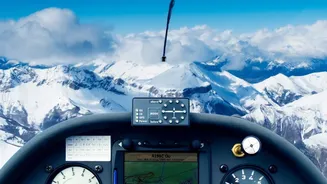
The most important safety checks for an Alpine flying trip begin long before you arrive at the airfield. Mountain flying is a specialised skill, and formal training is non-negotiable. In France, a specific mountain rating is often required to land at designated
high-altitude airstrips, known as 'altiports'. Even if you don't plan to land at these challenging spots, undertaking a mountain flying course is crucial. These courses provide essential knowledge on topics that aren't deeply covered in standard pilot training, such as navigating complex terrain and understanding unique mountain weather patterns.Your planning should also involve a deep dive into charts and regulations. French airspace has its own specific rules, including designated Visual Flight Rules (VFR) routes and altitude restrictions over nature reserves and built-up areas. Familiarise yourself with military low-flying zones (RTBA/AZBA) which must be checked before each flight. Lastly, ensure your documentation is in order. For many non-EU pilots, this means having the correct EASA-compliant licence and medical certificate. This foundational work builds the mental framework needed to operate confidently and safely in a demanding environment.
The Crucial Daily Briefing: Weather and Performance
On the day of the flight, your safety routine intensifies. Mountain weather is notoriously fickle and can change with frightening speed. A standard weather briefing is just the start. You must look for specific mountain-related phenomena. This includes the Foehn wind, a warm, dry wind that can create severe turbulence on the leeward side of ridges. Also be aware of valley winds, which tend to flow up-valley during the day and down-valley at night, and the potential for powerful updrafts and downdrafts that can exceed your aircraft's climb performance. A good rule of thumb for inexperienced mountain pilots is to avoid flying if winds aloft are forecasted to be above 25 knots.Next comes the critical calculation of density altitude. High elevations, combined with warm summer temperatures, create 'thin' air that significantly degrades aircraft performance. Your engine will produce less power, your propeller will be less efficient, and your wings will generate less lift. This means you will need a much longer takeoff roll and will experience a reduced rate of climb. You must use your Pilot's Operating Handbook (POH) to calculate your expected performance based on the current temperature and pressure altitude, not just the field elevation. Ignoring density altitude is a common factor in mountain flying accidents. Planning flights for the cooler morning hours can provide a significant performance and safety margin.
The Walk-Around and In-Flight Discipline
The pre-flight walk-around inspection, while routine, requires extra diligence. Pay close attention to all flight control surfaces, ensuring they are free and correct. Check your oxygen system if you plan to fly at altitudes where it's required. Ensure all necessary documents, including your airworthiness and registration certificates, are on board.Once airborne, safety becomes a continuous process of disciplined decision-making. Tactical choices are paramount. When flying in a valley, always fly along one side rather than down the middle. This ensures you have enough room to execute a 180-degree turn if you encounter unexpected weather or downdrafts. A common practice is to fly on the right side of the valley. When approaching a mountain pass or ridge, do so at a 45-degree angle. This allows for an easier escape turn back toward lower terrain if you find the conditions on the other side are not what you expected or if a strong downdraft prevents you from climbing over.Constant vigilance is key. Monitor your instruments, especially your altimeter and vertical speed indicator, for signs of unexpected altitude loss. Always have an escape route in mind. The stunning beauty of the Alps can be distracting, but a pilot’s primary focus must always remain on flying the aircraft safely and adhering to the plan, while being ready to deviate from that plan the moment conditions require it.