



The World's Space Experts in Bengaluru
The International Conference on Spacecraft Mission Operations, or SMOPS-2026, is a major event where global space agencies, scientists, and industry leaders converge. This edition, held in Bengaluru and co-organised by the Indian Space Research Organisation
(ISRO), focuses on a critical theme: making space missions smarter and more sustainable. At its core, the discussion is about a revolutionary shift from ground-controlled spacecraft to increasingly autonomous ones that can think for themselves. The gathering is a forum for debating and defining the next generation of space exploration, with a heavy emphasis on automation and Artificial Intelligence (AI).
Why Automation is No Longer Optional
For decades, spacecraft have been like puppets, with human operators on the ground pulling every string. This approach is becoming unsustainable for two key reasons. First, our ambitions are growing. With plans for massive satellite constellations numbering in the thousands, it is simply impossible for human teams to manage each one individually. Second, we are venturing further into deep space. When a probe is near Mars or Jupiter, the time delay for a signal from Earth can be several minutes or even hours. In an emergency, waiting for instructions isn't an option. Automation provides the only viable solution: giving the spacecraft the intelligence to manage its own operations and respond to its environment in real-time.
Routine Decisions in an Extreme Environment
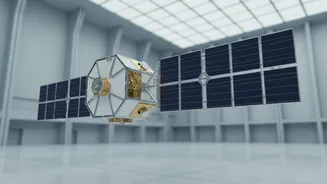
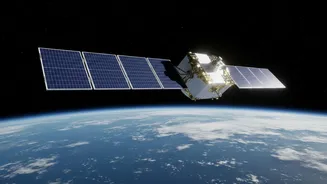
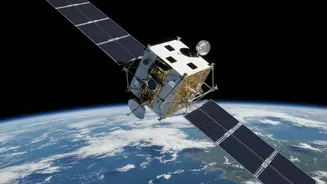
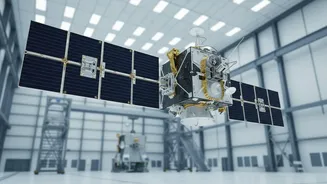
What exactly are these 'routine decisions'? They are the thousands of small but critical tasks that keep a mission running. This includes constantly adjusting solar panels to face the sun for maximum power, firing tiny thrusters to maintain a precise orbit (a process called station-keeping), and monitoring thousands of health parameters, from temperature to voltage. An automated system can also perform tasks like identifying and prioritising important scientific data for transmission back to Earth, saving valuable bandwidth. It can even detect a system anomaly, diagnose the problem, and switch to a backup component without any human intervention.
The Rise of AI in Orbit
Modern spacecraft automation goes far beyond simple pre-programmed commands. The real game-changer is the integration of Artificial Intelligence and machine learning. Instead of just following a checklist, an AI-powered satellite can learn from experience. It can analyse sensor data to predict a potential component failure before it happens or optimise its flight path to conserve fuel, thereby extending its mission life. This allows the role of the human operator to evolve from a constant micromanager to a high-level supervisor, focusing on the bigger picture of the mission's scientific goals.
India's High Stakes in Autonomy
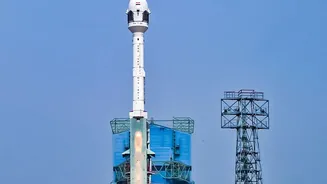
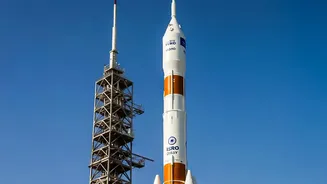
For India, this technological shift is not just an academic interest; it is central to its future space ambitions. ISRO is actively developing these capabilities. A prime example is the successful SpaDeX (Space Docking Experiment) mission, which demonstrated India's ability to perform automated docking between two satellites—a foundational technology for building future space stations. As ISRO prepares for ambitious missions like Gaganyaan (India's first human spaceflight mission) and further interplanetary exploration, robust automation will be essential for astronaut safety and mission success. This focus ensures India remains a key player in the global space ecosystem.