

What are Connected Cars, Exactly?
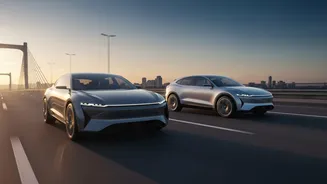
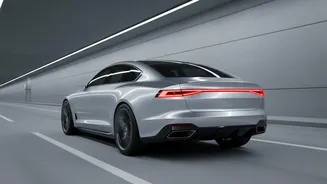
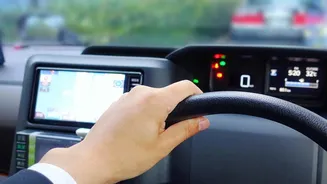
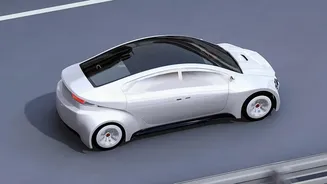
At its heart, a connected car is one that can communicate wirelessly with the world around it. This concept is called Vehicle-to-Everything, or V2X. It allows vehicles to exchange real-time data about their speed, location, and direction with other elements
on the road. This communication network breaks down into several key types: Vehicle-to-Vehicle (V2V) lets cars talk directly to each other to prevent collisions; Vehicle-to-Infrastructure (V2I) allows communication with things like traffic lights and road signs to improve traffic flow; and Vehicle-to-Pedestrian (V2P) can alert drivers to cyclists or people on the road. The goal is to create a digital ecosystem where a car knows about a hazard long before its driver can see it, potentially preventing up to 80% of crashes involving unimpaired drivers.
The Battle of the Standards
For this safety net to work, all vehicles must speak the same language. This is where standards become the most important part of the story. For years, two main technologies have competed for dominance: Dedicated Short-Range Communications (DSRC) and Cellular V2X (C-V2X). DSRC is an older technology, similar to Wi-Fi, that has been tested for years. C-V2X, on the other hand, uses modern cellular networks, including 4G and emerging 5G, to communicate. While both aim for the same safety outcomes, they are not interoperable—a car using DSRC cannot talk to a car using C-V2X. The industry has been locked in a debate over which to adopt. However, momentum has recently shifted decisively toward C-V2X, which leverages existing and growing cellular infrastructure. Many global regulators and automakers are now backing it as the future path.
Why a Single Standard is Crucial
The entire safety proposition of V2X technology hinges on interoperability. If different automakers choose different technologies, the network effect is lost. It would be like having a phone that can only call other phones from the same brand. For a connected vehicle system to be effective, it needs to be universal. A Tata must be able to warn a Maruti Suzuki of sudden braking, and a Mahindra must receive a signal from a traffic light, regardless of who manufactured the components. A unified standard ensures that every connected vehicle and piece of infrastructure can communicate seamlessly, creating a comprehensive safety web that protects all road users. Without this common ground, the technology would remain fragmented and its life-saving potential severely limited.
The New Plan for Indian Roads
With its massive mobile penetration and rapid 5G rollout, India is uniquely positioned to benefit from connected-car technology, specifically C-V2X. The government is taking notice. With over 150,000 road fatalities annually, the potential for V2X to save lives is immense. Recent government moves signal a clear push towards adoption. In June 2026, the government waived licensing requirements for the 5.9GHz band used for V2X communications, a critical step to lower barriers for manufacturers. Furthermore, the Ministry of Road Transport and Highways (MoRTH) has proposed a phased rollout for V2V systems beginning in 2027, signalling a concrete timeline. Pilot projects in cities like Ahmedabad have already demonstrated the benefits for emergency vehicle routing and collision avoidance, showcasing the technology's real-world impact.