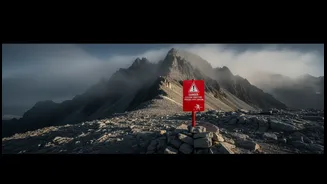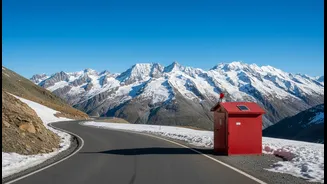








The Deception of Driving Distance
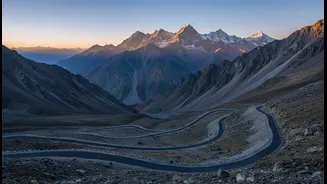
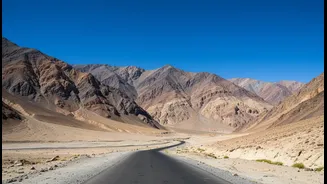
With improved roads and more powerful vehicles, high-altitude destinations across the Himalayas feel closer than ever. It’s tempting to look at a map and plan a road trip from Manali to Leh based on driving time, pushing to cover as much ground as possible.
A common but risky itinerary involves driving from Manali (around 2,050 metres) and aiming for an overnight stop at Sarchu (4,290 metres). While this might seem efficient on paper, it forces your body to ascend over 2,200 metres in a single day, creating a significant risk for altitude sickness. The allure of a quick journey masks the physiological stress it places on your body. The distance your car can cover has no bearing on how quickly your body can adapt to the decreasing oxygen levels.
Understanding Acute Mountain Sickness (AMS)
Acute Mountain Sickness is your body's response to ascending too quickly to an altitude where there is less oxygen and lower air pressure. The symptoms often mimic a bad hangover: headache, nausea, fatigue, loss of appetite, and difficulty sleeping. These symptoms can appear when ascending above 2,500 metres (about 8,200 feet). While mild symptoms are common, ignoring them and continuing to ascend can lead to severe, life-threatening conditions like High-Altitude Cerebral Edema (HACE), which involves brain swelling, or High-Altitude Pulmonary Edema (HAPE), where fluid builds up in the lungs. Fitness level, age, or gender do not grant immunity; even the fittest athletes can suffer from AMS if they ascend too rapidly.
The Golden Rule: Prioritise Sleeping Altitude
The key to safe acclimatization is to control the altitude at which you sleep. Your body does most of its adaptation during rest, and sleeping at a very high elevation too soon places it under immense stress. Mountaineers and medical experts follow a crucial principle: "climb high, sleep low." This means you can ascend to a higher point during the day, but you should descend to sleep at a lower elevation. The most widely accepted guideline is that once you are above 3,000 metres (around 10,000 feet), you should not increase your sleeping elevation by more than 300 to 500 metres per night. Additionally, it's wise to plan a rest day, with no change in sleeping altitude, for every 1,000 metres you gain.
How to Plan Your Itinerary Correctly
Let's revisit the Manali-Leh highway example. Instead of making a dangerous dash to Sarchu, a safer itinerary would involve an overnight stay at a lower altitude. Driving from Manali to Jispa or Keylong (around 3,200 metres) is a much safer first day. This represents an elevation gain of around 1,150 metres, which is still substantial, but it keeps your sleeping altitude much lower than Sarchu, giving your body a better chance to adjust. After a night in Jispa, your body is better prepared for the journey ahead toward Leh. When flying directly into a high-altitude location like Leh (3,500 metres), the rules are even stricter. The widely accepted protocol is to have complete rest for the first 24 to 48 hours before undertaking any activity. This initial rest period is non-negotiable for safe acclimatization.
Listen to Your Body, Not Just the Map
Beyond a well-planned itinerary, acclimatization involves simple but vital practices. Staying well-hydrated by drinking 3-4 litres of water daily is crucial. Avoid alcohol and smoking, as they are respiratory depressants that hinder acclimatization. Eat a high-carbohydrate diet and avoid over-exertion for the first couple of days at a new altitude. The most important rule is to never ascend further if you are experiencing symptoms of AMS. If symptoms persist or worsen, the only effective treatment is to descend to a lower altitude where you last felt well. A successful mountain journey is measured by the experience, not by speed.