




Echoes of Tradition: The Cosmic Drama
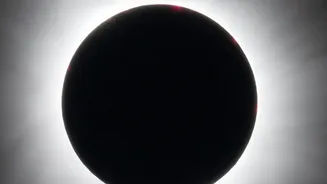
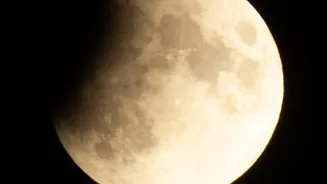
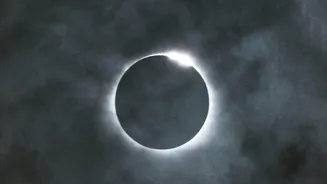
In many Indian households, an eclipse, or 'Grahan', is a time of great caution, steeped in powerful mythology. The most prominent story involves the celestial being Rahu, who, in an act of cosmic revenge, is said to swallow the sun, causing an eclipse.
This event is often seen as inauspicious, a period when the atmosphere is charged with negative energies. As a result, a host of traditional restrictions are observed. Many people fast, avoiding cooking or eating during the eclipse, believing that food prepared during this time becomes impure. Pregnant women are often advised to take special care, staying indoors to protect the unborn child from perceived harmful influences and avoiding the use of sharp objects like knives or scissors. These practices are not about physical harm from looking at the sun but are tied to a deep-rooted spiritual worldview concerning cosmic balance and purity.
The Science of Sight: A Physical Burn
Scientific warnings about an eclipse focus on a very specific and physical danger: solar retinopathy. This is a condition where the intense radiation from the sun damages the light-sensitive cells of your retina, the tissue at the back of your eye. The sun emits powerful ultraviolet (UV) and infrared radiation that can literally burn your retina. The most deceptive part of this injury is that the retina has no pain receptors, so you won't feel it happening. Damage can occur in just a few seconds of direct viewing and might not become apparent for hours or even days. The result can be temporary or permanent vision loss, including blind spots, distortion, and altered colour vision. The danger isn't mythological or spiritual; it's a straightforward physical injury caused by concentrated solar energy.
Why Sunglasses Aren't Enough
A common and dangerous misconception is that regular sunglasses, no matter how dark, are safe for viewing an eclipse. They are not. Everyday sunglasses are designed to reduce glare and visible light, but they do not block the intense infrared and UV radiation that causes retinal burns. In fact, because they make the scene darker, they can trick your pupils into dilating, allowing even more harmful radiation to enter your eye. The only safe way to look directly at a partial or annular eclipse is through special-purpose solar filters, such as certified “eclipse glasses” or handheld solar viewers that meet the ISO 12312-2 international safety standard. These items are thousands of times darker than regular sunglasses and are specifically designed to filter out the harmful rays.
Bridging Belief and Biology
The cultural and scientific perspectives, while different, are not necessarily in conflict. Traditional advice to stay indoors during an eclipse is, by default, an effective way to prevent eye injury—you can't damage your eyes if you're not looking at the sun. The divergence happens when people want to witness the celestial event. While cultural practices focus on avoiding the inauspicious nature of the eclipse, scientific guidelines are designed to allow for safe observation. One can respect tradition by fasting or meditating indoors, or choose to engage with the astronomical wonder by stepping outside with proper ISO-certified protection. It is not an either/or choice. The key is to understand that the two sets of advice come from different belief systems and serve different purposes: one for spiritual well-being and the other for the physical preservation of your eyesight.