

More Than Just Pretty Pictures
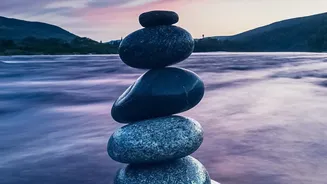
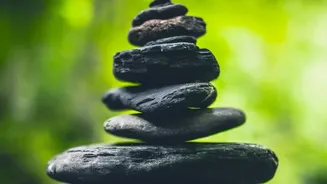
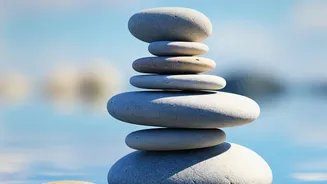
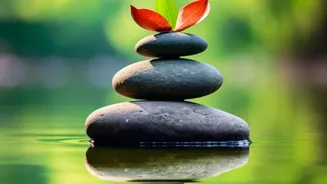
In a world saturated with digital noise, the simple act of balancing one stone upon another offers a powerful antidote. While social media has popularised dramatic, gravity-defying sculptures, the true essence of stone balancing isn't about creating a perfect
structure for a photo. It's a meditative process, a dialogue between you, the stones, and the force of gravity. The practice is less about the final product and more about the internal state it cultivates: a quiet mind, a steady hand, and an appreciation for the present moment. It serves as a natural stress reliever, calming the mind and lowering anxiety through its gentle, repetitive nature.
The Physicality of Stillness
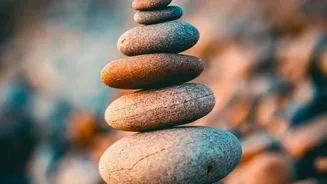
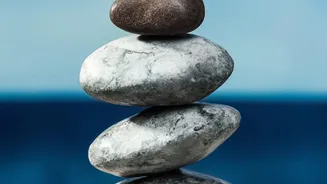
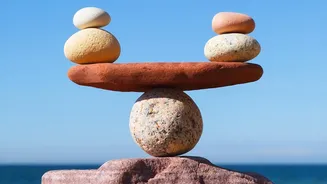
Stone balancing is a surprisingly physical activity that hones fine motor skills and hand-eye coordination. The process begins with selecting your stones, which often involves walking and exploring your surroundings. Then comes the delicate task of finding the balance point. This isn't achieved by force, but by feel. You must become sensitive to the subtle shifts in weight and texture, making micro-adjustments until you feel the stones settle. Practitioners often describe finding three points of contact, creating a stable 'tripod' for the stone to rest on. This requires you to trust the feeling in your fingertips as much as what your eyes see, enhancing your spatial awareness and dexterity over time.
A Masterclass in Focus
To balance a stone, you must give it your undivided attention. Your mind cannot be wandering to your to-do list or scrolling through your phone. This intense focus is the core of its benefit as a mindfulness practice. As you concentrate on the single task of finding equilibrium, mental chatter begins to fade away, and you become fully present. Practitioners often describe entering a 'flow state,' a deep meditative experience where the sense of time dissolves. This heightened concentration isn't just for the moment; regular practice can improve your ability to focus on other tasks in your daily life, enhancing mental clarity for work or study.
Embracing the Collapse: A Lesson in Patience
Here is a fundamental truth of stone balancing: your stack will fall. And it will fall many times. This is not a sign of failure but a core part of the process. Each collapse is an opportunity to practice patience and resilience. The real art is not in preventing the fall, but in your ability to take a breath, let go of frustration, and begin again calmly. This activity teaches that the goal is not perfection but persistence. Unlike many pursuits where failure is a source of stress, in stone balancing, it is an expected and even welcome part of the learning curve, teaching you to detach from the outcome and find joy in the simple act of trying.
How to Begin Your Practice
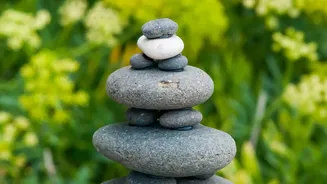
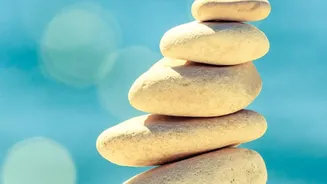
Getting started with stone balancing is simple and requires no special equipment. Find a quiet place with a variety of stones, like a riverbank, a beach, or even a local park. Start small. Don't aim for a towering masterpiece on your first try. Begin by trying to balance just one rock on its end on a larger, stable base rock. Feel for the small divots and imperfections that can serve as a contact point. Hold the stone, feel the direction it wants to fall, and gently adjust it until you sense that moment of stability. The most important thing is to approach it with a playful and curious mindset, letting go of expectations and enjoying the process.