





A Solar System in Flux
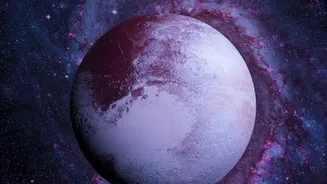
For 76 years, Pluto enjoyed its status as the ninth planet. Discovered in 1930 by Clyde Tombaugh, it was the only planet found by an American and held a special place in our cultural imagination. For decades, school children memorised its name at the end
of the planetary list. However, even from the start, Pluto was an oddball. It was far smaller than any other planet, smaller even than Earth's moon, with a strange, highly elliptical orbit that sometimes brought it closer to the Sun than Neptune. These quirks were puzzling, but without a formal, scientific definition of a 'planet,' its status remained. That all began to change with new eyes on the sky.
A Crowd in the Outer Darkness
The beginning of the end for Pluto's planethood started in the 1990s with discoveries in the Kuiper Belt, a vast ring of icy bodies beyond Neptune's orbit. Astronomers began finding more and more objects out there, some of which were quite large. The real crisis came in January 2005, when a team led by astronomer Mike Brown discovered an object named Eris. Initial observations suggested Eris was even larger and more massive than Pluto. This created a major problem for astronomers: If Pluto was a planet, did that mean Eris was the tenth planet? And what about the other large objects being found? The solar system might soon have dozens of planets, or astronomers needed to agree on what a planet truly is.
The Three Rules of Planethood
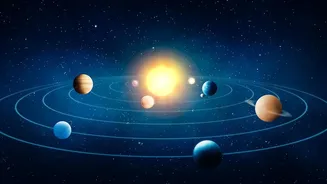
The debate came to a head at the International Astronomical Union (IAU) General Assembly in August 2006. After intense discussion, the members voted to pass the first-ever official definition of a planet. According to the IAU, a celestial body must meet three specific criteria to earn the title. First, it must be in orbit around the Sun. Second, it must have sufficient mass for its own gravity to pull it into a nearly round shape (a state known as hydrostatic equilibrium). Third, it must have “cleared the neighbourhood” around its orbit. This new set of rules would be the final test for Pluto.
Pluto's Neighbourhood Problem
Pluto successfully met the first two criteria: it orbits the Sun and it is spherical. However, it failed on the third and final rule. The requirement to have "cleared the neighborhood" means the object must be the gravitationally dominant body in its orbital path. It has either pulled in, thrown out, or captured any other objects of comparable size. The eight planets, from Mercury to Neptune, have all done this. Earth, for instance, is 1.7 million times more massive than all the other objects in its orbit combined. Pluto, on the other hand, has not. It shares its orbital space with numerous other large, icy objects in the Kuiper Belt, and its own mass is just a fraction of the total mass of those other objects. Because it couldn't be considered gravitationally dominant, it failed the test.
A Dwarf Planet Is Born
With the new rules in place, Pluto was reclassified into a new category: a dwarf planet. This category was created for objects that orbit the Sun and are nearly round but have not cleared their orbital neighborhood. Pluto was joined by Eris, which had triggered the debate, and Ceres, a large object in the asteroid belt that was actually considered a planet in the 19th century before being demoted. The decision was met with public outcry and even debate within the scientific community, with some planetary scientists arguing the definition is flawed. Less than five percent of the IAU's astronomers voted, leading some to question the decision's validity. Nevertheless, the 2006 definition remains the standard, officially leaving our solar system with eight planets.