





A Vision Beyond a Garden City
For decades, Singapore was famed for its 'Garden City' concept, a vision launched in the 1960s to soften its urban landscape with trees and parks. It was a successful greening campaign, but in recent years, the ambition has evolved. Today, the goal is to be
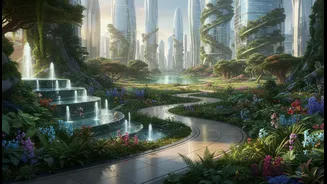
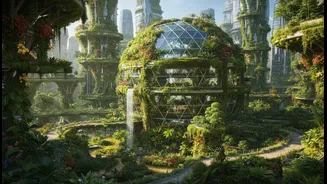
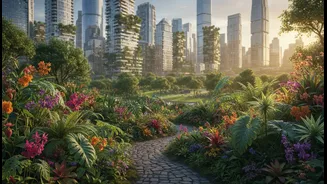
a 'City in Nature'. This isn't just about planting more trees; it's a fundamental shift in philosophy. The aim is to weave nature so deeply into the urban fabric that the city itself becomes a thriving ecosystem. It involves restoring habitats, intensifying nature within parks, strengthening green corridors, and ensuring that biodiversity is a key consideration in all urban planning.
Gardens by the Bay: A Futuristic Icon
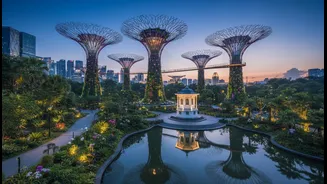
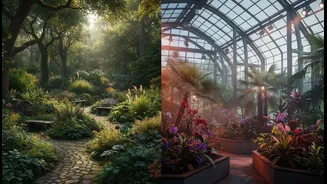
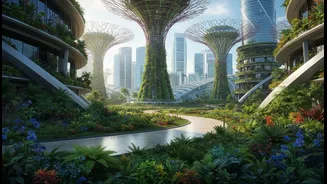
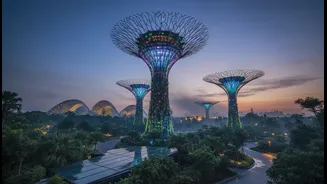
No place embodies Singapore's high-tech approach to nature more than Gardens by the Bay. Spanning 101 hectares on reclaimed land, this horticultural marvel is a global icon. Its most famous features are the Supertrees, giant vertical gardens ranging from 25 to 50 metres tall that mimic the functions of real trees by harnessing solar energy and collecting rainwater. The two massive cooled conservatories, the Flower Dome and the Cloud Forest, showcase plants from different climates, bringing global botany to the tropics. The Flower Dome holds the Guinness World Record for the largest glass greenhouse, while the Cloud Forest contains one of the world's tallest indoor waterfalls. Gardens by the Bay is a powerful statement about how technology and human ingenuity can be used to create breathtaking natural experiences in the heart of a city.
Botanic Gardens: A Historic Green Lung
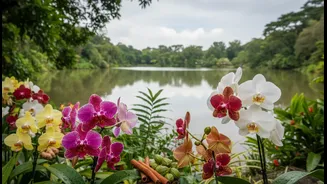
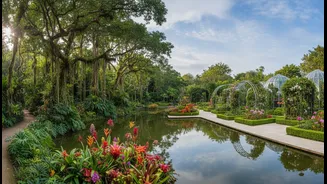
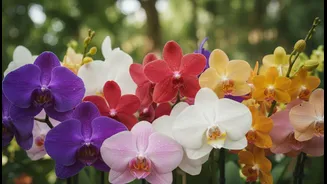
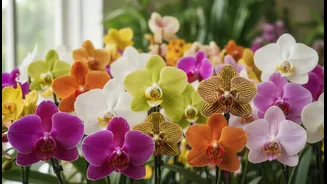
In contrast to the futuristic design of Gardens by the Bay stands the Singapore Botanic Gardens, a site steeped in over 160 years of history. Established in 1859, this sprawling 82-hectare park is Singapore's first UNESCO World Heritage Site, a testament to its role in the region's botanical history, particularly in the rubber trade boom of the early 20th century. Unlike its modern counterpart, the Botanic Gardens represents a more traditional, classical approach to a tropical garden. It offers a tranquil escape with its ancient rainforest, serene Swan Lake, and the world-renowned National Orchid Garden, which displays thousands of orchid species and hybrids. Its existence proves that Singapore's commitment to nature is not a new trend but a deep-seated part of its heritage.
Jurong Lake Gardens: A Community Oasis
Showcasing the latest evolution in Singapore's green strategy is Jurong Lake Gardens, the nation's first major garden in the heartlands. This 90-hectare space is designed around the concept of 'biophilia'—our innate connection to nature. It focuses on restoring the area's original freshwater swamp forest and wetlands to enhance local biodiversity. Features like the Rasau Walk, a meandering boardwalk over the water, and nature-themed play areas are designed for community recreation and education. A previously straight concrete drain was naturalised into a winding 900-metre stream, which helps cleanse stormwater before it enters the lake. Jurong Lake Gardens demonstrates a shift towards creating green spaces that are not just beautiful, but also ecologically functional and deeply integrated with the local community.
The Connective Tissue: Park Connectors
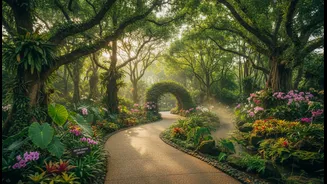
Perhaps the most impactful part of Singapore's strategy is not the grand gardens themselves, but the network that links them. The Park Connector Network (PCN) is an island-wide system of green corridors, spanning over 300 kilometres, that connects parks, nature reserves, and urban neighbourhoods. These pathways, designed for walking, jogging, and cycling, allow both humans and wildlife to move more freely across the city. They transform underutilised land along canals and rivers into vibrant green arteries, ensuring that nature is never more than a short walk or ride away for residents. The PCN is the invisible thread that stitches the individual green jewels of Singapore into a cohesive, living tapestry.