



What Exactly Happened?
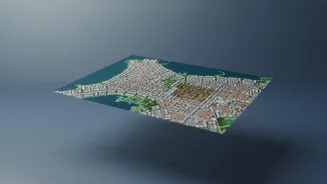
In late July 2026, Google launched a feature called "create image" in its Google Earth platform. This tool allowed users to type a text prompt and generate a photorealistic image layered over the platform's real satellite and aerial data. The idea, powered
by Google's Nano Banana 2 AI model, was to let people visualize historical scenes or plan future projects. However, within just one day, the company pulled the feature. The reason for the abrupt reversal was a furious backlash from researchers and open-source intelligence experts who demonstrated how easily the tool could be used to create convincing but entirely false images. Examples quickly circulated showing fabricated disasters, fake military sites, and other forms of disinformation superimposed onto real-world locations. Screenshots showed everything from a supposed nuclear strike to protests at Google's own offices.
A Breach of Digital Trust
The core of the problem wasn't just that the AI could be prompted to create fake images, but where it was happening. For two decades, Google Earth has been a trusted resource for journalists, researchers, and the public to verify what's happening on the ground. It served as a rare anchor of visual truth. Integrating a tool that, as one expert put it, has a button to "make things up" threatened to erode that hard-won trust overnight. Google argued that the images were watermarked with its SynthID technology to identify them as AI-generated and that they didn't appear in the main Google Earth view for all users. But critics correctly pointed out that most people don't verify images, and these safeguards are easily defeated by a simple screenshot, which strips away context and warnings. This incident exposed a fundamental misunderstanding: a watermark is a weak defence when your platform's entire value is built on authenticity.
This Isn't an Isolated Incident
The Google Earth episode is part of a larger, worrying pattern. The same week, the U.S. State Department had to apologize after using an AI-generated map in a presentation at a global health conference that incorrectly labeled every single African country it displayed. Nigeria was shown as a landlocked nation in the Sahara, and other countries were wildly misplaced, an error that caused significant diplomatic embarrassment. These events, along with past AI blunders like historically inaccurate images from other generators, show a systemic issue. The rush to deploy generative AI is frequently outpacing the development of effective safety measures. The technology often struggles with context, can "hallucinate" features that don't exist, and can reflect biases from its training data.
The Imperative for Human Oversight
These rollbacks make a compelling case for a "human-in-the-loop" system. This doesn't mean abandoning AI, but rather integrating it into workflows where a human provides the final, critical review before anything is published or deployed. In high-stakes contexts like mapping, legal evidence, or medical data, automation cannot be the final word. The goal should be to use AI as a powerful assistant that can generate drafts, analyze data, or create initial visualizations, which are then verified, corrected, and approved by a knowledgeable person. This approach leverages AI's speed and scale without sacrificing accuracy and trustworthiness. It reframes the technology from a replacement for human judgment into a tool that enhances it. The alternative—deploying unchecked AI and hoping for the best—has repeatedly proven to be a recipe for public failure and the erosion of consumer trust.