

A Star System in Its Turbulent Youth
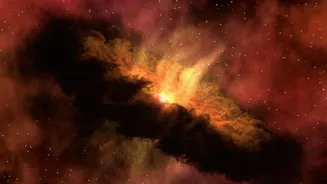
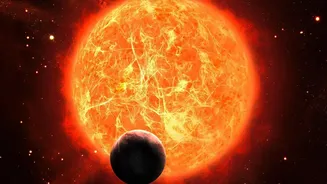
Located just 63 light-years from Earth, Beta Pictoris is a star system that’s practically a newborn in cosmic terms, at only about 23 million years old. It provides astronomers with a rare opportunity to watch a planetary system in the chaotic process
of formation. The star is surrounded by a huge, bright disk of dust and debris—the raw material from which planets are made. This disk has long fascinated scientists, and before this latest discovery, two other giant planets, Beta Pictoris b and Beta Pictoris c, were known to orbit the star. Beta Pictoris b was one of the very first exoplanets to ever be directly photographed. The system is a unique natural laboratory for understanding how planets interact with their environment and each other in their early, formative years.
Meet Beta Pictoris d: The Newest Addition
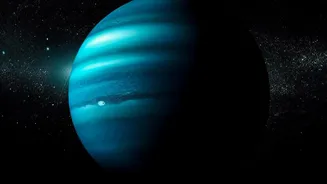
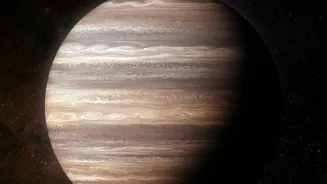
The newly found world, named Beta Pictoris d, was a serendipitous discovery. An independent team of astronomers was not even looking for a new planet. Instead, they were using Webb’s powerful instruments to study the known planet, Beta Pictoris b, when they noticed an unexpected signal. This new planet is also a gas giant, but it's the smallest of the three, estimated to be at least two times the mass of Jupiter. Its siblings, for comparison, are each around ten times Jupiter's mass. Beta Pictoris d orbits its star at a distance comparable to Neptune in our own solar system, giving it the widest orbit of the trio. This finding makes Beta Pictoris only the second star system to have three directly imaged planets.
How Webb's Powerful Eye Made It Possible
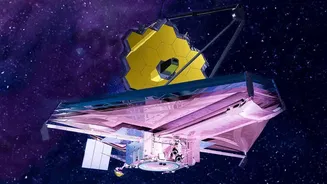
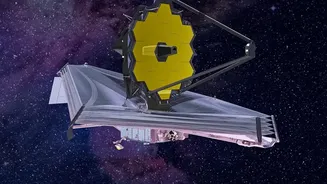
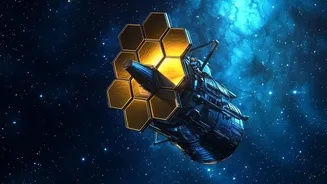
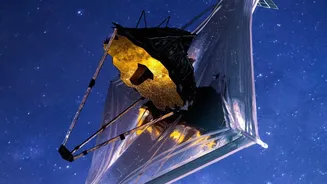
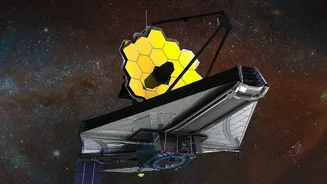
Finding Beta Pictoris d wasn't as simple as just taking a picture. The bright glare of the star and its massive debris disk act like a cosmic fog, making it incredibly difficult to spot faint planets orbiting within it. This is where the James Webb Space Telescope’s unique capabilities came into play. Instead of spotting a faint point of light, astronomers found the planet using a different method. They used Webb's Near-Infrared Spectrograph (NIRSpec) to analyse the chemical composition of the area. The instrument detected the tell-tale chemical fingerprint of a planet’s atmosphere—specifically, signs of methane, carbon monoxide, and water vapour. This technique of finding a planet by its atmospheric traces, rather than its light, could revolutionise the search for other hidden worlds. In a separate study, another team confirmed the planet's existence using the European Southern Observatory's Very Large Telescope, noting it was hiding in archived data from the past decade.
Why This Discovery Is a Game-Changer
The discovery of a third giant planet in the Beta Pictoris system is more than just adding another exoplanet to the catalogue. It challenges and refines our understanding of how planetary systems are built. The location of Beta Pictoris d, just inside the system's main debris disk, provides a live test of the theory that giant planets are responsible for carving out and shaping these disks with their immense gravity. Astronomers can now directly study this interaction in the very system where the idea was first proposed. Having three giant planets in one young system offers an unprecedented chance to study their atmospheres and compositions in the same environment, helping scientists piece together the complex puzzle of planetary evolution. This chaotic, active system serves as a thrilling preview of what our own solar system might have looked like in its infancy.