


The Cosmic Graveyard
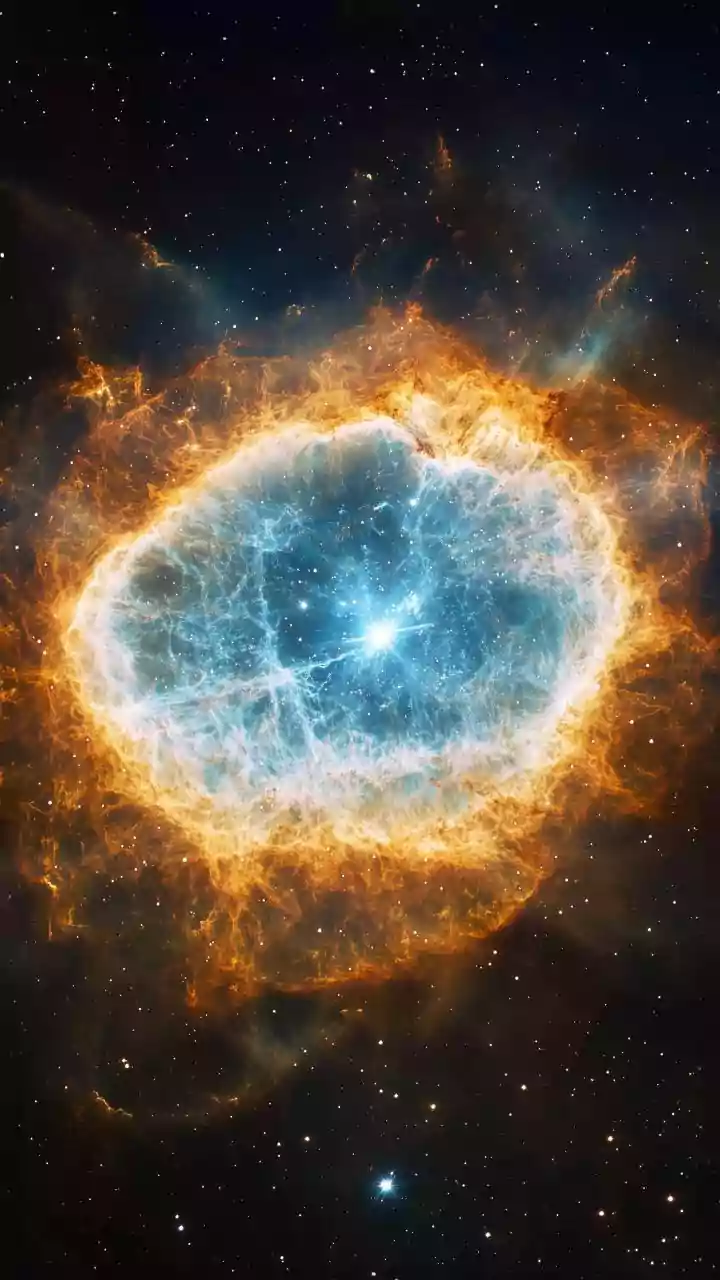
First, what exactly is a white dwarf? When a star similar in size to our Sun runs out of fuel, it sheds its outer layers, leaving behind a hot, incredibly dense core about the size of Earth. This is a white dwarf. It no longer generates heat through nuclear
fusion but simply cools down over billions of years, like a dying ember from a cosmic fire. These stellar corpses were long thought to follow a simple rule: their colour, like that of most stars, is dictated by their temperature, ranging from a hot pale blue to a cooler white or orange. But new research has shown that this is not the whole story, revealing a surprising and colourful variety among these dead stars.
The Mystery of the Green Star
Astronomers from the University of Warwick have found that some white dwarfs break all the colour rules. The most startling example is a white dwarf named WD J1330+6435, which models suggest would appear a ghostly 'chartreuse green'. This is a first in astronomy; while stars can appear blue, white, or red, the physics of blackbody radiation means their light typically blends in a way that prevents them from looking green. So, what makes this one different? The secret lies in its extremely dense atmosphere and what it has been eating. The immense pressure in a white dwarf's atmosphere causes certain elements to absorb light in unusual ways. For WD J1330+6435, traces of sodium, calcium, and lithium pollute its atmosphere, absorbing a broad range of orange and red light and leaving a greenish glow behind.
A Survey of Stellar Neighbours
The discovery comes from a wider investigation into the true colours of these stellar remnants. The headline refers to a specific part of the research where scientists examined a representative sample of 151 white dwarfs located within about 65 light-years of Earth. Using spectroscopic data—which splits starlight into its constituent colours like a prism—the researchers calculated what these stars would look like to the human eye up close. While most of the 151 stars appeared white, as expected, they found five with unusual colouring: two yellow and three pink. This suggests that about one in every thirty white dwarfs in the universe might have a strange, unexpected hue.
Clues from a 'Polluted' Atmosphere
The unusual colours are more than just a cosmic curiosity; they are clues to a violent past. A white dwarf has incredibly strong gravity, which should quickly pull any heavy elements like calcium or sodium down below its visible surface. The fact that these elements are present in the atmosphere means they must be constantly replenished from an external source. The prevailing theory is that these white dwarfs are 'polluting' themselves by consuming the remains of their own planetary systems. Asteroids, comets, and even shattered planets that survived the star's death are pulled in and vaporised, leaving their chemical fingerprints in the white dwarf's atmosphere.
Stellar Cannibalism and a Rainbow of Remnants
The 'green' hue of WD J1330+6435 is therefore a direct result of this stellar cannibalism, with its atmosphere enriched by rocky planetary material. But the study found other colours, too. Another white dwarf, WD J1011+2845, was found to have a deep salmon-pink glow. In this case, the colour is caused by carbon molecules being dredged up from the star's core and brought to the surface, where they absorb blue and green light. These discoveries paint a new picture of white dwarfs not just as fading embers, but as active, dynamic systems that act as forensic labs for studying the composition of exoplanets.
A Glimpse into Our Solar System’s Future
This research provides a fascinating, if sobering, glimpse into the distant future of our own solar system. In about five billion years, our Sun will exhaust its fuel and become a white dwarf. The fate of the remaining planets is uncertain, but this study shows it is common for white dwarfs to consume leftover planetary debris. It's possible that billions of years from now, an alien astronomer might observe our dead Sun and deduce the chemical makeup of Earth, Mars, or the asteroid belt from the 'pollution' in its atmosphere. The colours of these dead stars are, in essence, the last echoes of the planetary systems they once hosted, offering a unique window into the life and death of stars and their worlds.