




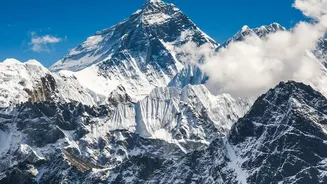
The Threat from the 'Third Pole'
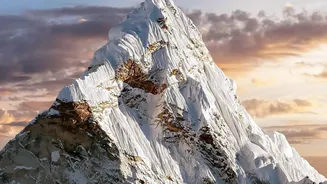
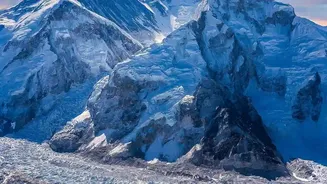
The Hindu Kush Himalaya region is often called the 'Third Pole' because it holds the largest volume of ice outside the polar regions. These glaciers are the lifeblood for nearly two billion people downstream, feeding ten major Asian river systems, including
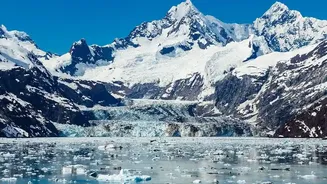
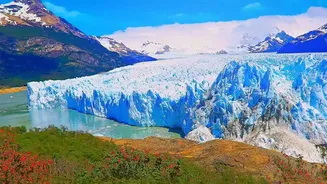
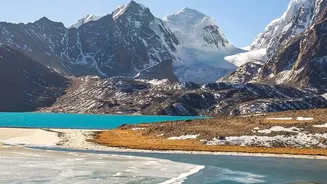
India's Ganges and Brahmaputra. But this frozen reservoir is melting. As glaciers retreat, they leave behind vast depressions that fill with meltwater, forming glacial lakes. Many of these lakes are held back only by unstable natural dams of loose rock and debris called moraines. The danger arises when these dams fail, leading to a Glacial Lake Outburst Flood (GLOF)—a sudden, violent release of enormous volumes of water and debris that can devastate anything in its path.
What the Latest Science Shows
The warnings have grown more urgent. Landmark reports from the International Centre for Integrated Mountain Development (ICIMOD) in 2026 confirmed that glaciers in the region are melting at an alarming pace, with ice loss rates doubling since the year 2000. This accelerated melt is expanding existing glacial lakes and creating new ones, significantly heightening the risk of GLOFs. One recent study identified 47 high-risk glacial lakes across the region, with 21 in Nepal, 25 in Tibet (China), and one in India, threatening the Koshi, Gandaki, and Karnali river systems. A catastrophic flood in Nepal's Rasuwa district in August 2026, which killed over 1,000 people, was linked to a massive failure of a mountain slope and glacier ice, highlighting a new and terrifying type of cascading disaster that is harder to predict than a traditional GLOF.
Nepal on the Frontline of Disaster
Nepal is uniquely vulnerable. Its steep topography and the concentration of high-risk glacial lakes place its mountain communities, critical infrastructure, and booming hydropower industry in the direct path of danger. The August 2026 flood was a brutal demonstration of this, wiping out roads, bridges, and hydropower facilities, and leaving thousands missing. Rescuers faced immense challenges as the disaster cut off entire regions, illustrating how a single event high in the mountains can trigger a widespread national crisis. With hundreds of hydropower projects planned or underway, many close to glacial lakes, the country's energy security is deeply intertwined with the stability of its glaciers.
Why This Is India's Problem Too
What happens in Nepal's mountains rarely stays there. The river systems are shared, and a GLOF or flash flood originating in Nepal can send a wall of water surging into India within hours. The states of Bihar, Uttar Pradesh, and West Bengal are particularly vulnerable to downstream flooding from rivers like the Kosi and Gandaki. Beyond immediate flood risks, the long-term melting of Himalayan glaciers threatens India's water security. While the initial melt might increase river flows, this will eventually be followed by significant reductions as the glaciers diminish, impacting agriculture and drinking water for millions in the Gangetic basin. In response to the Nepal disaster, India has ordered its own Himalayan states to re-evaluate risks from nearly 200 high-risk glacial lakes and accelerate mitigation projects.
A Race for Regional Cooperation
The sheer scale of the threat is forcing a rethink of disaster management. Experts agree that purely national efforts are no longer enough. There are growing calls for a new 'Himalayan disaster compact' involving India, Nepal, China, and Bhutan to create a permanent, real-time early warning system. This would involve sharing data on river levels, glacier stability, and rainfall automatically across borders. While some bilateral data-sharing exists, political tensions can interrupt cooperation when it is needed most. Recent events have made it clear that building resilience is a shared responsibility, requiring investment in joint monitoring, common infrastructure standards for things like hydropower dams, and community-led preparedness plans to ensure warnings reach the last village in time.