


Our Missing Planetary Neighbors
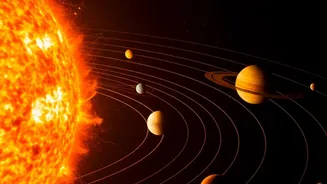
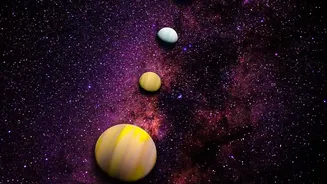
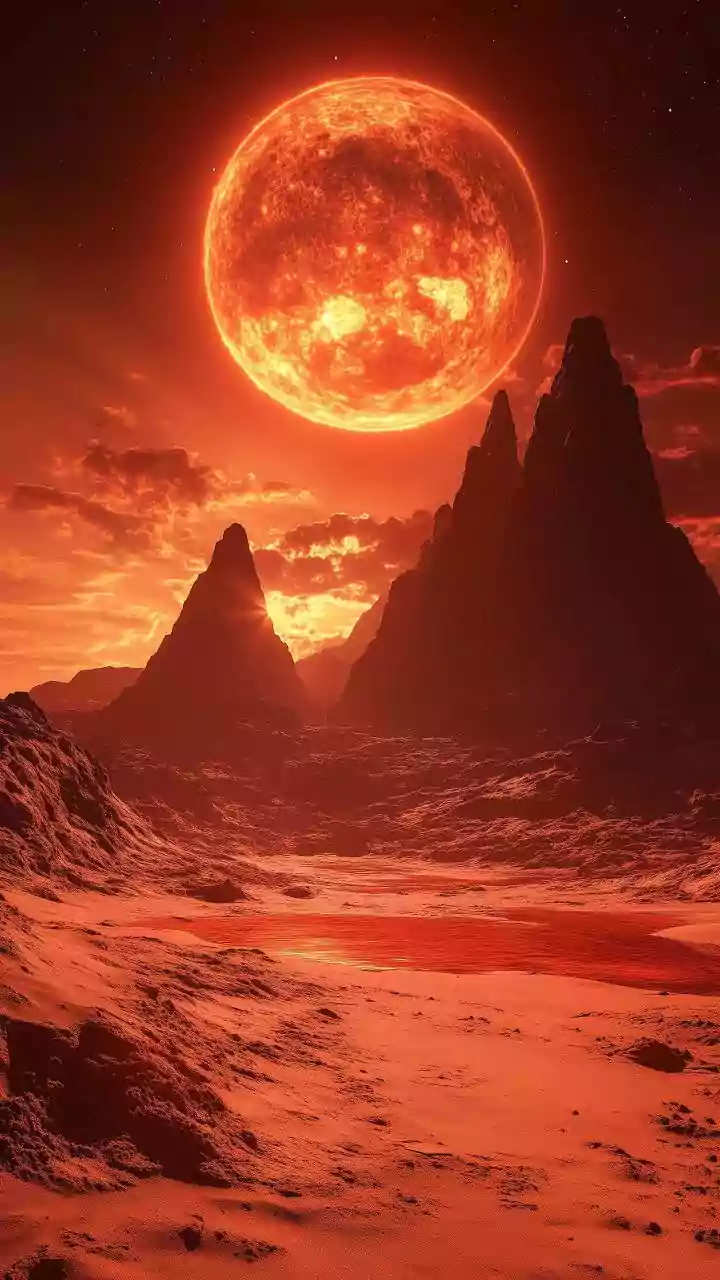
Across the galaxy, the most common type of planet we've found is the “super-Earth”—a world larger than our own rocky planet but smaller than icy Neptune. These planets are often found orbiting their stars in tight, scorching orbits, closer than Mercury
is to our sun. Yet, in our own solar system, the space between the sun and Mercury is conspicuously empty. This cosmic vacancy has puzzled astronomers for years. If super-Earths are so common, why don’t we have one? It suggests that the story of our solar system’s formation was far more chaotic and unusual than we once believed, and recent scientific models are finally starting to provide a compelling explanation.
The Jupiter Effect
The prime suspect in this planetary puzzle is the largest inhabitant of our solar system: Jupiter. Its immense size and gravitational influence have long been known to act as a cosmic shield, protecting Earth from asteroids and comets. But new evidence suggests that in the early days of the solar system, Jupiter was less of a guardian and more of a wrecking ball. The leading theory, known as the “Grand Tack” hypothesis, proposes that Jupiter did not form in its current orbit. Instead, it migrated inward from the outer solar system, blazing a trail of destruction toward the sun before being pulled back out by the gravitational influence of a newly formed Saturn. This inward-then-outward journey would have had dramatic consequences for anything in its path.
Rewriting Cosmic History
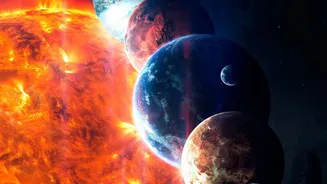
New computer simulations give us a vivid picture of what this planetary rampage might have looked like. As a young Jupiter moved inward, its gravity would have pushed a cascade of planetary building blocks, or planetesimals, ahead of it. This created a collisional chain reaction, grinding would-be super-Earths down into rubble. Much of this material would have been sent spiraling into the sun to be vaporized. According to research from institutions like Caltech and Rice University, Jupiter’s migration effectively swept the inner solar system clean, destroying the first generation of planets that were forming there. This destructive phase cleared out the very region where super-Earths are commonly found in other star systems.
A Second, Quieter Creation
But the story doesn't end with destruction. After clearing the inner solar system, Jupiter's outward migration, pulled by Saturn, essentially reset the stage. The leftover dust and rock from the first generation of planets became the raw material for a second, less massive generation: Mercury, Venus, Earth, and Mars. The Grand Tack model neatly explains not only the absence of super-Earths but also why Mars is so much smaller than Earth and Venus; there simply wasn't as much material left over at Mars's distance to build a larger world. In this view, our terrestrial planets are not the original inhabitants of the inner solar system, but the successors built from the ashes of their larger, vanquished predecessors.
An Alternative Theory: The Sun's Secret
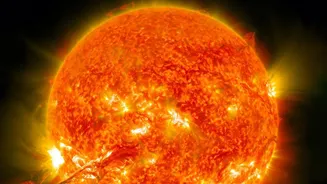
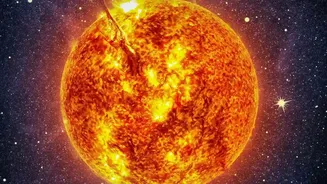
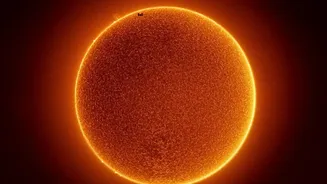
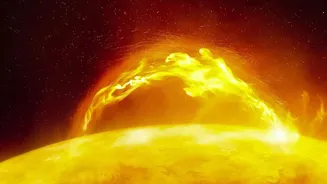
While the Grand Tack hypothesis is a leading contender, a more recent and dramatic theory suggests a different fate for a primordial super-Earth. Research published in 2026 proposes that our solar system did form a super-Earth, but it spiraled inward and was completely swallowed by the young sun. Proponents of this model suggest that this cosmic meal would have left subtle chemical fingerprints, like a lower-than-expected amount of lithium on the sun's surface, that are still detectable today. According to these simulations, a super-Earth falling into the sun billions of years ago could account for several long-standing mysteries about our star's composition and internal structure. This theory also provides a tidy, if violent, explanation for our missing neighbor.