



A Puzzling Discovery in Gale Crater
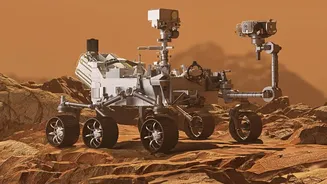
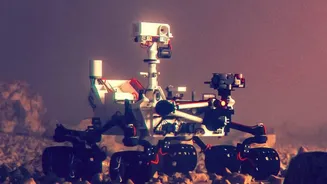
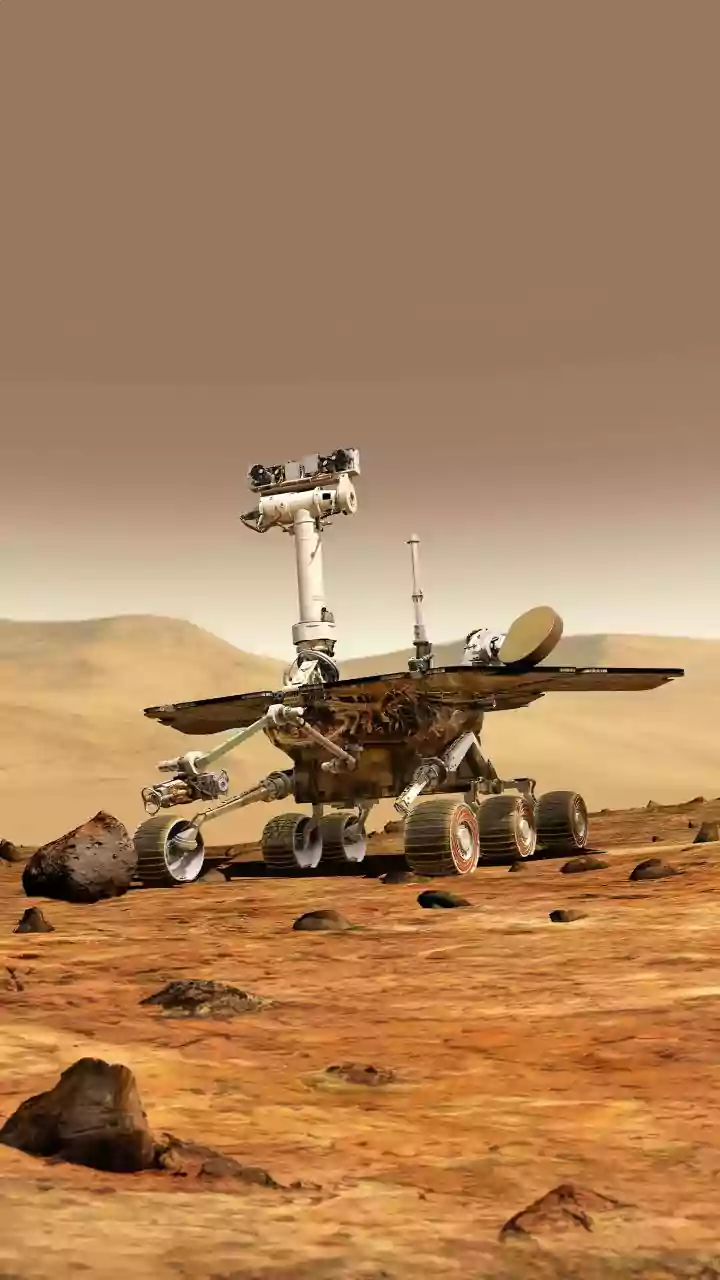
For over a decade, the six-wheeled science laboratory known as Curiosity has been diligently climbing Mount Sharp, a 5.5-kilometre-high mountain inside the vast Gale Crater. This region is a layered time capsule, with each rock stratum holding clues to Mars'
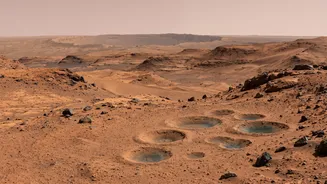
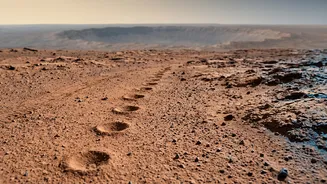
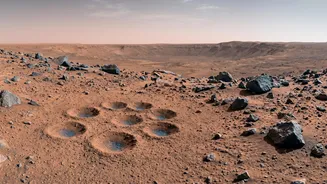
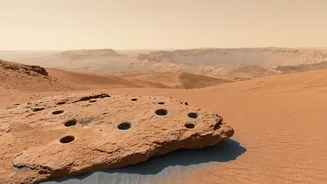
ancient past. While recently traversing a section of the mountain called Valle Grande, the rover spotted something unusual: tiny, shallow pits dotting the bedrock. While holes from meteorite impacts are common on Mars, these were different. They were broad, shallow, and unlike anything the science team had encountered before on the planet.
Why Are These Holes So Strange?
On Earth, and even elsewhere on Mars, similar-looking pits often have a straightforward explanation. They can form when harder pebbles or mineral nodules are embedded in softer rock. Over eons, the softer surrounding material erodes away, and eventually, the harder pebble falls out, leaving a cavity behind. However, the new holes discovered by Curiosity don't fit this model perfectly. Scientists noted that the pits are broader and shallower than typical formations of this kind. Crucially, there were no obvious pebbles or nodules in or near the holes that looked like they could have once occupied them, deepening the mystery of their origin.
Unraveling the Clues with Advanced Tech
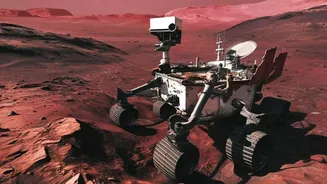
Faced with this puzzle, the NASA team is putting Curiosity's advanced instruments to work. The rover used its Mars Hand Lens Imager (MAHLI), a powerful magnifying camera on its robotic arm, to take detailed close-up photos of the pits. At the same time, its Mastcam cameras captured overlapping stereo images of the surrounding area. This data will allow scientists back on Earth to construct detailed three-dimensional models of the terrain. By precisely measuring the shape, depth, and context of the holes, they hope to work backward and deduce the geological processes that formed them. The investigation is purely geological for now, with no evidence suggesting any kind of biological origin.
A Broader Pattern of Martian Surprises
These strange holes are not the only recent surprise from Valle Grande. In the same area, the rover found that layers of rock were changing in appearance rapidly, with some tough, grey areas resisting erosion differently from their neighbours. Not long before, Curiosity also discovered a vast expanse of honeycomb-like polygonal fractures, a pattern seen before but never in such a concentrated area. These features can be formed by drying mud, temperature cycles, or other processes. Together, these findings paint a picture of a complex and dynamic ancient environment, one that Curiosity was sent to decipher. The ultimate goal is to understand how Mars transitioned from a planet that once hosted lakes and streams to the cold, arid world it is today.