




The green light for the Delhi-Panipat Namo Bharat corridor has sparked excitement for a faster future. But while approvals mark a critical milestone, they are only the first step on a long and complex journey for mega-infrastructure projects in India.
A Game-Changer for Regional Connectivity
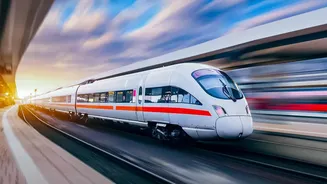
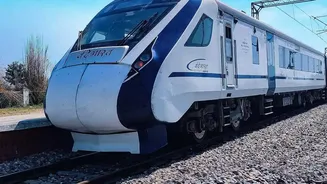
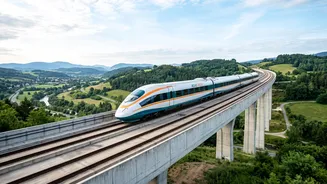
The Delhi-Panipat-Karnal Regional Rapid Transit System (RRTS) promises to be a transformative project for the National Capital Region. Stretching over approximately 136 kilometres, this semi-high-speed rail line aims to slash travel time between Delhi and Karnal from nearly four hours to just 90 minutes. For commuters heading to Panipat, the journey could be reduced to about an hour, a significant improvement over the current two-to-three-hour travel time by road or conventional train. With trains designed to operate at 160 km/h and run at a frequency of every five to ten minutes, the corridor is expected to decongest one of India's busiest road and rail arteries, National Highway 44. The project, estimated to cost over ₹33,000 crore, involves constructing 22 stations and is a key part of a larger plan to foster balanced urban development by connecting industrial and residential hubs in Haryana seamlessly with Delhi.
The First Major Hurdle: Land
Before a single pier can be constructed, the government must acquire the necessary land, a process that is notoriously one of the biggest bottlenecks for infrastructure projects in India. While the National Highways Authority of India (NHAI) recently approved the use of land along NH-44 for the corridor, this is just one piece of the puzzle. The process involves acquiring land from numerous private owners, and it is fraught with potential delays. Notifications must be issued, and a 30-day window is provided for landowners to file objections. Disputes over compensation rates are common and can lead to lengthy litigation, stalling the project for years. Even after a price is agreed upon, the physical handover of land can face resistance. For a linear project like the RRTS, even a small, contested parcel can halt construction along an entire section.
Funding, Coordination, and Political Will
Mega-projects like the RRTS are funded through a complex mix of contributions from the central government, multiple state governments, and loans from multilateral agencies. For the Delhi-Panipat corridor, this requires seamless financial coordination between the Centre, Delhi, and Haryana. History shows that disagreements over cost-sharing can and do arise. The Delhi government, for instance, has previously expressed reluctance over its financial contribution to RRTS projects, creating uncertainty. Beyond funding, the project requires a massive coordination effort between dozens of civic agencies to shift utilities like high-tension power lines, water pipelines, and sewer systems. Any lack of synergy or a shift in political priorities following an election can slow momentum and push timelines further out.
Lessons from the Delhi-Meerut Corridor
To understand the potential challenges, one need only look at the operational Delhi-Ghaziabad-Meerut RRTS corridor. While hailed as an engineering marvel, its journey was not without difficulties. The project had to navigate building through some of the NCR's most congested areas, requiring the use of massive tunnel-boring machines and constructing elevated stations at dizzying heights above live traffic. The implementing agency, NCRTC, successfully overcame these challenges through meticulous advance planning and by securing land with minimal public disruption. However, reports also show that even after becoming operational, achieving projected ridership depends on factors like effective multimodal integration and first- and last-mile connectivity, which are still works in progress. These are valuable lessons for the Panipat corridor, highlighting that the work isn't over even when the trains start running.
A Realistic Timeline to 2030
The official target for the completion of the Delhi-Panipat-Karnal corridor is 2030. While preliminary work like utility diversion has reportedly begun on some stretches, the path to meeting this deadline is narrow. The project is yet to receive final sanction from the Union Cabinet, after which construction tenders can be floated. From there, the on-ground work of building elevated viaducts and underground tunnels across a 136 km stretch is a monumental task. The experience of other metro and RRTS projects in India suggests that a seven-to-ten-year construction timeline is realistic, provided there are no major delays in land acquisition or funding. Any significant hurdle in these initial stages could easily push the completion date further into the next decade.