





Start with the Packaging
Your first clue to paneer's freshness comes before you even open it. Inspect the packaging carefully. If you notice a packet that is swollen, puffed up, or looks like a tight balloon, it is best to avoid it. This puffiness is often caused by gas produced
by microbial activity, a clear warning sign of spoilage, especially if the product has been exposed to unsuitable temperatures. Any tears, leaks, or other damage to the seal can also allow bacteria to enter, compromising the paneer inside. While a simple dent in a can or box might be harmless if the inner seal is intact, a bloated or leaking vacuum-sealed bag is a major red flag. Always check the use-by date as well, but do not rely on it alone if other signs of spoilage are present.
The Visual Inspection: Colour and Mould
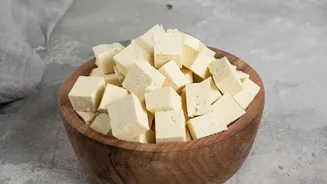
Once out of its packaging, your eyes are a powerful tool. Fresh paneer should be a consistent, clean white or a slightly off-white, creamy colour. If you see a yellowish tint developing, it indicates the paneer is getting old and is on its way to spoiling. More serious signs are any discoloured patches, especially grey, green, pink, or black spots. These are signs of mould growth. Unlike hard cheeses where you can sometimes cut away a mouldy spot, with a soft, high-moisture cheese like paneer, mould spores can penetrate deep into the block, making the entire piece unsafe to eat. If you see any mould, the entire block should be discarded.
The Touch Test: Slimy vs. Moist
Fresh paneer should feel firm yet soft and springy. It should not leave a greasy or sticky residue on your fingers. One of the most common signs of spoilage is a slimy texture. If the paneer feels slick, sticky, or has a gooey film on its surface, it has gone bad and should not be consumed. This sliminess is a result of bacterial growth on the surface. Don't confuse this with the natural moisture of paneer, especially if it's stored in water. Moist is good; slimy is not. Paneer that is overly hard, rubbery, or excessively crumbly might not be spoiled, but could be a sign of poor quality or adulteration with starch.
Trust Your Nose: The Smell Test
Your sense of smell is a primary defence against eating spoiled food. Fresh paneer has a very mild, milky, and clean aroma. If it has any strong, off-putting odour, it's a sign that it has spoiled. The most common bad smell is a sour or acidic one, similar to spoiled milk. Other descriptions of spoiled paneer smell include yeasty, pungent, or even like ammonia. If opening the package releases any sort of sour or foul smell, do not proceed to taste it. The smell test is one of the most reliable indicators that paneer is no longer safe for consumption.
When in Doubt, Throw It Out
Eating spoiled paneer carries the risk of foodborne illness, which can cause symptoms like nausea, vomiting, abdominal cramps, and diarrhoea. The bacteria that cause these illnesses can multiply rapidly in a high-moisture dairy product like paneer. Some people may wonder if cooking spoiled paneer will make it safe, but this is not recommended. Heat may not kill all the toxins produced by certain bacteria that have grown on the food. The same rule applies to 'fake' or adulterated paneer, which can sometimes be made with unsafe ingredients like starch, urea, and other chemicals that pose long-term health risks, including potential damage to the liver and kidneys. If you have any reason to suspect your paneer is bad—be it the smell, texture, or appearance—the safest choice is always to discard it.
Proper Storage for Longer Freshness
To prevent your paneer from spoiling prematurely, proper storage is key. For store-bought paneer, keep it refrigerated and unopened until you are ready to use it. Once opened, or if you have homemade paneer, the best method is to submerge it in a container of cold water. Seal the container and store it in the coldest part of your fridge. It is crucial to change the water every day to keep the environment clean and prevent bacterial growth. This method keeps the paneer moist and fresh for several days. For longer storage, you can freeze paneer. Wrap it tightly in plastic wrap and then foil, or place it in a freezer-safe bag, and it can last for several months, though its texture may become more crumbly upon thawing.