




The ISRO Connection
The story of Skyroot begins not in a boardroom, but within the hallowed halls of the Indian Space Research Organisation (ISRO). In 2018, two of its promising young scientists, Pawan Kumar Chandana and Naga Bharath Daka, made a bold decision. They saw
the global rise of private space companies and believed India had the talent and potential to compete. Resigning from their secure government jobs, they founded Skyroot Aerospace in Hyderabad with an ambitious mission: to make spaceflight affordable, reliable, and on-demand by building India's first privately developed launch vehicles. They were betting on a future where India's space sector, long dominated by the state-run ISRO, would open up to private enterprise—a bet that would soon pay off with government reforms in 2020.
Selling a Vision, Not Just a Vehicle
Without a finished rocket to show, Chandana and Daka had to sell something more powerful: a credible vision. Their pitch was not just about building rockets; it was about a new, more agile approach. They focused on developing a modular series of launch vehicles, named 'Vikram' after the father of India's space program, Dr. Vikram Sarabhai. A key part of their strategy involved using advanced technologies like 3D printing and carbon composite structures from the outset. This approach promised cost efficiencies and faster production times. Instead of waiting years to build a full-scale rocket, they focused on proving their core technology piece by piece. They successfully tested their solid, liquid, and cryogenic rocket engines, demonstrating tangible progress and technical capability to potential investors long before an integrated flight.
The Early Believers
Every startup needs its first believers, and for Skyroot, they came in the form of savvy entrepreneurs and angel investors. Myntra founder Mukesh Bansal was one of the first to write a significant cheque, seeing the potential in the founders' vision. This early seed money was crucial. It was followed by investments from firms like Speciale Invest and the promoters of Greenko Group, Anil Chalamalasetty and Mahesh Kolli. These early backers weren't just investing in hardware; they were investing in the team. Chandana and Daka's background at ISRO gave them immense credibility. They understood the complexities of rocket science not as a theoretical exercise, but through hands-on experience on some of India's most prestigious launch vehicle projects. This expertise was Skyroot's most valuable asset.
From Blueprints to Big Bucks
The initial seed funding created momentum. As Skyroot methodically hit its technology milestones, bigger players took notice. The major turning point came in September 2022, just two months before its first launch. The company announced a $51 million Series B funding round led by GIC, Singapore's sovereign wealth fund. This was, at the time, the largest funding round in India's private space-tech sector. The investment was a massive vote of confidence. It validated Skyroot's entire strategy: proving its technical prowess incrementally had successfully de-risked the venture enough to attract a major global institutional investor. The funding was secured not on the promise of a future launch, but on the evidence of a well-managed, technically sound development process.
Validation in the Skies
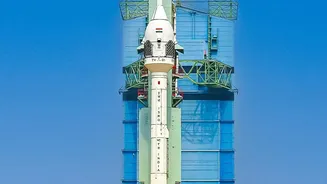
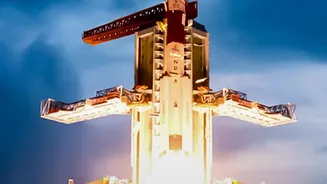
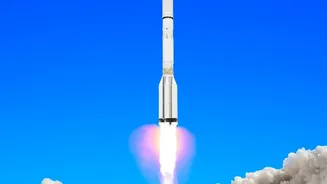
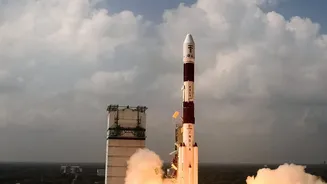
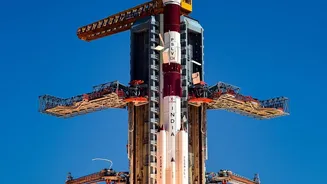
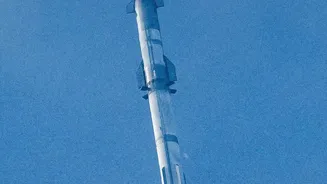
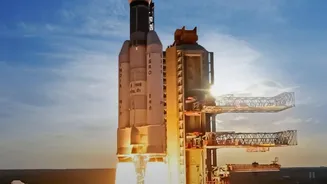
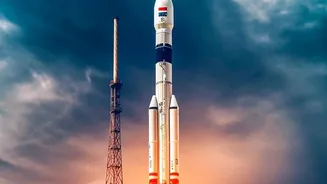
On November 18, 2022, all the planning, engineering, and investment culminated in a plume of smoke and fire on the launchpad at Sriharikota. Under the mission name 'Prarambh' (The Beginning), Skyroot launched Vikram-S, a suborbital rocket. The rocket soared to an altitude of 89.5 kilometers, successfully validating its core technologies in a real-world flight. It was the first-ever rocket launch by a private company in India, a historic moment for the nation's burgeoning space ecosystem. For the investors who had backed the company, it was the ultimate validation. The faith they had placed in a team with a powerful vision and a detailed plan, but no flight history, had been vindicated in the most spectacular way possible.