




A Key Regulatory Hurdle Cleared
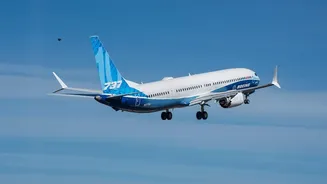
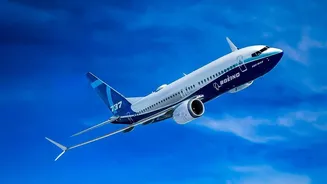
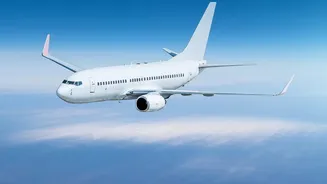
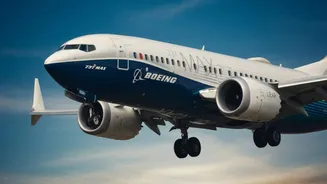
The U.S. Federal Aviation Administration (FAA) has granted an amended type certificate for the Boeing 737 MAX 7, the smallest model in the MAX family. This certification, announced on August 3, 2026, formally clears the aircraft for commercial service
after an approval process that spanned nearly a decade. The sign-off came after Boeing completed extensive and complex technical work mandated by the regulator. The approval is a significant moment for Boeing, which has been under intense scrutiny following two fatal crashes in 2018 and 2019 and a subsequent series of high-profile quality control failures.
The Required Technical Fixes
The path to certification was long because the FAA demanded significant changes to enhance safety. Before granting approval, the agency required Boeing to implement several key improvements. These included updating the plane's flight-control software, enhancing the flight crew alerting system to provide clearer information to pilots, and a complete redesign of the engine anti-ice system. The anti-ice system issue was a major technical hurdle, as an earlier proposed fix was found to create a separate safety hazard, forcing engineers to develop a new solution. The extensive review process involved over 1,000 hours of ground and flight testing and was guided by new, stricter certification laws passed by the U.S. Congress.
The Long Road to This Point
This moment cannot be understood without context. The entire 737 MAX fleet was grounded globally for 20 months following the crashes of Lion Air Flight 610 and Ethiopian Airlines Flight 302, which killed 346 people. Investigations revealed flaws in the plane's design, particularly the Maneuvering Characteristics Augmentation System (MCAS) software. More recently, a January 2024 incident involving a door plug blowing out mid-flight on an Alaska Airlines MAX 9 jet led the FAA to cap Boeing's production and intensify its oversight of the company's manufacturing processes. This series of events shattered confidence and forced a top-to-bottom re-evaluation of both Boeing's safety culture and the FAA's certification methods.
What This Means for Boeing and Airlines
The certification of the MAX 7 is a crucial step toward financial and industrial recovery. It allows Boeing to begin preparing for deliveries to customers, most notably Southwest Airlines, which is the launch customer with hundreds of orders. Deliveries are expected to begin in 2027. The MAX 7 is the longest-range member of the family and is designed for performance at high-altitude airports. Approval also provides momentum for certifying the final variant, the larger MAX 10. However, this doesn't mean an immediate return to business as usual. The FAA has made it clear that its safety inspectors will remain on-site at Boeing's production facilities to monitor manufacturing and safety culture closely. The agency has shifted from a hard production cap to a performance-based oversight model, meaning any future production increases will depend on Boeing consistently meeting quality metrics.
An Enduring Watchful Eye
While celebrating this milestone, Boeing executives acknowledge the lessons learned. In an internal memo, Commercial Airplanes CEO Stephanie Pope noted that the difficult certification process has led to a clearer understanding of regulatory requirements that will be applied to future programs like the 777X. The FAA has stressed that this approval is not a blank check. The agency will continue its enhanced oversight indefinitely. For airlines and the flying public, this certification represents a system working, albeit slowly. It demonstrates that the new, more rigorous safety checks are being enforced. The ultimate test, however, will be whether Boeing can translate these certified design changes into consistently safe and reliable production on the factory floor.