


Listening to the Deep
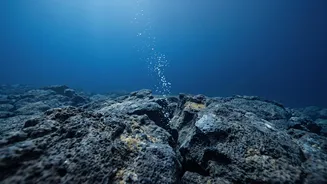
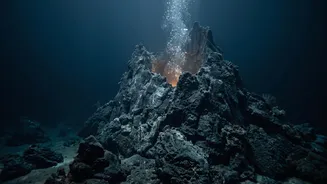
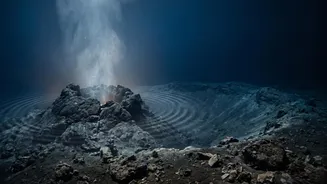
Monitoring volcanoes on land is a well-established science involving seismometers, gas sensors, and satellite imagery. Submarine volcanoes, however, are a different challenge entirely. Hidden by kilometres of water, they are notoriously difficult to observe.
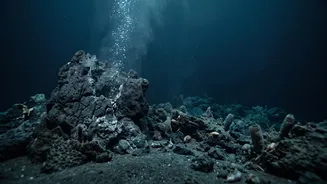
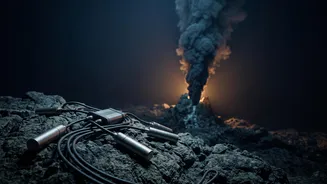
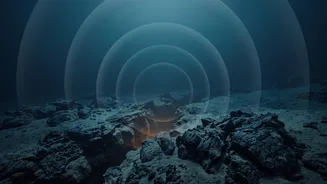
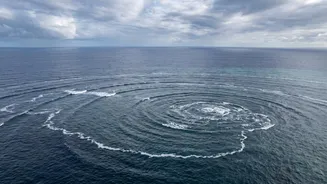
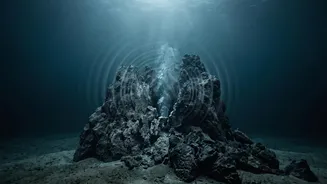
Recent breakthroughs suggest that the most effective way to track their activity may be to listen. Underwater microphones, known as hydrophones, can detect acoustic signals that travel with remarkable efficiency through water. An erupting or collapsing volcano can act like a massive bell, ringing out sounds that can journey for thousands of kilometres. These sounds, called T-waves, provide a rich source of data on processes happening deep below the waves, from submarine landslides to the explosive interaction of hot lava and cold seawater.
Lessons from the Hunga Tonga Eruption
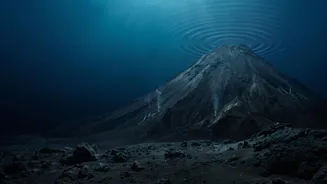
The 2022 eruption of the Hunga Tonga-Hunga Ha'apai volcano was a dramatic and tragic reminder of the power of these underwater giants. It sent atmospheric pressure waves around the globe and triggered devastating tsunamis. In the aftermath, scientists re-analysing the event made a crucial discovery. While conventional seismic monitors, often located far from the volcano, provided a muted and incomplete picture, hydroacoustic data told a clearer story. Researchers found that the most destructive tsunami was not caused by the initial explosion, but by the collapse of the volcano's caldera about 90 minutes later. This collapse generated a massive and distinct underwater sound signal, a powerful 'boom' that was detected by seismic stations as far as 2,600 kilometres away.
A Race Against the Wave
This discovery is pivotal because of one simple fact: sound travels much faster than a tsunami. The acoustic waves generated by a caldera collapse or an underwater landslide move through the ocean at about 1.5 kilometres per second. A tsunami wave, by contrast, travels at a much slower pace, though still incredibly fast for an ocean wave. This speed difference creates a precious time window. By detecting the tell-tale acoustic signature of a tsunami-generating event, an alert could potentially be issued well before the devastating waves make landfall. This could give coastal communities crucial extra minutes or even hours to evacuate, a significant improvement on current systems which struggle to predict non-earthquake-related tsunamis.
Building the Future of Warnings
The goal now is to turn this scientific insight into a practical early-warning tool. This involves creating systems that can automatically detect and identify the specific acoustic signatures of dangerous volcanic processes amidst the ocean's general background noise. Scientists are using data from past events, like Hunga Tonga and eruptions offshore of Mayotte in the Indian Ocean, to build a library of these sounds. Networks of autonomous hydrophones and even specialised freely drifting floats are being tested as ways to create a more comprehensive listening network across the vast oceans. The idea is to combine this hydroacoustic data with information from satellites and seismic networks to create a multi-layered warning system that gives a more complete picture of what is happening both above and below the water.
Challenges on the Horizon
While the promise of acoustic monitoring is significant, challenges remain. The ocean is a noisy place, filled with sounds from shipping, marine life, and earthquakes, and distinguishing a specific volcanic signal requires sophisticated analysis. Furthermore, the way sound travels can be affected by seafloor topography and water conditions, which can complicate the process of pinpointing a sound's origin. However, researchers are encouraged by the progress. Other studies, such as those at Kīlauea in Hawaii, are even using the ambient noise of ocean waves crashing on the shore to detect changes in the magma chambers below. As magma moves, it opens or closes small cracks in the rock, which subtly changes the speed at which these background sounds travel, offering another clue that an eruption may be imminent. Each new study adds another layer of understanding, bringing us closer to a future where we are no longer surprised by these powerful geological events.