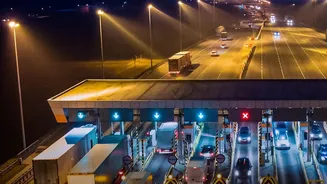





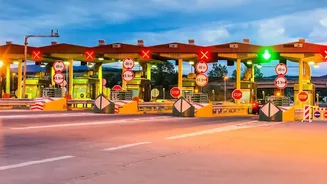


The Deal Behind the Drive
Many of India's national highways are built and managed through Public-Private Partnerships (PPPs). Under popular models like Build-Operate-Transfer (BOT), a private company, known as a concessionaire, funds and constructs a highway. In return, the government
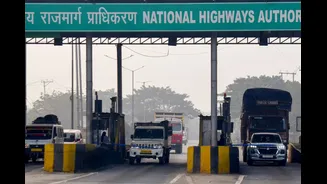
grants it the right to operate the road and collect tolls from commuters for a long, fixed period—typically 20 to 30 years. This approach allows the government to accelerate infrastructure development without bearing the massive upfront costs. The National Highways Authority of India (NHAI) is the central agency that oversees these projects, from bidding to monitoring. Over 30% of India's national highways have been developed through such PPP models.
Locked in by Design
The core of a concession agreement is stability. To secure billions in financing from banks and investors, private developers need a predictable and guaranteed revenue stream. The contract, or Model Concession Agreement (MCA), specifies nearly everything in advance: the construction standards, maintenance schedules, and, crucially, the toll rates. These rates are often tied to a predetermined formula, allowing for fixed annual increases, but leaving little room for other adjustments. Any attempt by the government to unilaterally change these terms—for example, by lowering tolls in response to public outcry—would constitute a breach of contract. This could trigger significant legal and financial penalties, including termination payments that compensate the concessionaire for its investment and debt.
A Double-Edged Sword for Commuters
For the government, the PPP model is a powerful tool for rapid infrastructure growth. It brings private sector efficiency and capital to public projects. However, for road users, the model presents a clear trade-off. The primary benefit is access to modern, well-maintained highways that might not have been built otherwise. The downside is the inflexibility. Commuters are locked into toll payments for the entire concession period, regardless of changing economic conditions or public sentiment. The system is designed to protect the private investment, meaning the contract's terms often take precedence over the public's desire for lower costs or operational changes. This rigidity is a feature, not a bug, ensuring that the project remains financially viable for the concessionaire.
When the Contract Clock Runs Out
True change becomes possible only when the concession period ends. At the conclusion of the contract, the private company transfers the road back to the government authority, typically the NHAI. At this point, the government has several options. It can decide to stop collecting tolls altogether, reduce the rates to cover only maintenance costs, or issue a new tender for another company to operate and maintain the road under entirely new terms. This is the moment the headline refers to: the transfer of the asset back to public control allows for a complete reset of its operating rules. Similarly, if a concessionaire defaults or sells its stake, the contract may be transferred to a new entity, which can sometimes open the door for renegotiation, though this is less common than waiting for the contract to expire naturally.