


What is SMOPS-2026?
SMOPS stands for the International Conference on Spacecraft Mission Operations. The 2026 edition, held from April 8-10 in Bengaluru, was the second of its kind. Jointly organised by the Indian Space Research Organisation (ISRO), the Astronautical Society
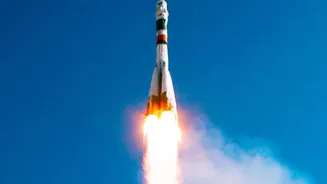
of India (ASI), and the International Academy of Astronautics (IAA), the event brought together global space agencies like NASA and ESA, private companies, and academics. The theme was "Innovative Operations for Smart and Sustainable Space Mission Management". Simply put, it was a gathering of the world's top minds to discuss the future of flying and managing things in space, from single satellites to complex interplanetary missions.
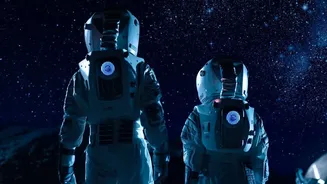
The Rise of the AI Astronaut
While not a person, Artificial Intelligence was the star of the show. According to ISRO Chairman Dr. V Narayanan, AI and machine learning have shifted from being theoretical concepts to essential tools for modern space missions. This technology is seen as pivotal for enabling more autonomous and efficient mission operations. The focus is on creating a synergy between humans and machines, where AI takes on routine tasks, analyzes vast amounts of data, and even helps a spacecraft make decisions on its own. ISRO itself successfully used AI and machine learning during its landmark Chandrayaan-3 moon landing mission.
Cutting the Cord from Ground Control
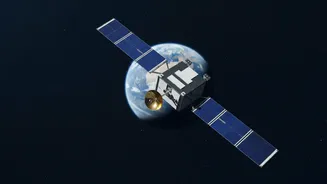
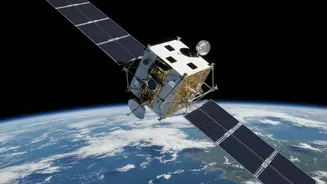
Traditionally, every action a spacecraft takes is commanded from a ground station. This requires constant communication and a large team of operators. Lessening this dependence is crucial for several reasons. For deep-space missions, the communication delay can be significant, making real-time control impossible. In Earth orbit, reducing reliance on ground stations lowers operational costs and frees up human experts to focus on more complex problems. Furthermore, in a contested space environment, ground stations could become vulnerable. Autonomous spacecraft are more resilient and can continue their mission even if communication links are disrupted. A recent US Air Force experiment, for instance, successfully used a neural network to control a satellite's orientation without human input, proving the concept's viability.
How AI is Changing Operations
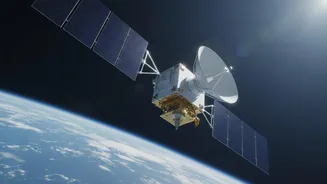
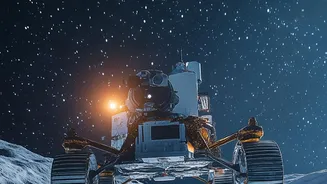
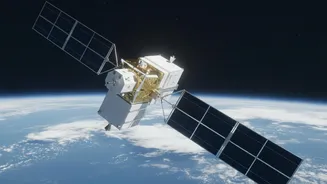
At SMOPS-2026, discussions covered how AI can be applied across the board. This includes managing large constellations of satellites, where an AI can optimize the network, handle data traffic, and monitor the health of hundreds of spacecraft simultaneously. For robotic exploration missions, like Mars rovers, AI enables the machine to navigate terrain and make scientific observations without waiting for instructions from Earth. AI-powered analytics can process sensor data far faster than a human, identifying anomalies or objects of interest, which is critical for space domain awareness—essentially, keeping track of everything orbiting our planet to avoid collisions.
Challenges and the Human Role
Handing control over to an algorithm doesn't come without challenges. One of the key themes at the conference was addressing the complexities and risks. This includes ensuring the cybersecurity of AI systems to prevent hacking and developing robust software that can handle unexpected situations. There's also the major challenge of increasing space traffic and the need for better regulation and coordination, tasks that AI can help manage but ultimately require international agreement. The goal is not to remove humans from the equation entirely, but to elevate their role. Instead of being constant operators, they become mission supervisors, overseeing the AI, setting strategic goals, and intervening only when necessary.