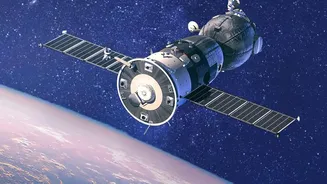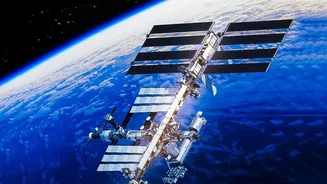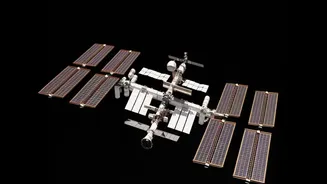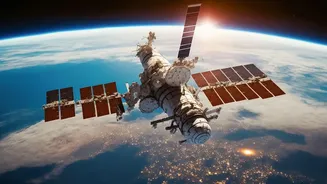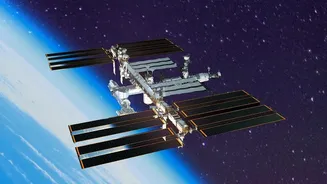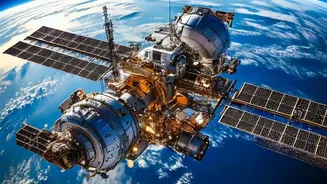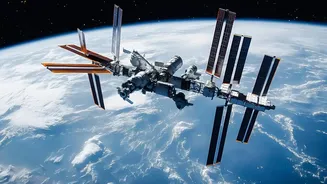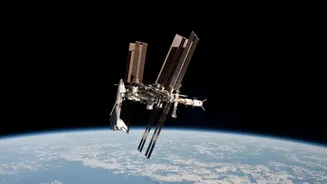






The International Space Station, humanity's orbital home for over two decades, just received a critical power boost. A recently completed, multi-year upgrade has revitalized its aging energy grid, ensuring the laboratory can continue its mission.
An Aging Grid in Orbit
Just
like infrastructure on Earth, the systems that keep the International Space Station (ISS) running require maintenance and upgrades. The station's original, massive solar arrays were a marvel of engineering when first deployed between 2000 and 2009. Designed with a 15-year lifespan, they have served admirably for over two decades. However, the harsh environment of space—relentless solar radiation and constant strikes from micrometeoroids—has taken a toll. Over the years, this degradation has gradually reduced their power output, just as the demand for electricity on board has grown with more sophisticated scientific experiments and operational needs. Before the upgrades began, the station's power generation had fallen to about 160 kilowatts.
A High-Tech Solution: iROSA
Instead of a costly and complex mission to replace the enormous original arrays, NASA and its partners devised an ingenious solution: augmentation. The answer came in the form of ISS Roll-Out Solar Arrays, or iROSAs. These new, smaller, and more efficient arrays are designed to be installed directly over a portion of the old ones. Using advanced, more compact solar cell technology, each iROSA generates a significant amount of power despite its smaller size. They work in tandem with the unshaded portions of the original arrays, boosting the overall power supply. This clever overlay strategy allowed NASA to significantly increase the station's electrical capacity without removing the existing infrastructure.
A Marathon of Spacewalks
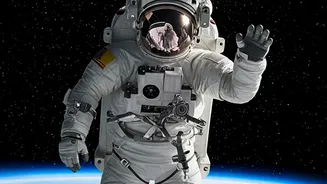
Installing the eight iROSA units was a monumental task that began in June 2021 and concluded in November 2026. The project required a total of 18 spacewalks by multiple astronaut crews to prepare the mounting sites and install the arrays. The final two arrays were installed in late October and early November 2026 by NASA astronaut Anil Menon and Canadian Space Agency astronaut Joshua Kutryk. During a series of spacewalks, each lasting around seven hours, the astronauts worked meticulously to maneuver the 750-pound (340-kilogram) arrays into position, bolt them onto the station's truss structure, and connect the complex electrical systems. The work demanded precise coordination between the spacewalkers and the ground controllers in Houston, who often operated the Canadarm2 robotic arm to assist in moving the bulky hardware.
What More Power Actually Means
With the eighth and final iROSA now deployed, the station's total available power has been boosted from 160 kilowatts to approximately 215 kilowatts—an increase of about 30 percent. This additional power is not just a number; it is the lifeblood of the station's future. It allows for more scientific experiments to run simultaneously, from medical research to technology demonstrations for future missions to the Moon and Mars. It also provides the necessary energy to support the station's life support systems, computers, visiting spacecraft, and the growing number of commercial activities in low-Earth orbit. This upgrade essentially secures the ISS's operational viability through its planned retirement in 2030, ensuring it can continue to serve as a premier microgravity laboratory.