





The Cost of Confusion
Misinterpreting food date labels is a major contributor to household food waste in India and across the globe. A study in India confirmed that while most people check labels, many misunderstand terms like 'Best Before', treating it as a strict deadline
for consumption. This confusion leads to perfectly edible food being thrown away, which not only wastes money but also puts unnecessary strain on our environmental resources. The array of terms—'Best Before', 'Use By', 'Expiry Date'—can be baffling, but they are not interchangeable. Each serves a distinct purpose, signalling either quality or safety.
‘Best Before’: A Mark of Quality, Not a Safety Warning
The 'Best Before' date is about sensory quality. It tells you the period during which the food will be at its peak freshness, taste, and texture. It is commonly found on a wide range of products like biscuits, chips, cereals, canned goods, and spices. Food is generally safe to eat after its 'Best Before' date, but it might not taste as good as it once did. For example, a biscuit might be less crisp or a spice might be less fragrant. So, before you toss that packet of snacks that's a few days past its 'Best Before' date, it’s worth checking if it still looks, smells, and tastes acceptable.
‘Use By’ and ‘Expiry Date’: Your Safety Deadline
Unlike 'Best Before', the 'Use By' or 'Expiry Date' is a safety instruction. This label is applied to highly perishable goods like dairy products, fresh meat, poultry, and ready-to-eat salads. You should not consume these foods after the 'Use By' date, even if they look and smell fine, as they could contain harmful bacteria that cause food poisoning. The Food Safety and Standards Authority of India (FSSAI) mandates a 'Use By' or 'Expiry Date' for certain products, including infant food, to ensure consumer safety. For these items, the date is a firm deadline and should always be followed.
Decoding ‘Sell By’ and Other Retailer Dates
You might also encounter a 'Sell By' date on packaging. This date is not for you, the consumer; it's an instruction for the retailer. It helps the store manage its inventory by indicating how long a product should be displayed for sale. Food is still safe to consume after the 'Sell By' date, provided it has been stored properly. For instance, milk is often good for about a week after its 'Sell By' date if refrigerated correctly. Other codes, often a series of letters and numbers, are typically 'Pack Dates' used by manufacturers for tracking and are not meant to guide consumers on shelf life.
Beyond the Label: Trust Your Senses
While labels are important guides, they aren't the only tool at your disposal. For foods past their 'Best Before' date, your senses are your best ally. Before consuming, inspect the food. Does it look right? Is the colour and texture as expected? Is there any sign of mould? Give it a sniff. An off-odour is a clear warning sign. If it passes the sight and smell test, and it's a food that is safe to taste-test (avoid this with high-risk 'Use By' items), a small bite can tell you if the quality has deteriorated. This sensory check can prevent a lot of unnecessary waste.
Smart Storage for a Longer Shelf Life
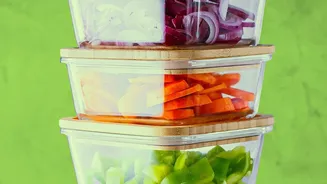
How you store your food is just as important as reading the label. Proper storage can significantly extend the freshness and safety of your groceries. For example, milk and dairy products should be kept in the coldest part of the fridge, like the back of the bottom shelf, not in the door where temperatures fluctuate. Store leafy greens in moisture-resistant bags, but wait to wash most produce until you're ready to use it, as excess moisture can speed up spoilage. Understanding and implementing correct storage practices can help you get the most out of your food, long before the date label even becomes a concern.