








A single piece of networking equipment, no bigger than a suitcase, is now at the center of a major investigation after it triggered a nationwide shutdown of American airspace, grounding thousands of flights and stranding countless passengers.
The Day the Skies Stood Still
On the afternoon
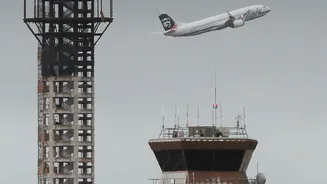
of Friday, November 13, the U.S. Federal Aviation Administration (FAA) took the extraordinary step of ordering a nationwide ground stop, halting all departing flights for more than four hours. The measure, only the third of its kind in American history, was prompted by a sudden and spreading instability in the communication network that air traffic controllers use to guide aircraft. While planes already in the air were able to land safely, the disruption cascaded through the system, leading to the cancellation of over 12,000 flights over the weekend and affecting more than a million travelers. The chaos highlighted the vulnerability of the national aviation network to a single point of failure.
The Router in Question
Investigators quickly zeroed in on a surprising culprit: a newly installed router at a remote FAA communications site in El Dorado, Arkansas. The device was being installed by government contractor L3Harris as part of a long-overdue project to upgrade the FAA’s ageing telecommunications infrastructure from copper wires to modern fiber-optic cables. Instead of a seamless upgrade, the new router allegedly began flooding the network with an overwhelming number of connection attempts—about 1,000 every four to five seconds. This data deluge overwhelmed older equipment across the network, causing instability in radar and communication feeds at 17 of the FAA’s 22 en-route air traffic control centers.
An Investigation Underway
The FAA, along with Transportation Secretary Sean Duffy, has launched a full investigation to determine the root cause, with officials stressing that a cyberattack has been ruled out. The key questions are whether the failure was due to faulty equipment, an installation error by the contractor, or an inherent incompatibility between the new Juniper router and the FAA's legacy Cisco systems. The suspect router has been sent to an L3Harris lab in Florida for analysis, with representatives from the FAA, router manufacturer Juniper, and even the FBI on hand to oversee the process. In the meantime, the FAA has paused further router installations and disabled certain functions on 60 similar routers as a precaution.
A System's Achilles' Heel
The incident has put a harsh spotlight on the fragility of America’s critical aviation infrastructure. For years, government oversight reports have warned that the system was antiquated and vulnerable, with some components dating back decades. The fact that a routine upgrade—an action meant to improve the system—was the very thing that brought it down is a source of major concern. It demonstrates that even without malicious intent, a single point of failure can cascade through the network and bring the nation’s air travel to a halt. This has renewed urgent calls from officials for increased funding to accelerate the modernization of the entire network, not just patch it with individual upgrades.
What Happens Now?
The findings of the investigation will have significant consequences. If the contractor, L3Harris, or the manufacturer, Hewlett Packard Enterprise (which owns Juniper), are found to be at fault, they could face serious repercussions. However, some experts express skepticism that a single router could cause such a catastrophic, network-wide failure, suggesting the underlying architecture itself lacks sufficient redundancy. Regardless of the specific cause, the episode has strengthened the case for a fundamental overhaul of the FAA's telecommunications system. For travelers, the FAA has stated the immediate issue is resolved, but the incident serves as a stark reminder of the complex and sometimes fragile technology that keeps the skies safe.