





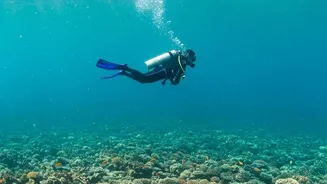
Redefining Success Underwater
For many beginners, there is a temptation to measure a first dive by its depth or duration. But experienced divers and instructors will tell you the true measure of success is far more personal: it's about comfort and control. Feeling anxious before taking
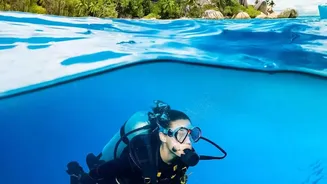
your first breath underwater is completely normal. After all, we are land-based creatures. The goal of an introductory dive, often called a Discover Scuba Dive, is not to push your limits, but to allow you to experience breathing underwater in a calm, supervised setting. When you feel in control, your breathing slows, your movements become more deliberate, and you can truly absorb the incredible new environment around you. A dive that feels good is a dive that has gone right.
Your Instructor Is Your Guide
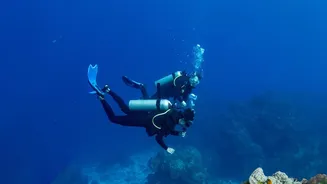
The single most important factor in a comfortable first dive is your instructor. A great instructor is more than a teacher; they are your guide and safety officer, responsible for making you feel secure from the moment you meet. When choosing a dive centre, don't hesitate to ask questions. How long have they been teaching? How many students are in a group? A smaller group means more individual attention. A good instructor will be patient, clear in their explanations, and passionate about diving. Crucially, tell them if you're nervous. This allows them to adjust the pace and provide the support you need, ensuring they stay close and offer one-on-one help.
Trust the Training Process
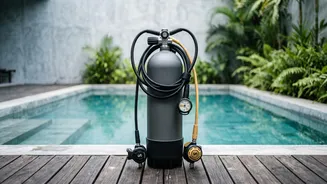
A structured introductory experience is designed to build your confidence step-by-step. It always begins with a pre-dive briefing where you'll learn about the gear, basic safety rules, and hand signals. You will start in a pool or very shallow, calm water to simply get used to breathing through a regulator. This is your time to acclimate. Don't rush it. Focus on slow, deliberate 'Darth Vader' breaths—a long, full inhale, followed by a long, full exhale. This practice in a controlled environment is designed to show you that the equipment works, the air is flowing, and you are in command before you ever descend into deeper water.
Mastering the Art of 'Doing Nothing'
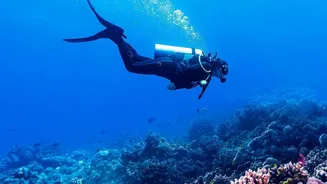
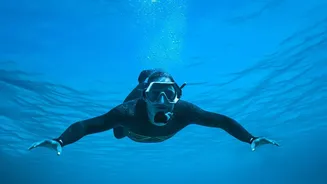
One of the most essential skills in diving is buoyancy control—the ability to hover weightlessly, neither sinking nor rising. While you won't perfect it on your first go, the principle is key to comfort. A diver with poor buoyancy control is often working hard, kicking and using their hands, which uses more energy and air. A calm diver moves less. Your instructor will manage your buoyancy equipment (the BCD, or buoyancy control device), but you can help by keeping your body relaxed and your breathing steady. Resisting the urge to kick or wave your arms is a huge step toward feeling stable and in control. The less you fight the water, the more comfortable your dive will be.
Embrace the Underwater World
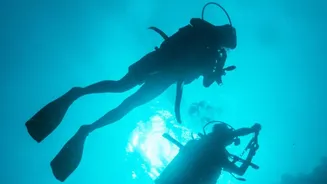
Once you descend with your instructor, the focus shifts from the technical to the experiential. Move slowly. The slower you go, the more you see and the less air you use. Stay close to your guide; they are your point of reference and safety. Try to quiet the analytical part of your brain and simply observe. Notice the way light filters through the water, the colours of the coral, and the small fish that dart in and out of view. Many common fears, like running out of air or encountering scary marine life, are extremely unlikely and are addressed by the strict safety protocols every professional follows. Your instructor is constantly monitoring your air and the environment, leaving you free to enjoy the moment.