





The Rapid Descent Explained
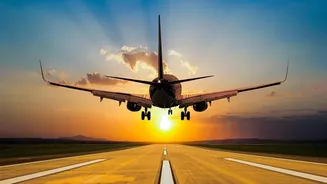
That stomach-in-your-throat feeling of a quick descent can be alarming, but it’s rarely a sign of trouble. Pilots differentiate between a normal descent and a rapid one, and even a 'rapid' descent is a highly controlled maneuver. A standard descent is gentle,
often around 700 feet per minute, designed for passenger comfort. However, sometimes a faster rate is needed. It’s important to distinguish this from falling; the aircraft is always flying under the complete control of the pilots, who are deliberately changing altitude. Think of it less like dropping and more like a car purposefully going down a steep hill while remaining in full control.
Routine Reasons for a Quick Drop
More often than not, a speedy descent is initiated for entirely routine, non-emergency reasons. Air Traffic Control (ATC) might instruct pilots to descend quickly to maintain safe spacing between aircraft or to fit into a busy arrival sequence at the destination airport. This is sometimes called a 'slam-dunk' approach. Another common cause is weather. Pilots may descend to find smoother air and avoid turbulence, or to get below developing weather systems or icing conditions. In some cases, if a flight has a strong tailwind and is ahead of schedule, pilots might perform a quicker descent to meet their planned arrival time, saving fuel by staying at a higher altitude for as long as possible.
The Real (and Rare) Emergency
In the rare event of a true emergency, a rapid descent is a critical safety procedure. The most common reason for a declared emergency descent is a loss of cabin pressure. Aircraft are pressurized to a comfortable 'cabin altitude' of around 8,000 feet. If that pressure is lost, pilots are trained to immediately and safely bring the plane down to an altitude below 10,000 feet, where the air is dense enough to breathe without supplemental oxygen. This is when you would see oxygen masks deploy. While it feels dramatic, this is a well-rehearsed drill. Pilots reduce engine power, often deploy speed brakes to increase drag, and follow a specific, high-speed profile to descend as quickly and safely as possible, all while communicating with ATC to ensure the path below is clear.
Flying in Circles: The Holding Pattern
If you notice your plane making repeated, long turns instead of heading straight for the airport, you're likely in a 'holding pattern'. This is essentially a designated waiting area in the sky. Far from being a sign of being lost, it’s a highly structured procedure used by Air Traffic Control to manage the flow of aircraft. Pilots are instructed to fly a specific, racetrack-shaped path over a designated navigation point, known as a 'fix'. This keeps the aircraft safely within a protected block of airspace while it waits for clearance to land. Standard patterns involve one-minute straight legs and 180-degree turns, ensuring the procedure is predictable and safe.
Why Planes Are Asked to Hold
Holding patterns are the aviation equivalent of a traffic light, used by ATC to press pause on arrivals. There are several common reasons for this. The most frequent is airport congestion; simply put, more planes are scheduled to arrive than the runway can safely handle at that moment. Weather is another major factor. Thunderstorms, strong crosswinds, or low visibility can reduce the rate at which planes can land, causing a backlog that needs to be managed. Other reasons can include a temporary runway closure for an inspection or to clear debris, or to give a preceding aircraft that had a minor issue time to clear the runway. When you are placed in a hold, ATC will give your pilots an 'Expect Further Clearance' (EFC) time, so they have a clear idea of how long the delay might be.