





A Match Made Across the Cosmos
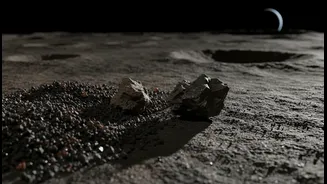
Scientists at Ahmedabad's Physical Research Laboratory (PRL) have made a groundbreaking connection. By analysing data from the Pragyan rover's Alpha Particle X-ray Spectrometer (APXS), they found that the soil composition at the 'Shiv Shakti' landing
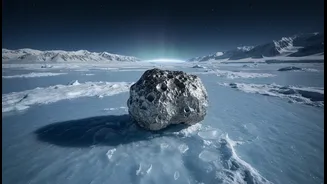
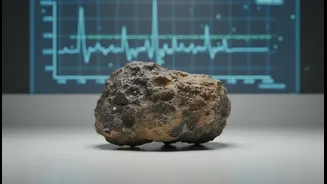
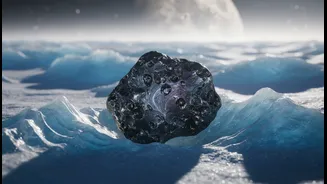
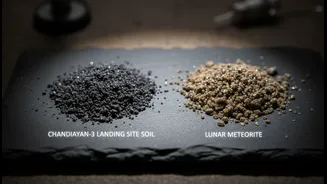
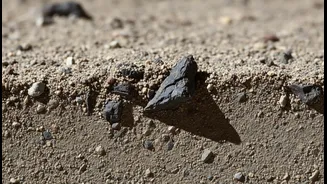
point is a near-perfect match to a meteorite known as ALHA 81005. This specific meteorite holds a special place in science; discovered in Antarctica's Allan Hills in 1982, it was the very first rock on Earth to be officially identified as originating from the Moon. The new study compared the rover's findings against 66 known lunar meteorites, and ALHA 81005 emerged as the closest chemical relative.
The Chemistry of Connection
The link isn't just a vague resemblance; it's in the specific elemental recipe. The soil at Shiv Shakti and the meteorite ALHA 81005 both show unusually low levels of aluminium oxide and high levels of iron and magnesium oxides compared to typical lunar highlands. For example, the soil at the landing site contains about 26.1% aluminium oxide, while the meteorite has 25.8%—both significantly less than the highland average of around 29.6%. Conversely, the combined iron and magnesium oxide content is around 14.4% at Shiv Shakti and 13.7% in the meteorite, nearly double the typical highland amount. This places both samples in a rare compositional category between two major lunar rock types, known as ferroan anorthosites and Mg-suite rocks.
What Does This Similarity Mean?
It's important to clarify that this doesn't mean the meteorite was blasted off from the exact spot where Chandrayaan-3 landed. Instead, it signifies that both the Shiv Shakti region and the area where the meteorite originated represent a similar, and somewhat unusual, type of magnesium-rich lunar crust. This finding is crucial because it helps scientists create a 'ground truth' link between samples we have on Earth (meteorites) and their potential source regions on the Moon. It validates the use of lunar meteorites as reliable, albeit randomly delivered, samples of the Moon's diverse geology.
The Secrets of Shiv Shakti Point
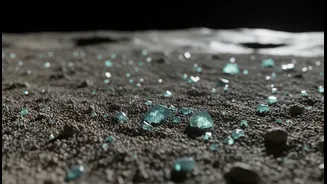
The discovery also reinforces how special the Chandrayaan-3 landing site is. Scientists believe the soil there isn't just from the surface. The region is about 350 km from the massive South Pole-Aitken (SPA) basin, one of the largest impact craters in the solar system. The colossal impact that created the SPA basin billions of years ago would have excavated rock from deep within the Moon's crust and mantle, scattering it across the surrounding landscape. The unique chemical signature at Shiv Shakti, rich in magnesium and iron, is thought to be evidence of this ancient, deep-seated material being mixed into the surface soil.
A New Chapter for Lunar Science
This research, published in the journal 'npj Space Exploration', is a landmark for ISRO and the global scientific community. It is one of the first studies to establish such a direct correlation between on-site measurements from a lunar mission and the existing collection of lunar meteorites on Earth. This breakthrough not only deepens our understanding of how the Moon's ancient crust was formed but also supports the 'Lunar Magma Ocean' hypothesis—the idea that the Moon was once covered in a sea of molten rock. The findings from Chandrayaan-3 provide a vital piece of the puzzle, helping us understand the geological story written across the Moon's surface over billions of years.