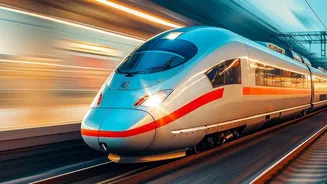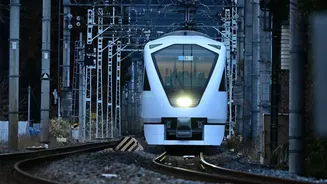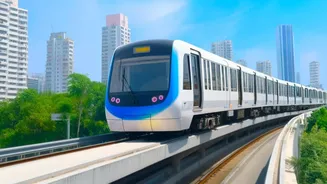




A New Era of Speed
The much-anticipated Mumbai-Ahmedabad High-Speed Rail Corridor is gearing up for its first critical test. According to Union Railway Minister Ashwini Vaishnaw, trial runs for India's first bullet train are expected to commence between May and June 2027.
This marks a pivotal moment for the 508-kilometre-long project, which has been under intense public and governmental scrutiny since its foundation stone was laid in 2017. The initial trials will focus on a specific, nearly completed section of the corridor, likely between Surat and Bilimora in Gujarat. This phase is essential for testing the track, signalling systems, and the Japanese Shinkansen-based rolling stock at operational speeds of up to 320 kmph.
The Journey from Gujarat to Maharashtra
The project's progress has been a tale of two states. In Gujarat, construction has moved at a brisk pace, with large sections of the elevated viaduct, piers, and station superstructures now visible. The National High Speed Rail Corporation Ltd (NHSRCL), the body executing the project, reports that work on stations like Surat, Vapi, and Bharuch is in advanced stages. In contrast, the project faced significant delays in Maharashtra, primarily due to prolonged challenges in land acquisition. However, recent progress has been substantial, with construction now in full swing across the 135-km Maharashtra stretch. Officials have confirmed that over 100 km of pier work is complete in the state, signalling that the most significant hurdles have been overcome and enabling a more unified construction push along the entire route.
What a Trial Run Entails
A trial run is far more than just putting a train on the tracks. For a project of this complexity, it involves a rigorous and phased testing process. Initially, the trainsets, including the first indigenous body frame which has been sent for structural testing, will be tested at low speeds. Gradually, engineers will increase the speed to test the stability of the train and the integrity of the J-Slab ballastless track system. The trials, expected to last two to four months, will also validate the advanced 2x25 kV overhead electrification and the DS-ATC signalling systems, which are crucial for ensuring the safety and reliability required for operations at 320 kmph. This phase is critical to ironing out any issues before the line can be certified for passenger service.
Phased Opening and Final Completion
While the trial runs are a major step, the entire 508-km corridor will not open at once. The initial commercial service is expected to launch on the Gujarat section, with the Surat-Bilimora stretch being the likely first candidate for public use by August 2027. Following successful testing, this will be followed by other sections within Gujarat. The complete corridor, connecting Mumbai's Bandra Kurla Complex (BKC) to Sabarmati in Ahmedabad, is now targeted for completion by 2029. The BKC station itself is an engineering marvel, being constructed nearly 30 metres underground to seamlessly integrate with Mumbai's dense urban landscape. When fully operational, the bullet train will slash the travel time between the two financial hubs from over six hours to just under two hours for limited-stop services.