







The Seasonal Strawberry Struggle
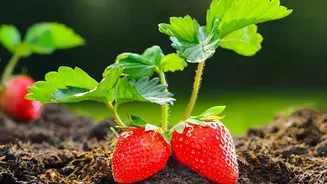
Traditionally, strawberry cultivation in India is a short-lived affair, confined mainly to the winter season from November to March. Regions like Mahabaleshwar in Maharashtra, which account for about 85% of India's total production, rely on their cool
climate and specific soil conditions to produce the beloved berry. This seasonality creates a significant challenge for farmers. They face immense pressure to maximize their harvest in a small window, while being vulnerable to unpredictable weather like unseasonal rains, which can ruin an entire crop at its peak. Furthermore, traditional soil-based farming involves high labour costs for tasks like weeding, and the constant threat of soil-borne diseases and pests often necessitates chemical treatments.
Enter Hydroponics: A Soil-Free Solution
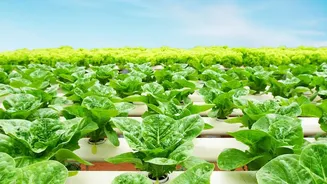
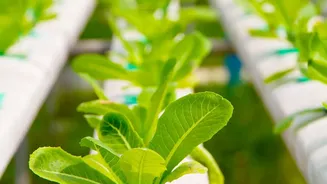
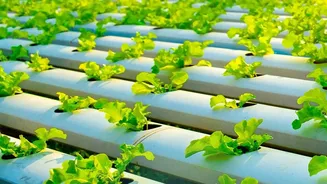
Hydroponics offers a revolutionary alternative by completely eliminating the need for soil. In this method, plants are grown in an inert medium like coco-peat (made from coconut husk) or simply with their roots suspended in a nutrient-rich water solution. This solution delivers a precisely controlled diet of essential minerals directly to the plant's roots. The entire setup is often housed within a polyhouse or greenhouse, creating a controlled environment where factors like temperature, humidity, and light can be managed. This protects the crop from external weather events and pests, creating a stable and predictable growing environment.
The Sweet Rewards for Farmers
The shift to hydroponics presents numerous advantages for Indian farmers. The most significant is the ability to break free from seasonal constraints and cultivate strawberries year-round, ensuring a continuous supply and steady income. This method can lead to yields that are 30-50% higher than soil-based farming because the controlled environment optimizes plant growth. Vertical farming techniques, where plants are stacked in layers, can multiply production capacity by up to five times on the same piece of land. Hydroponics is also incredibly water-efficient, using up to 90% less water than traditional methods, as the water is recycled within the system. Moreover, the absence of soil dramatically reduces the incidence of soil-borne diseases, leading to healthier crops with fewer pesticides.
Growing Beyond Traditional Borders
One of the most exciting aspects of hydroponics is its potential to democratize strawberry cultivation. This technology allows for the fruit to be grown in regions previously considered unsuitable due to climate or soil type. From urban rooftops in Mumbai to farms in Uttar Pradesh, entrepreneurs and farmers are successfully cultivating strawberries far from their traditional hilly homes. This decentralization not only brings the produce closer to consumers, reducing transport costs and ensuring freshness, but it also opens up new economic opportunities for farmers across the country. Success stories, like a UP farmer who harvested five tonnes of strawberries and earned lakhs in just two months, highlight the transformative potential of the technology.
Not Without Its Challenges
Despite the clear benefits, adopting hydroponics is not a simple step. The primary barrier is the high initial investment. Setting up a small commercial hydroponic farm can cost several lakhs of rupees, with large-scale automated systems running much higher. The technology also demands a steep learning curve. As one farmer noted, “The soil is forgiving; hydroponics does not forgive.” A small mistake in managing the nutrient solution or environment can lead to a quick disaster, and the technical knowledge required for monitoring pH levels and nutrient uptake is crucial. Energy costs for running pumps and, in some cases, climate control systems can also be significant.