




The Land of the First Sun
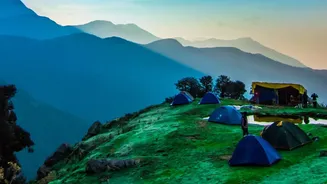
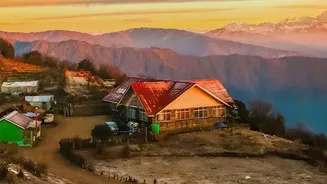
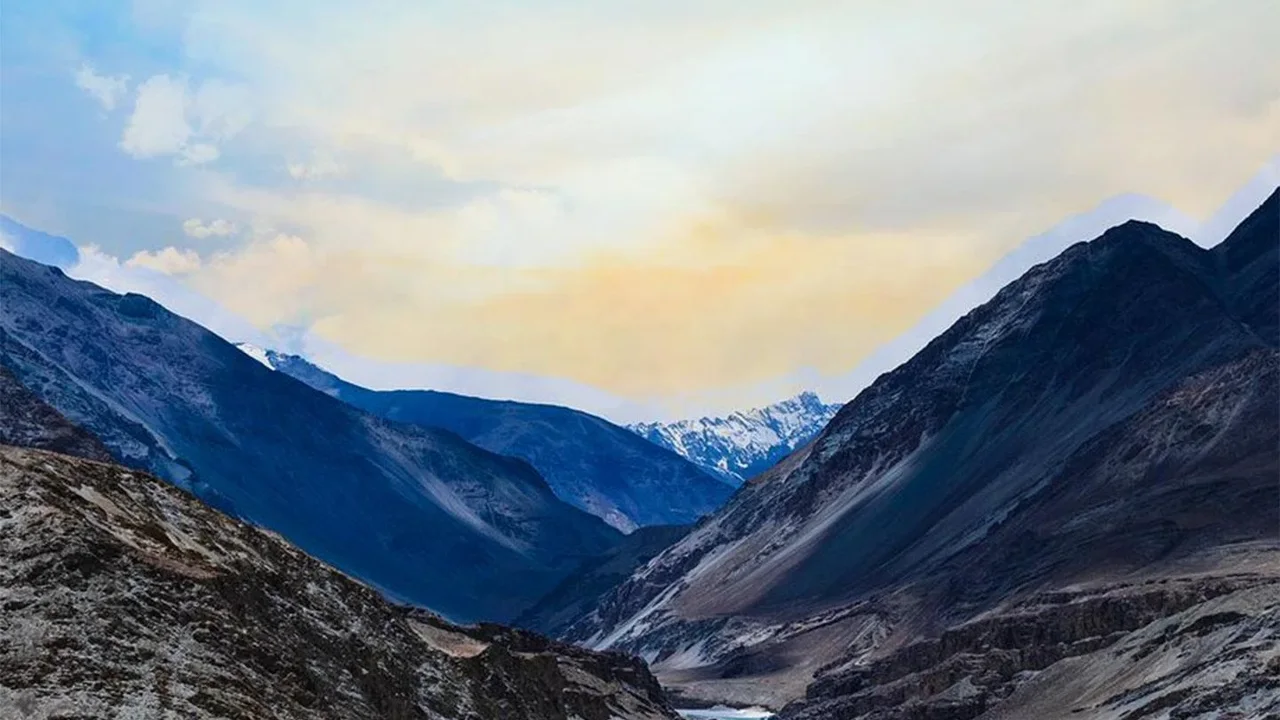
Imagine standing on a grassy plateau, shrouded in the pre-dawn chill, as the sky transforms from inky black to a canvas of orange and gold. This is the daily spectacle at Dong Valley, a place that earned its fame for being the first to witness the sunrise
in India. Located in the remote Anjaw district, near the tri-junction where India, Myanmar, and China meet, this valley offers more than just a geographical superlative. The experience became particularly famous on January 1, 2000, when people from around the world gathered to see the first sunrise of the new millennium. Ever since, it has been a pilgrimage for travellers seeking to witness the country’s first light piercing the darkness over a panorama of untouched mountains. In the peak of summer, the sun can rise as early as 4 AM, nearly two hours before it is seen in the western parts of the country.
The Predawn Journey to Millennium Point
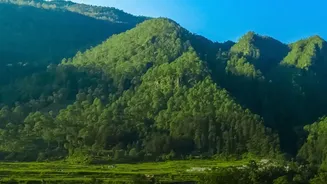
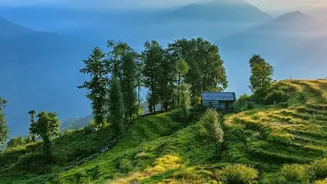
The reward of the sunrise is earned with a trek that is an adventure in itself. The journey begins in the dead of night, typically around 2 AM, from the nearby town of Walong. A short drive leads to the village of Tilam, the starting point for the eight-kilometre hike to the viewpoint often called Millennium Point. The trail, a gradual ascent through fragrant pine forests and sprawling grasslands, is undertaken in complete darkness, guided only by torchlight. The trek itself takes about one and a half to two hours, a steady climb that builds anticipation with every step. As you ascend, the sounds of the forest give way to the silence of the high-altitude meadow, where you wait for the day’s first spectacle to unfold across the eastern horizon.
Walong: The Historic Gateway
The journey to Dong is intrinsically linked with Walong, the nearest town and the administrative hub for the region. Walong itself is steeped in history and strategic significance. Situated on the banks of the Lohit River, this town was the site of one of the most intense conflicts of the 1962 Indo-China War. The Walong War Memorial stands as a solemn tribute to the soldiers who fought in the Battle of Walong. For travellers, Walong serves as the essential base, offering basic but clean homestays and the necessary provisions for the trek. It’s a place where the serene beauty of bamboo groves and rolling hills coexists with the stark reminders of its past, adding a layer of depth to the entire experience.
Beyond the Sunrise
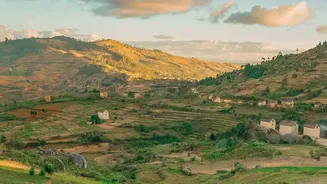
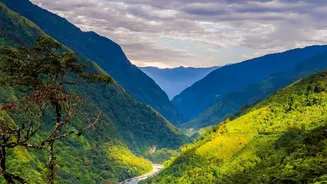
While the sunrise is the main draw, the region around Dong and Walong offers more to explore. A short distance away lies Kaho, one of India’s easternmost villages, offering a glimpse into life on the frontier. The area is crisscrossed by stunning suspension bridges over the vibrant blue waters of the Lohit River, which are an experience to walk across. Near the trek's starting point at Tilam, a natural hot spring offers a perfect opportunity to relax and soothe tired muscles after the descent. The entire valley, inhabited by the Meyor and Mishmi tribes, is a testament to a life deeply connected with nature, far from the rush of the modern world.
How to Plan Your Journey East
Reaching Dong Valley requires planning. The journey typically begins from Dibrugarh in Assam, which has the nearest major airport and railway station. From there, it’s a multi-day road trip through Tezu and Hayuliang to reach Walong. It is crucial for Indian citizens to obtain an Inner Line Permit (ILP) to enter Arunachal Pradesh, which can be applied for online. Foreign nationals require a Protected Area Permit (PAP). The best time to visit is from October to April, when the weather is pleasant and the skies are generally clear, offering the best chances for a spectacular sunrise. Packing warm clothes is essential, as even in warmer months, the pre-dawn hours are very cold.