






The Golden Spice of Meghalaya
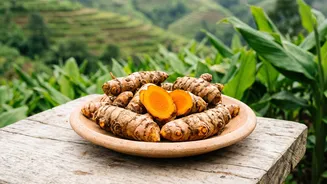
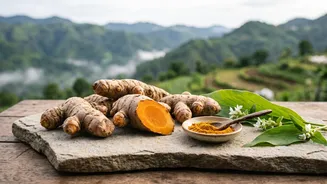
Not all turmeric is created equal. Lakadong turmeric, a variety native to the Jaintia Hills, is globally renowned for its exceptionally high curcumin content, which ranges from 7% to as high as 12%. This is significantly higher than the 2-4% found in most
other turmeric varieties. Curcumin is the active compound that gives turmeric its powerful anti-inflammatory and antioxidant properties. The unique combination of the region's high altitude, rich soil, and abundant rainfall gives Lakadong turmeric its distinct potency, deep colour, and aroma—qualities that have been impossible to replicate elsewhere. This makes it highly sought after in domestic and international markets for culinary, medicinal, and wellness purposes.
The Woman Behind the Movement
At the heart of this agricultural resurgence is Trinity Saioo, a schoolteacher from Mulieh village. For her transformative work, she is affectionately known as 'Turmeric Trinity' and was awarded the Padma Shri, India's fourth-highest civilian honour, in 2020. Her journey began around 2003 when she recognised the economic potential of the superior Lakadong variety over the less profitable Lachein variety that local farmers were traditionally growing. Realising that Lakadong fetched a much higher price, she started cultivating it herself. After seeing her own income double, she was inspired to share her success with her community.
From Struggle to Sustainability
Before Saioo's intervention, many farmers in the region were struggling. They were cultivating varieties with low market demand and were often unaware of the high value of the indigenous Lakadong turmeric. The area's agricultural focus had also been impacted by local coal mining industries, which led to a decline in turmeric production. Farmers who did grow the spice often faced exploitation from middlemen and lacked the organised structure to demand fair prices. This resulted in low returns that discouraged many from continuing the cultivation.
A Harvest of Hope and Empowerment
Driven by a desire to uplift her community, Trinity Saioo began organising local women farmers. With assistance from the Spices Board of India, she provided training in organic farming methods, helped secure subsidies, and created awareness about the Lakadong variety's benefits. She spearheaded the formation of Self-Help Groups (SHGs) and cooperatives, such as the Ieng Skhem Spice Producer Industrial Co-operative Society, which now includes over 800 farmers. These groups empower farmers, particularly women, by helping them with processing, packaging, and marketing, allowing them to bypass middlemen and connect directly with buyers. This organised approach has enabled many farmers to triple their incomes, build better houses, and secure a more stable livelihood for their families.
The Future of Lakadong
The success of Trinity Saioo's initiative played a crucial role in encouraging the Meghalaya government to launch 'Mission Lakadong' in 2018. The mission aims to significantly scale up the production of this high-value spice and strengthen its market presence. The crop also received a Geographical Indication (GI) tag, legally protecting its name and origin. However, challenges remain. Climate change, with its erratic rainfall and new pests, poses a threat to cultivation in the region. Despite these hurdles, the foundation laid by Saioo has created a resilient and organised farming community. Her work has not only revived the cultivation of a heritage crop but has also established a powerful, replicable model for women-led agricultural enterprise and sustainable rural development across India.