

From Bengaluru to the Stars
Dr. Ramya Manjunath Anche's journey into the cosmos began in Devanahalli, Bengaluru. She pursued her education and PhD training in India at the Indian Institute of Astrophysics (IIA), building a formidable foundation in astronomical instrumentation, optical
design, and polarimetry. Her work at IIA included developing models for the Thirty Meter Telescope project. After moving to the United States, she continued to build an impressive career, working as a postdoctoral researcher before joining the University of Arizona's prestigious Steward Observatory as an assistant research professor in 2021. Her expertise in how light behaves and how to build instruments to study it made her a perfect candidate to lead a complex space mission.
Decoding the PUFFINS Mission
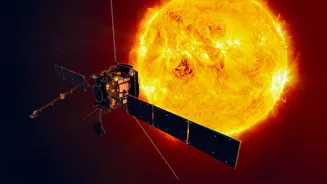
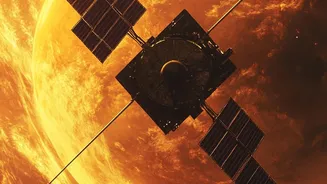
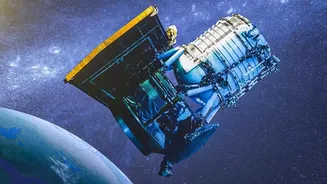
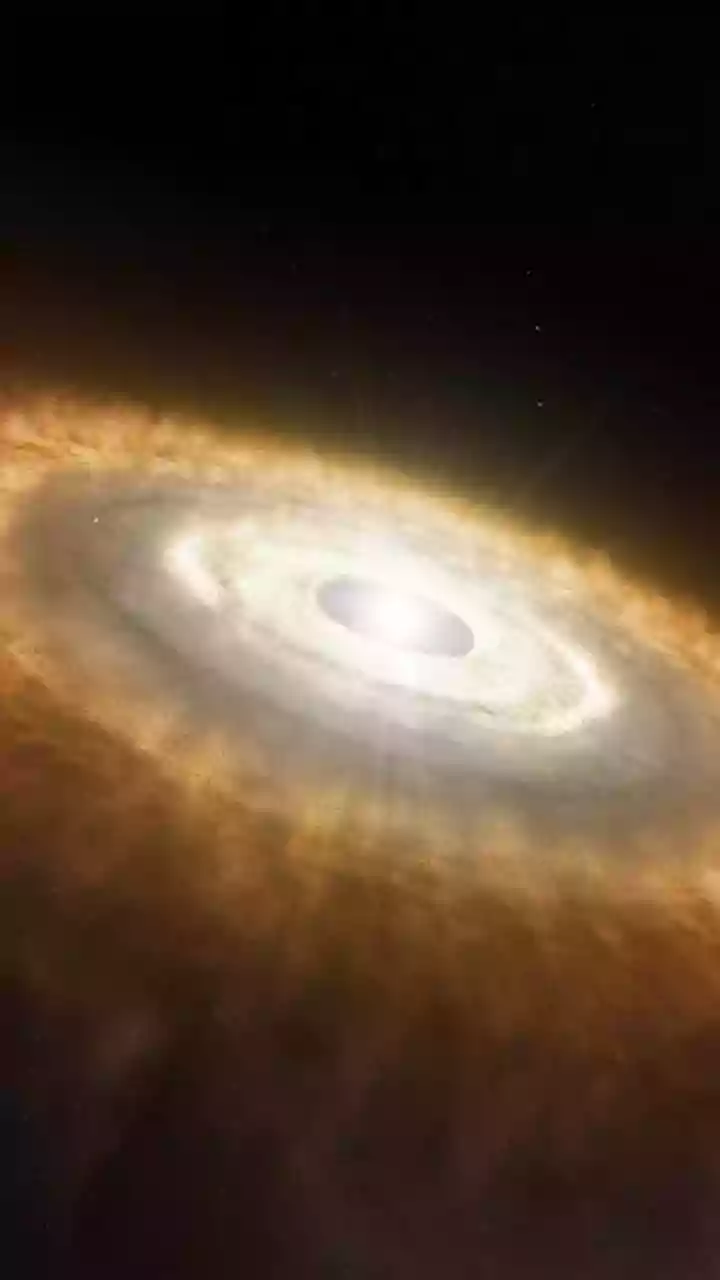
PUFFINS stands for 'Polarimetry in the Ultraviolet to Find Features in INterStellar dust'. At its core, this $20 million NASA mission is designed to study the tiny, almost invisible particles of dust that exist in the vast emptiness between stars. These dust grains, some as small as a virus, are crucial ingredients in the universe's recipe book. They influence how stars and planets form and evolve. The PUFFINS mission will launch a SmallSat, a compact satellite equipped with a 10-inch telescope, into a low-Earth orbit. From there, it will observe the ultraviolet (UV) light from approximately 70 different stars. By analyzing how this starlight is changed by the dust it passes through, scientists can learn about the dust's composition and behaviour.
The Power of Polarimetry
The key technique PUFFINS will use is called ultraviolet spectropolarimetry. Think of light as waves vibrating in various directions. Polarization is a property of light that describes the orientation of these vibrations. When starlight passes through interstellar dust, certain dust grains align with the galaxy's magnetic field, acting like microscopic filters. This alignment leaves a specific 'imprint' on the light's polarization. By measuring this change, scientists can deduce information about the dust that is otherwise impossible to see. This technique is not new, but according to Dr. Anche, it hasn't been deployed from space for this purpose in nearly three decades, making PUFFINS a pioneering effort to revive and advance the field.
The Crucial Role of a Principal Investigator
Being chosen as a Principal Investigator (PI) for a NASA mission is an immense honour and responsibility. The PI is the scientific heart and leader of the entire project. They are the person who conceives the investigation, is responsible for carrying it out, and ensures its scientific objectives are met. From managing the budget and team to overseeing the instrument design and analyzing the final data, the PI's vision guides the mission from concept to conclusion. Dr. Anche's proposal for PUFFINS was selected through NASA's Astrophysics Pioneers program, which specifically aims to support compelling space science missions led by early-career researchers. Her leadership places her at the forefront of a mission that will not only gather critical data but also train the next generation of scientists.
Why This Cosmic Dust Matters
While it might seem esoteric, studying interstellar dust has profound implications. As Dr. Anche explains, 'Since dust is such a critical component of how planetary systems and eventually life form, understanding it feels very essential'. The data from PUFFINS will help refine our models of star and planet formation, and how our galaxy regulates its temperature and evolves chemically. Furthermore, the mission serves as a vital scientific and technological precursor for NASA's next great flagship observatory, the Habitable Worlds Observatory (HWO), planned for the 2040s. The lessons learned from PUFFINS will help define the capabilities of future, even more powerful telescopes designed to search for habitable planets beyond our solar system. The mission, with a targeted launch in 2030, is set to fill a crucial knowledge gap in our understanding of the cosmos.