


A Surprising Molecular Resilience
In a landmark finding, scientists at MIT and collaborating institutions have discovered that peptides, which are short chains of amino acids, can survive in conditions mimicking the intensely acidic clouds of Venus. Even more surprisingly, these molecules
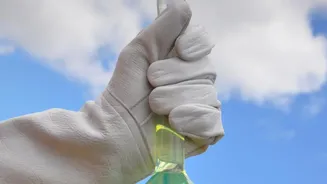
don’t just endure; they fold into stable, three-dimensional shapes. This is a crucial property because a molecule's structure often dictates its function, opening the door to the possibility that they could perform biological tasks. Published in the Proceedings of the National Academy of Sciences, the research used advanced spectroscopy to observe how peptides behaved in concentrated sulfuric acid, finding they remained intact for weeks. This resilience challenges the long-held assumption that Venus's corrosive atmosphere would instantly destroy any complex organic molecules.
What is Prebiotic Chemistry?
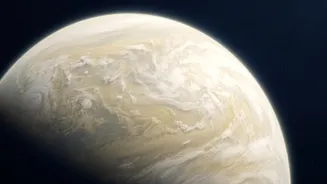
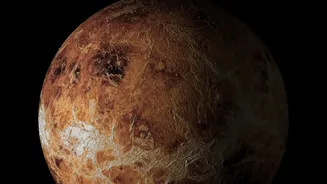
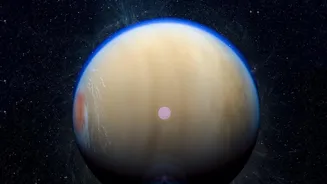
Prebiotic chemistry refers to the chemical reactions that are believed to have occurred on Earth before life existed, creating the complex molecules necessary for biology to emerge. It’s the study of how non-living matter could give rise to life's essential components, such as amino acids, nucleic acids, and lipids. Finding that these molecules can remain stable on Venus is significant because it suggests a similar chemical pathway could exist, even in an environment radically different from early Earth. While the surface of Venus is a scorching furnace, a temperate zone exists high in its atmosphere, between 48 and 64 kilometers, where conditions are milder. Scientists have wondered if this cloud layer could serve as a cradle for life, especially since meteorites are known to regularly deliver organic materials into the planet's atmosphere.
An Unexpectedly Stable Environment
The discovery hinges on a counterintuitive chemical principle. While concentrated sulfuric acid is incredibly destructive on Earth, its corrosive power is often dependent on the presence of water. The chemical reactions that break down peptides, known as hydrolysis, require water molecules. In the nearly pure sulfuric acid environment of Venus’s clouds, water is so scarce that these destructive reactions are far less effective. This means an environment that appears hostile from an Earth-based perspective might actually preserve certain organic molecules. This isn't the first hint that key molecules could survive there. Previous research from the same MIT group had already shown that 19 essential amino acids and the components of DNA could remain stable in Venus-like acidic conditions. The new study on peptides takes this a step further by showing these building blocks can assemble into more complex, structured forms.
The Bigger Picture: From Phosphine to Peptides
This latest research adds another layer to the ongoing debate about life on Venus, which was reignited in 2020 by the controversial detection of phosphine gas in the planet's atmosphere. On Earth, phosphine is overwhelmingly associated with biological or industrial processes, so its potential presence on Venus was a tantalizing clue. While the phosphine detection remains heavily debated, it spurred a new wave of laboratory experiments to test whether life's chemistry is truly impossible there. The confirmation that peptides and their constituent amino acids can withstand the acidic environment provides a plausible chemical foundation that was previously thought to be missing. It shifts the conversation from a simple search for biosignatures to understanding the fundamental chemical possibilities in non-water-based environments.
What Comes Next in the Search?
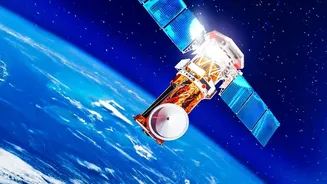
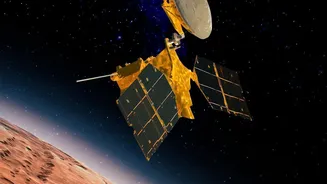
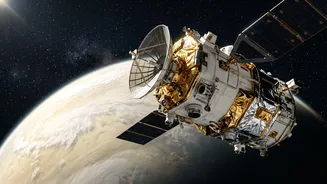
These laboratory findings do not prove life exists on Venus, but they make the planet a much more compelling target for astrobiology. The next step is to see if these folded peptides could perform useful functions and to test whether longer, more complex molecules like peptide nucleic acid (PNA), a synthetic relative of DNA, can also form stable structures. The ultimate confirmation will require direct observation. A new generation of missions is planned to do just that, including NASA's DAVINCI and VERITAS spacecraft and the European Space Agency's EnVision orbiter. These missions aim to analyze the Venusian atmosphere in unprecedented detail, potentially confirming what these lab experiments now suggest: that the clouds of Venus may be a surprisingly promising place to look for chemistry on the edge of life.