


The Sun’s Unseen Threat
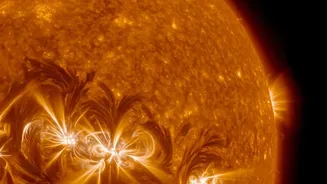
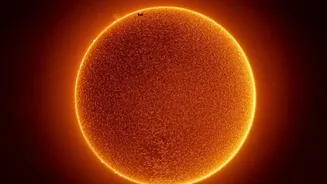
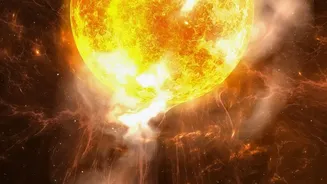
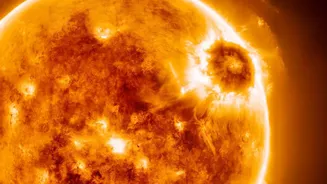
The sun, our life-giving star, has a volatile side. It constantly releases a stream of charged particles known as the solar wind. Most of the time, Earth’s magnetic field acts as a protective shield, deflecting these particles. However, the sun can also
unleash more violent outbursts called coronal mass ejections (CMEs), which hurl billions of tons of material into space at incredible speeds. If a powerful CME strikes Earth, it can overwhelm our magnetic defenses, creating a geomagnetic storm. These storms can induce harmful electrical currents in power grids, disrupt satellite communications and GPS signals, damage spacecraft electronics, and pose a radiation risk to astronauts. In our hyper-connected society, a severe space weather event could have cascading effects across numerous industries.
Meet Your New Cosmic Sentry: IMAP
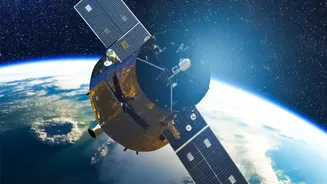
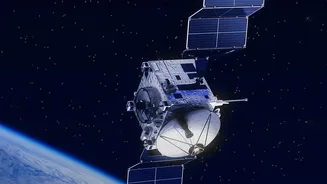
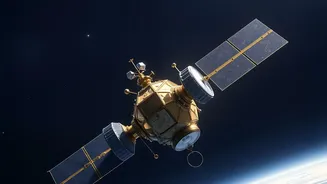
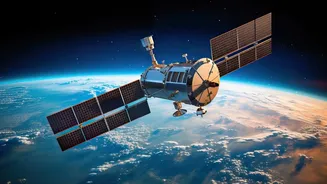
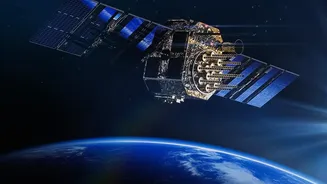
Enter the Interstellar Mapping and Acceleration Probe, or IMAP. This NASA mission, led by a team from Princeton University, is a state-of-the-art celestial cartographer. Launched in September 2025, its primary job is to study the boundary of our solar system, a protective bubble called the heliosphere, which is inflated by the solar wind and shields us from harsh interstellar radiation. But IMAP has another critical role. From its strategic vantage point at the first Lagrange point (L1), about 1.5 million kilometers from Earth in the direction of the sun, it acts as an upstream early-warning system for space weather.
Why Near-Real-Time Data is a Game-Changer
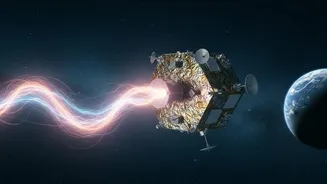
Previous missions have provided space weather data, but IMAP represents a significant leap forward in timeliness and detail. The mission features the IMAP Active Link for Real-Time (I-ALiRT) system, which continuously broadcasts crucial measurements. By positioning itself at the L1 point, IMAP can detect fast-moving solar particles before they reach Earth, providing forecasters with advance notice—potentially around 30 to 60 minutes—to issue alerts. This warning window, while seemingly short, is invaluable. It gives power grid operators time to protect their systems, allows satellite companies to place their assets into a safe mode, and helps ensure the safety of astronauts in orbit.
A Symphony of Instruments
IMAP achieves its mission with a suite of ten sophisticated science instruments built by an international consortium of institutions. Instruments like the Solar Wind Electron (SWE) and Solar Wind and Pickup Ion (SWAPI) measure the speed, density, and temperature of the particles making up the solar wind. The magnetometer (MAG) measures the interplanetary magnetic field carried by the wind, which is a key factor in how a solar storm will interact with Earth's own magnetic field. Other instruments, like the High-energy Ion Telescope (HIT), specifically track the most dangerous, fast-moving particles that can cause the most damage to technology. This comprehensive data provides a much clearer and more immediate picture of incoming threats.
From Data to Actionable Warnings
The data collected by I-ALiRT is a direct feed to space weather forecasters, such as those at the National Oceanic and Atmospheric Administration's (NOAA) Space Weather Prediction Center. They can use this high-cadence information to improve the timeliness and accuracy of their warnings and alerts for a wide range of sectors. This includes the aviation industry, which needs to reroute polar flights during major events; utility companies managing the electrical grid; and the operators of the thousands of satellites that underpin modern finance, navigation, and global communications. Ultimately, IMAP’s near-real-time data stream is not just an academic exercise; it’s a vital service that helps protect the technological backbone of our global economy and daily life.