




Returning humans to the Moon by 2028 is about more than just a powerful rocket. NASA's ambitious Artemis program now faces its next giant leap: developing and proving the critical equipment astronauts will need to live and work on the lunar surface.
Beyond the Landing
For
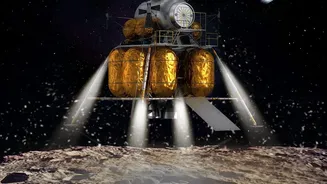
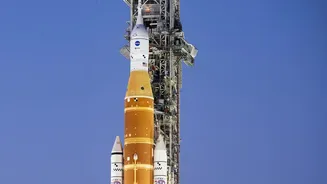
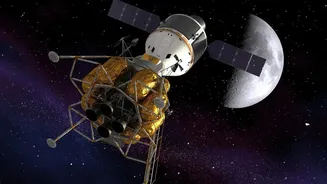
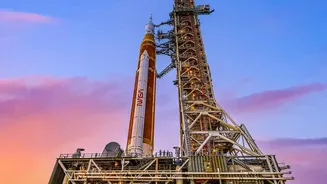
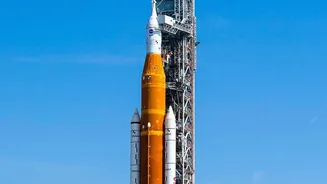
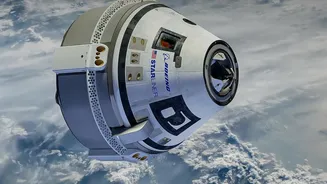
decades, the story of space exploration was dominated by the journey—the dramatic launch, the long coast through the void, and the nail-biting descent. With the Artemis program, NASA is rewriting that story. The new goal isn't just to visit the Moon, but to establish a sustainable human presence there. This ambitious shift from temporary flags and footprints to a long-term 'Moon Base' requires a whole new class of hardware designed not for a few days, but for extended stays and complex scientific work. The focus is moving from the ride to the Moon, provided by the Space Launch System (SLS) rocket and Orion capsule, to the tools needed once astronauts arrive. This includes everything from how they will travel across the surface to where they will live and how they will conduct experiments. It’s a fundamental change in thinking that treats the Moon as a destination for settlement and a proving ground for future missions to Mars.
A New Ride for the Moon
The iconic Lunar Roving Vehicle of the Apollo era was a marvel, but it was essentially a disposable dune buggy for short trips. To support a permanent base, astronauts need a far more robust and versatile ride. Enter the Lunar Terrain Vehicle (LTV). NASA is partnering with commercial companies like Intuitive Machines, Lunar Outpost, and Venturi Astrolab to develop this next-generation, unpressurised rover. Unlike its predecessor, the LTV is being designed for durability and semi-autonomous operation. It will function as both a crew transport for exploring miles from the landing site and a robotic science platform that can be controlled remotely from Earth between crewed missions. These vehicles must be able to carry heavy scientific equipment and lunar samples while enduring the extreme temperatures and rugged terrain of the Moon's South Pole. Before ever leaving Earth, prototypes are undergoing rigorous evaluation to test everything from control interfaces to their ability to withstand the violent shaking of a rocket launch.
A Home on the Lunar Frontier
To stay on the Moon for weeks or months at a time, astronauts will need more than a cramped lander. NASA is planning for a Foundational Surface Habitat, a small outpost that would serve as a home and workplace for up to four astronauts. These habitats are crucial for protecting the crew from the Moon's hostile environment, which includes extreme temperature swings, dangerous radiation, and the ever-present threat of micrometeoroid impacts. The habitat will serve multiple roles: a living quarters, a science lab, a communications hub, and a workshop for repairing equipment. NASA is exploring various concepts, including hybrid structures that use both rigid and inflatable components to maximize interior space while fitting within the constraints of a rocket's payload fairing. This lunar home base is a critical step, allowing for the kind of long-duration missions needed to truly understand the Moon and test systems for an eventual journey to Mars.
The Challenge of Lunar Dust
One of the single greatest challenges for any long term lunar mission is something the Apollo astronauts discovered firsthand : Moon dust . Officially known as regolith , this fine , abrasive powder is nothing like sand on Earth . Because the Moon has no atmosphere or weathering , the particles are sharp , jagged , and electrostatically charged , causing them to cling to everything . During the Apollo missions , dust infiltrated spacesuits , scratched visors , clogged mechanisms , and caused equipment to overheat . Apollo 17 Commander Eugene Cernan called it 'one of the most aggravating , restricting facets of lunar surface exploration' . For the Artemis program , where equipment must last for years , mitigating dust is a top priority . NASA is running extensive tests in specialized vacuum chambers on Earth , using simulated lunar soil to see how hardware , especially spacesuits and moving parts , holds up against the relentless grit .
Proving Grounds on Earth and in Orbit
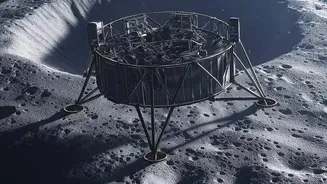
Before this new generation of hardware touches lunar soil, it must pass a series of gruelling tests. Much of this validation happens on Earth in specialized facilities, like NASA's Lunar Development and Test Facility, where engineers simulate the vacuum, temperature extremes, and dusty conditions of the Moon. But some tests are too complex for ground-based simulations. To that end, NASA has completely redesigned its nearterm missions. The Artemis III mission, launching in 2027, will now be an ambitious dress rehearsal in lowEarth orbit. Astronauts will launch in the Orion capsule to rendezvous and practice docking with test versions of any landers being built by SpaceX and Blue Origin. This complex, multi launch mission is designed to reduce risk and test critical operational procedures close to home before attempting any first crewed landing in 2028.