




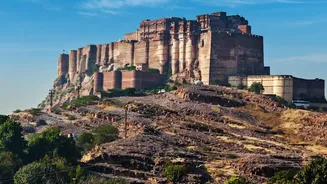
Mehrangarh Fort, Jodhpur
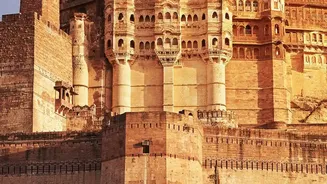
Rising 400 feet above the city of Jodhpur, Mehrangarh Fort seems to grow directly out of its rocky cliff. Founded in 1459 by Rao Jodha, its imposing walls, up to 36 metres high and 21 metres wide, protect a complex of palaces known for their intricate
sandstone carvings and delicate latticed windows. The stonework here is so fine that it creates a stunning contrast with the fort's rugged exterior. From its ramparts, visitors are treated to a panoramic view of Jodhpur’s famous blue houses and the vast Thar Desert stretching to the horizon, making it clear why Rudyard Kipling called it the “work of giants”.
Kumbhalgarh Fort, Rajasthan
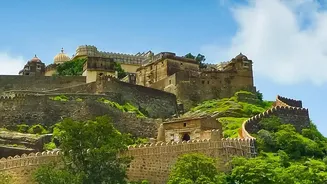
Nestled high in the Aravalli Hills, Kumbhalgarh is famous for its staggering scale. Constructed in the 15th century by Rana Kumbha, this UNESCO World Heritage Site is protected by a continuous wall that snakes through the hills for 38 kilometres—the second-longest wall in the world. This massive fortification, with its seven imposing gates and over 360 temples within, was a formidable stronghold for the Mewar kingdom. The scenic setting is just as impressive; from its highest points, you can see for miles across the rugged, undulating landscape of the Aravallis, a view that underscores its strategic genius and isolation.
Chittorgarh Fort, Rajasthan
Sprawling across a 700-acre hilltop, Chittorgarh is the largest fort complex in India and a symbol of Rajput pride and sacrifice. This UNESCO World Heritage site is a city in itself, containing palaces, temples, memorials, and about 20 large water bodies. The fort's history is filled with legendary tales of valour, including the heroic act of Jauhar. Its sheer scale is best appreciated from its ramparts, which overlook the plains of the Berach River valley. Structures like the Vijay Stambh (Tower of Victory) punctuate the skyline, offering views that are not just scenic but heavy with centuries of history.
Jaisalmer Fort, Jaisalmer
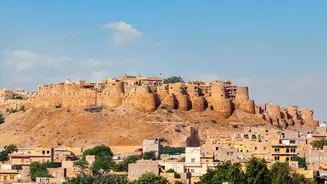
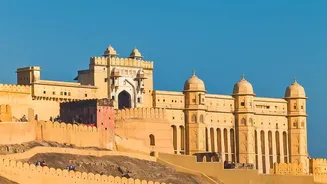
Rising from the heart of the Thar Desert, Jaisalmer Fort is a breathtaking sight. Built in 1156 from yellow sandstone, it glows a honey-gold at sunset, earning it the name Sonar Quila, or the Golden Fort. What makes Jaisalmer truly unique is that it's one of the few “living forts” in the world, with roughly a quarter of the old city's population still residing within its ancient walls. Its 800-year-old stone lanes are filled with homes, shops, and temples. The fort’s setting on Trikuta Hill provides a commanding view of the golden desert expanse, perfectly camouflaging it within the landscape.
Gwalior Fort, Madhya Pradesh
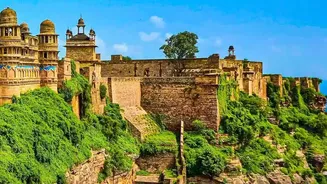
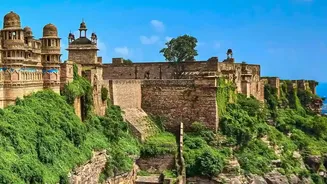
Described by the Mughal emperor Babur as “the pearl amongst the fortresses of Hind,” Gwalior Fort stands on a solitary rocky hill, Gopachal, overlooking the city. Its history stretches back to at least the 10th century, with structures reflecting various dynasties. The fort’s stonework is incredibly diverse, from the colourful tile work adorning the Man Mandir Palace to the giant rock-cut Jain sculptures carved into the cliffs. The scale is immense, covering three square kilometres. Its strategic high-ground location provides a defensive advantage and offers spectacular, sweeping views of the surrounding plains.
Golconda Fort, Hyderabad
Originally a mud fort, Golconda was transformed into a massive granite fortress by the Qutb Shahi dynasty. Situated on a 120-metre-high granite hill, its design is a marvel of engineering and acoustics. A handclap at the main gate can supposedly be heard at the highest point of the fort, a kilometre away, a feature designed for security. The fort’s colossal gates, drawbridges, and bastions are made of huge granite blocks fitted together without mortar. From its summit pavilion, the fort offers stunning panoramic views of Hyderabad’s bustling cityscape, blending ancient military might with a modern urban backdrop.
Daulatabad Fort, Maharashtra
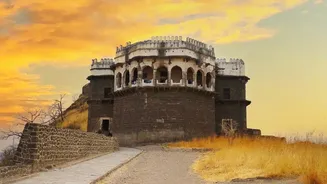
Once known as Deogiri, or 'Hill of the Gods,' Daulatabad Fort is an architectural marvel of defence built on a 200-metre-high conical hill. Founded in the 12th century, its strength lies in its ingenious design. The fortress is protected by a series of moats and walls, and the only access to the upper fort is through a dark, winding tunnel carved into the rock, designed to confuse and trap invaders. This rock-hewn fortress offers a challenging climb, but the reward is a spectacular 360-degree view of the Deccan plains, a testament to its status as one of India's most unconquerable strongholds.